

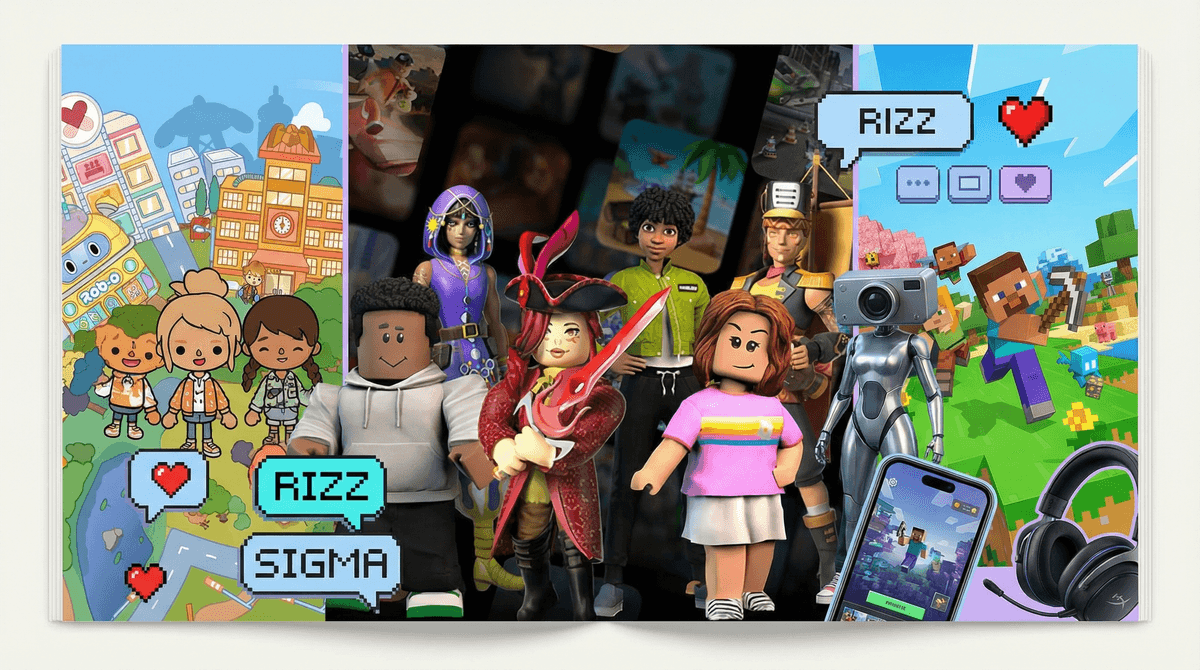
TL;DR: Digital play in 2026 isn't just "wasting time"—it’s where your kids are building social capital, learning complex systems, and, yes, watching some truly bizarre stuff. If you're feeling lost, start here:
- The Meme Lore: Skibidi Toilet is surrealist action, not just "brain rot."
- The Powerhouse: Roblox is a social club and a game engine rolled into one.
- The Language: "Ohio" means weird, "Rizz" is charisma, and "Sigma" is... complicated.
- Top Recommendation: If you want creative play without the predatory monetization, check out Toca Life World for younger kids or Minecraft for the older ones.
Get a breakdown of your kid's favorite game
If you walk past your ten-year-old and hear a song about a head in a toilet or see them staring at a blocky character working in a virtual pizza parlor, it’s easy to write it off as "brain rot." We’ve all been there. But for this generation, digital play is the new playground. It’s where they hang out after school, where they learn the jokes that make them feel like they belong, and where they experiment with identity.
In 2026, digital play isn't just a single app. It’s an ecosystem. According to recent Screenwise community data, about 65% of kids in grades 3-5 are spending at least 90 minutes a day in "sandbox" environments like Roblox or Minecraft. They aren't just "playing a game"; they are attending a digital birthday party, trading virtual pets, and navigating complex social hierarchies.
Let's address the elephant (or the toilet) in the room.
Created by YouTuber DaFuq!?Boom!, this started as a weird meme and turned into a massive narrative series. To us, it looks like nonsense. To kids, it’s a lore-heavy saga about a war between toilets with heads and people with cameras for heads. The Reality Check: It’s not "educational," but it’s also not inherently dangerous. It’s the 2026 version of Ren & Stimpy or Animaniacs—weird, slightly gross, and intensely popular. The "danger" is mostly the sheer amount of copycat "brain rot" content that clutters YouTube, which is often low-quality and designed solely for clicks.
The "Ohio" Effect
When your kid says "Only in Ohio," they aren't talking about the Midwest. In the current meme-speak, Ohio has become shorthand for "weird," "chaotic," or "dystopian." It’s part of a broader vocabulary (including "Gyatt," "Rizz," and "Sigma") that acts as a digital shibboleth. If you know the words, you’re in the group.
Why would a kid rather spend two hours in Roblox than go to the actual park?
- Agency: In the real world, kids are told what to do all day. In Minecraft, they have total control over their environment.
- Social Currency: If everyone at the lunch table is talking about a new "pet" in Adopt Me!, not having that pet feels like being the only kid without the "cool" sneakers in the 90s.
- Low-Stakes Risk: Trading items in Rocket League or Roblox teaches kids about value, negotiation, and (unfortunately) how to spot a scammer.
Roblox is the most polarizing platform in the Screenwise community. Here’s the no-BS take: It’s both.
On one hand, Roblox allows kids to learn basic Lua coding and game design. Some kids actually make "real" money (in the form of Robux that can be exchanged for USD) by creating popular shirts or games. It’s a legitimate introduction to the creator economy.
On the other hand, the platform is built on "dark patterns"—design choices intended to keep kids clicking and spending. The social pressure to buy "skins" or "game passes" is intense.
The Verdict: Roblox is a great tool for creativity if you have strict boundaries on spending and talk openly about how the game is trying to get their money.
If you’re looking to steer your child toward higher-quality digital play, here are our current top picks for 2026:
Minecraft (Ages 7+)
The gold standard. Whether they are in "Creative Mode" building architectural marvels or "Survival Mode" learning resource management, this is the most productive "game" a kid can play. Check out our guide on Minecraft vs. Roblox
Toca Life World (Ages 4-9)
Think of this as a digital dollhouse. There are no "levels" or "winning," just pure storytelling. It’s an excellent way for younger kids to practice digital agency without the social toxicity of multiplayer servers.
Scratch (Ages 8+)
If your kid loves the idea of making games but you want them off Roblox, Scratch is the answer. Developed by MIT, it’s a browser-based coding platform where they can create their own animations and games. It’s 100% educational and 100% free.
Hades (Ages 12+)
For older kids, Hades is a masterclass in narrative and Greek mythology. It’s challenging, beautiful, and a far cry from the mindless scrolling of TikTok.
Coolmath Games (Ages 6-12)
Don't let the name fool you—it’s not all long division. It’s a massive library of logic-based puzzles and strategy games. It’s a staple in school computer labs for a reason.
When we talk about "digital play," the risks aren't usually the content itself—it's the people and the patterns.
- Unfiltered Chat: In games like Fortnite or Roblox, the biggest risk is the other players. Toxic language and predatory behavior happen in the chat, not the game mechanics.
- The "For You" Feed: On YouTube, the autoplay feature is your enemy. It can take a kid from a Bluey clip to weird, AI-generated "Elsagate" style content in three clicks.
- Microtransactions: If your credit card is linked to their account, you’re asking for trouble. Use gift cards to provide a "digital allowance."
Instead of asking "What are you doing on that screen?", try these:
When you approach their digital world with curiosity instead of judgment, they are much more likely to come to you when something actually goes wrong (like a scam or a creepy message).
Digital play in 2026 is weird, fast-paced, and occasionally annoying. But it’s also where your child is learning to navigate the world. Your job isn't to police every single second of screen time, but to be the "guide on the side."
Understand the lore, set the boundaries on the bank account, and keep the conversation open. You don't have to love Skibidi Toilet, but you should know why your kid does.
- Check your settings: Read our guide on how to set up Roblox parental controls.
- Audit the YouTube: Take 15 minutes to look at your child's YouTube history together.
- Play with them: Spend 20 minutes inside their favorite game. Let them teach you how to play. It’s the fastest way to understand the social dynamics at play.
Check out our guide on Mr. Beast controversies and what they mean for your kids