

Is Infinity Train Too Scary for Kids? A Parent's Guide to the Emotional Animated Series
Infinity Train is an exceptional animated series that deals with heavy themes like grief, trauma, divorce, and moral complexity—wrapped in a sci-fi mystery format. Ages 10+ is the sweet spot, though sensitive kids might need to wait until 12+. The show gets progressively darker across its four seasons, with Book 3 being notably intense. If your kid handled Gravity Falls or The Owl House well, they can probably handle this. If they're still processing Inside Out 2, maybe give it another year.
The real question isn't "is it scary?" but "is my kid ready for genuinely complex emotional storytelling?"
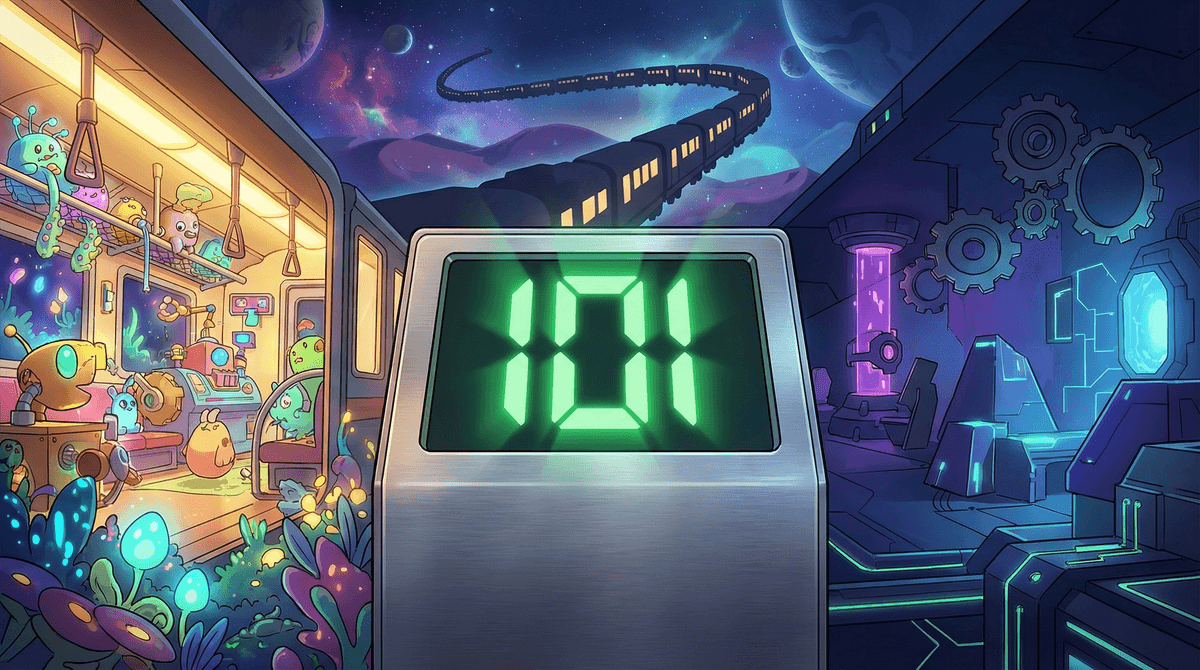
Infinity Train ran on HBO Max (now Max) from 2019-2021 across four "Books" (seasons). Each season follows different passengers who board a mysterious, infinite train with seemingly endless cars. Every passenger gets a glowing number on their hand that changes based on their personal growth—or lack thereof. The goal? Get your number to zero and you can go home.
The show was created by Owen Dennis, who worked on Regular Show, and it shows. There's that same blend of surreal humor and unexpected emotional depth, but Infinity Train skews more serious and psychological.
Each Book is essentially a standalone story (8-10 episodes, about 11 minutes each), so you can sample one season without committing to the whole series. But here's the thing: they're not all created equal in terms of intensity.
The show respects its audience's intelligence in a way that's honestly rare. It doesn't talk down to kids or oversimplify complex emotions. Characters make real mistakes with real consequences. The train itself is endlessly creative—one car might be a corgi kingdom, another a musical wasteland, another a creepy mirror world.
For kids who love mystery boxes and lore, Infinity Train delivers. Each car is a puzzle. The number system creates natural stakes. And the anthology format means you're never stuck with characters you don't connect with for too long.
The emotional storytelling is what makes it stick, though. This isn't a show about defeating the bad guy—it's about understanding yourself, processing trauma, and recognizing when you're hurting others. Heavy stuff, but presented through metaphor and adventure in a way that lands.
Here's where we need to get specific, because "too scary" varies wildly by Book.
Book 1: The Perennial Child (Ages 9-10+)
Follows Tulip, a 12-year-old dealing with her parents' divorce. This is the most accessible season—scary moments are relatively mild (some creepy robots, tense chase scenes), and the emotional themes, while deep, are processed through adventure and friendship. The scariest element is probably the Steward, a faceless robot that's genuinely unsettling but not graphic.
Scary rating: 3/10 Emotional intensity: 6/10
Book 2: Cracked Reflection (Ages 10+)
Follows MT (Mirror Tulip) and Jesse. This season introduces the concept that mirror people are considered "less than" real people and can be killed without consequence. There's more existential dread here—questions about identity, what makes someone "real," and whether some beings deserve rights. A major character dies (is "destroyed"), which is handled with weight but isn't graphic.
Scary rating: 5/10 Emotional intensity: 7/10
Book 3: Cult of the Conductor (Ages 12+)
This is where parents need to pay attention. Book 3 follows Grace and Simon, two teens who've been on the train for years and have built a cult-like society around NOT getting their numbers down. This season includes:
- A character being actually murdered on-screen (turned into dust/particles—animated but clearly death)
- Toxic relationship dynamics and manipulation
- A main character's complete psychological breakdown
- Themes of radicalization and cult mentality
- Animal death (a beloved companion character)
The finale is genuinely traumatic. Simon's death scene is one of the most disturbing moments in modern children's animation—not because it's gory, but because you watch someone completely lose themselves to their worst impulses.
Scary rating: 8/10 Emotional intensity: 10/10
Book 4: Duet (Ages 10+)
Follows two best friends, Ryan and Min-Gi, dealing with their band breaking up and growing apart. This returns to more emotional territory than horror—it's about friendship, growing up, and accepting change. There are tense moments but nothing on Book 3's level.
Scary rating: 4/10 Emotional intensity: 8/10
The scariness isn't really about jump scares or monsters (though there are some). It's about conceptual horror and emotional devastation.
Kids who might struggle:
- Those who are highly sensitive to characters making bad choices (you will yell at the screen)
- Kids who need clear good guys vs. bad guys (morality is VERY gray here)
- Children currently processing their own family trauma (divorce, loss, conflict)
- Kids under 10 who haven't developed abstract thinking about metaphor yet
Kids who will probably love it:
- Fans of Gravity Falls, The Owl House, Avatar: The Last Airbender
- Kids who loved Inside Out and want to go deeper
- Young viewers who appreciate character-driven stories over plot-driven ones
- Kids who like to analyze and discuss what they watch
Ages 8-9: Probably too early for most kids. The emotional complexity will go over their heads, and the scary moments (especially Book 3) are genuinely intense.
Ages 10-11: Book 1 is a great starting point. Watch together and gauge their reaction. If they're asking thoughtful questions about Tulip's number and why she's on the train, they're ready. If they're just focused on "when's the next action scene," maybe wait.
Ages 12+: Most kids this age can handle the full series, including Book 3, but I'd still recommend watching Book 3 together or at least being available for conversation afterward. That finale hits hard.
Teens 14+: This is actually the ideal age range. They'll catch the deeper themes about identity, toxic relationships, and moral complexity that younger kids might miss.
- Divorce and family conflict (Book 1)
- Identity and existential questions (Book 2)
- Toxic friendships and manipulation (Book 3)
- Death of major characters (Books 2 and 3)
- Some mild language (nothing worse than "crap" and "sucks")
- LGBTQ+ representation (casual and positive—if that's a concern for your family's values, you should know it's present but not a plot focus)
Start with Book 1, Episode 1-2 as a trial run. Each episode is only 11 minutes, so you're committing to 22 minutes max. Watch your kid's face during the Steward scene (Episode 2). If they're engaged and curious rather than anxious, you're good to continue.
Talk about the number system. It's a great metaphor for personal growth and therapy. "What do you think Tulip needs to learn to get her number down?" opens up conversations about emotional awareness without being preachy.
Definitely watch Book 3 together if you're letting your kid watch it at all. The finale needs processing. Have a conversation ready about what happened to Simon and why Grace's journey was different.
Use the anthology format to your advantage. If Book 1 feels too intense, you can stop there. If Book 3 feels like too much, skip to Book 4 (you'll miss some context but not enough to ruin it).
Less intense than: The Owl House (Season 2), Amphibia (Season 3), Adventure Time (later seasons)
More intense than: Gravity Falls (emotionally, not horror-wise), Hilda, Kipo and the Age of Wonderbeasts
Similar intensity to: She-Ra and the Princesses of Power (final season), Steven Universe (later seasons)
If your kid handled the emotional weight of Coco or Up, they can probably handle Infinity Train's emotional beats. If they're still not over what happened to Bing Bong, maybe wait.
Infinity Train is genuinely one of the best animated series of the past decade, but it's not for every kid at every age. The "too scary" question is really about emotional readiness more than horror elements.
Start with Book 1 around age 10-11, watch together, and see how it goes. Skip Book 3 entirely for sensitive kids or save it for age 12+. The show rewards thoughtful viewing and discussion—it's not background noise, it's the kind of thing you'll want to talk about afterward.
The real gift of Infinity Train is that it treats complex emotions and moral questions with the seriousness they deserve, wrapped in creative sci-fi adventure. That's rare in kids' media. But rare doesn't mean right for every kid at every moment.
Trust your kid's emotional maturity over their age, watch the first few episodes together, and you'll know pretty quickly if they're ready for the ride.
- Sample Book 1 on Max (HBO Max) with your kid
- Check out our guide to other emotionally complex animated shows if you want more options
- Read about how to talk to kids about complex emotions in media
- If your kid loves it, explore similar shows like Gravity Falls, The Owl House, or Over the Garden Wall