

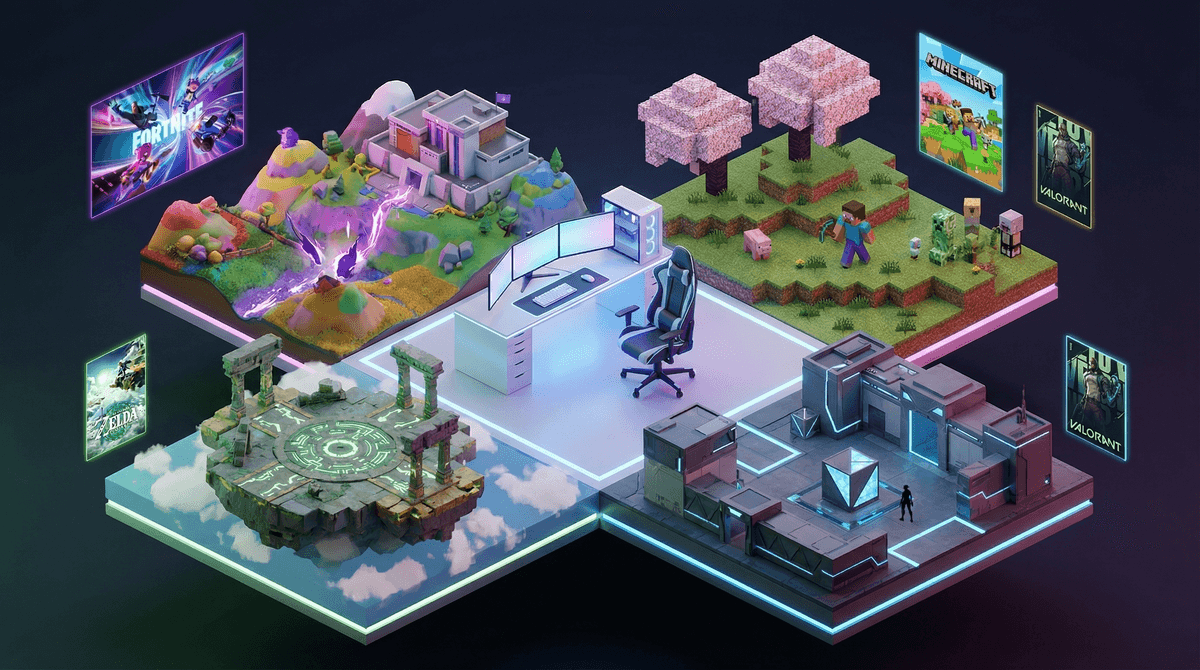
The Ultimate Guide to Video Games for Teens
TL;DR: Gaming isn't going anywhere, and for teens, it's often their primary social space. The key isn't whether they play, but what they're playing, who they're playing with, and how it fits into the rest of their life. This guide covers the most popular games teens are actually playing, what makes them appealing (or concerning), how to use ratings effectively, and how to set boundaries that don't make you the villain.
By the time kids hit middle school, gaming has typically shifted from "fun activity" to "core social infrastructure." Your teen isn't just playing Fortnite — they're hanging out with friends, coordinating strategies, sharing inside jokes, and building social capital.
According to research, about 90% of teens play video games in some capacity, and for many, it's their preferred way to socialize. The pandemic accelerated this shift dramatically. Gaming isn't the weird hobby anymore; not gaming is often the outlier position.
This creates a genuine parenting challenge: how do you support something that's clearly important to your teen's social life while also protecting them from legitimate concerns around addiction-like behaviors, online predators, inappropriate content, and the financial black holes that some games have become?
Battle Royale Games
Fortnite remains the undisputed king here. It's free-to-play, constantly updated with new content and collaborations (Star Wars! Marvel! Travis Scott concerts!), and has a relatively low skill floor with a high skill ceiling. The building mechanics set it apart from other shooters.
What parents should know: It's rated T for Teen (13+) for violence, but the violence is cartoonish — no blood, no gore. The bigger concerns are usually around spending (those V-Bucks add up fast) and voice chat with strangers. The game has solid parental controls that let you restrict purchases, limit chat, and set playtime limits.
Apex Legends is the more mature alternative, rated T as well but with a slightly older player base (high school rather than middle school). It's team-based, which can actually encourage better communication skills, but the voice chat culture can be toxic.
Open World & Sandbox Games
Minecraft doesn't go away just because kids become teens. Many teens still play, though they've often shifted from creative mode to more complex multiplayer servers, modded gameplay, or even creating their own content. It's rated E10+ and remains one of the safest major titles.
Roblox similarly sticks around, though teens tend to gravitate toward more sophisticated experiences within the platform. Some teens are actually making real money creating Roblox games. Others are spending real money on cosmetics. Learn more about how Robux economics actually work .
.
Grand Theft Auto V (GTA V) is rated M for Mature (17+) and this rating exists for a reason: graphic violence, strong sexual content, drug use, and constant profanity. That said, a huge number of teens play it, often specifically for GTA Online, which is less story-driven and more about hanging out in a virtual world with friends. This is a "know your kid" situation — the content is genuinely adult, but many teens handle it fine while others shouldn't be anywhere near it.
Competitive Multiplayer
League of Legends and Valorant dominate the competitive space. Both are free-to-play and both have notoriously toxic communities. They're also incredibly time-consuming — matches can last 30-45 minutes and you can't pause. Teens get genuinely invested in ranking systems and can spiral into unhealthy patterns around "climbing the ladder."
Rocket League is a safer bet: soccer with cars, rated E for Everyone, shorter matches, and while competitive, generally less toxic than MOBAs or tactical shooters.
Story-Driven & RPGs
The Legend of Zelda: Tears of the Kingdom and other Nintendo titles like Splatoon 3 remain popular with teens who want quality single-player experiences or family-friendly multiplayer. Nintendo consistently delivers games that are genuinely good without being problematic. (our Legend of Zelda guide breaks the series down by age and play style)
Elden Ring and the broader "Souls-like" genre appeal to teens who want challenge and depth. These games are brutally difficult but in a fair way that rewards patience and learning. Rated M for violence and some disturbing imagery.
Stardew Valley is the cozy game that transcends age groups. Farming, relationships, exploration — it's wholesome, it's engaging, and it's a nice counterbalance to more intense competitive games. Check out more cozy games for teens.
Sports & Racing
EA Sports FC (formerly FIFA), NBA 2K, and Madden are the big ones. These are generally rated E or E10+, but here's the catch: they all have "Ultimate Team" modes that are essentially gambling mechanics dressed up as card collecting. Teens can spend hundreds or thousands of dollars chasing rare players. Learn more about loot boxes and why they're controversial.
The ESRB (Entertainment Software Rating Board) rates games:
- E (Everyone): Generally fine for all ages
- E10+ (Everyone 10+): Mild violence or language
- T (Teen 13+): Violence, suggestive themes, crude humor, minimal blood
- M (Mature 17+): Intense violence, blood and gore, sexual content, strong language
- AO (Adults Only 18+): Prolonged graphic violence and/or explicit sexual content (extremely rare, most retailers won't carry these)
These ratings are helpful starting points, but they're not the whole story. Splatoon 3 is rated E10+ and is genuinely wholesome. Call of Duty is rated M and features realistic military violence. But the actual impact on your teen depends on their maturity, your family values, and the specific game in question.
What ratings don't tell you:
- Whether the game has predatory monetization
- What the online community is like
- How addictive the game loop is designed to be
- Whether voice chat is enabled by default
- How much time investment the game demands
This is why sites like Common Sense Media exist, and why platforms like Screenwise provide more nuanced breakdowns of what's actually in these games and what the real concerns are.
Legitimate Concerns:
Time investment: Some games are designed to be endless. Battle passes, daily challenges, seasonal content — they create FOMO (fear of missing out) and pressure to play every day. This is by design. Game companies employ psychologists to maximize engagement.
Voice chat toxicity: Online gaming communities can be brutal. Racism, sexism, homophobia, and general cruelty are common in many competitive games. Your teen will encounter this. The question is whether they're equipped to handle it and whether you've created space for them to talk to you about it.
Spending: Free-to-play games make their money somewhere, and it's usually through cosmetics, battle passes, and loot boxes. Teens are particularly vulnerable to social pressure around having the "right" skins or items. Learn about how to manage in-game purchases.
Predators: This is real but less common than media coverage suggests. Games with chat functions can be used by adults to groom children. This is why parental controls that limit who can communicate with your teen matter.
Physical health: Extended gaming sessions contribute to poor posture, eye strain, and sedentary behavior. The "gamer hunch" is real.
Overblown Concerns:
Violence causing real-world violence: Decades of research have failed to establish this link. Teens can distinguish between game violence and real violence. That doesn't mean exposing a 13-year-old to ultra-realistic military shooters is a great idea, but it's not creating school shooters.
Gaming addiction (in most cases): Yes, gaming disorder is real and recognized by the WHO. But most teens who game a lot aren't addicted — they're just doing what teens do, which is pour themselves into their interests. The line between "passion" and "addiction" is about whether gaming interferes with other important life functions (school, relationships, physical health, sleep).
Social isolation: For many teens, gaming is how they socialize. They're not isolated — they're connected, just differently than previous generations. This can be healthy or unhealthy depending on whether it supplements or replaces in-person connection.
Start with conversation, not rules: Ask your teen what they're playing and why they like it. Watch them play. Understand what they get out of it. Rules that come from understanding are more likely to be respected than arbitrary limits.
Focus on balance, not elimination: "No gaming" isn't realistic or reasonable for most teens. "Gaming after homework and chores, not past 10pm on school nights, and we do family dinner without screens" is reasonable.
Use parental controls, but don't rely on them exclusively: Every major platform (PlayStation, Xbox, Nintendo Switch, PC) has parental controls. Use them for purchase restrictions and time limits, but recognize that tech-savvy teens can work around many of these. The real control is the relationship and the culture you've built around gaming.
Make it a family conversation: If you have multiple kids, involve everyone in discussing what's fair. Teens are more likely to follow rules they helped create.
Model healthy screen habits yourself: If you're scrolling Instagram while telling your teen to get off Fortnite, you've lost the moral high ground.
Recognize gaming as a legitimate hobby: If your teen spends 10 hours a week gaming but maintains grades, friendships, and other activities, that's probably fine. We don't panic when teens spend 10 hours a week playing basketball.
Know when to escalate: If gaming is interfering with sleep, grades are dropping, your teen is irritable when not gaming, or they're lying about how much they play, it's time for a harder conversation and potentially professional help.
-
Take inventory: What is your teen actually playing? Make a list. Look up each game on Common Sense Media or Screenwise.
-
Check the settings: Go through parental controls on each platform your teen uses. Set spending limits, review privacy settings, and understand who can communicate with them.
-
Have the money talk: Establish clear rules about in-game purchases. Some families do a monthly gaming budget, some require teens to use their own money, some ban purchases entirely. Whatever you choose, be explicit about it.
-
Create tech-free zones and times: Family dinners, bedrooms after bedtime, and during homework are common boundaries. Pick what works for your family and enforce it consistently.
-
Play together: Even if you're terrible at it, playing a game with your teen opens up conversation and shows you're interested in their world. Try It Takes Two or Overcooked for co-op games that are actually fun for mixed skill levels.
-
Check in regularly: Gaming culture moves fast. What's popular and what the concerns are can shift in months. Make gaming part of your regular conversations, not just something you address when there's a problem.
Gaming is a massive part of teen culture and it's not going away. The goal isn't to eliminate it but to help your teen develop a healthy relationship with it — one where gaming is a fun part of life, not the only part.
Your teen will probably play games you find too violent, too time-consuming, or too expensive. They'll want to play with friends you don't know. They'll get frustrated when you set limits. This is all normal.
What matters is that you're engaged, informed, and willing to have ongoing conversations about gaming that go beyond "get off that thing." Understand what they're playing, why they like it, and who they're playing with. Set boundaries that make sense for your family. And recognize that for better or worse, their social lives are happening in these virtual spaces.
The teens who develop the healthiest relationships with gaming are usually the ones whose parents took the time to understand it rather than just fear it.
Want to dig deeper? Check out how to set up parental controls for popular gaming platforms, explore alternatives to violent games, or learn about gaming and mental health.