

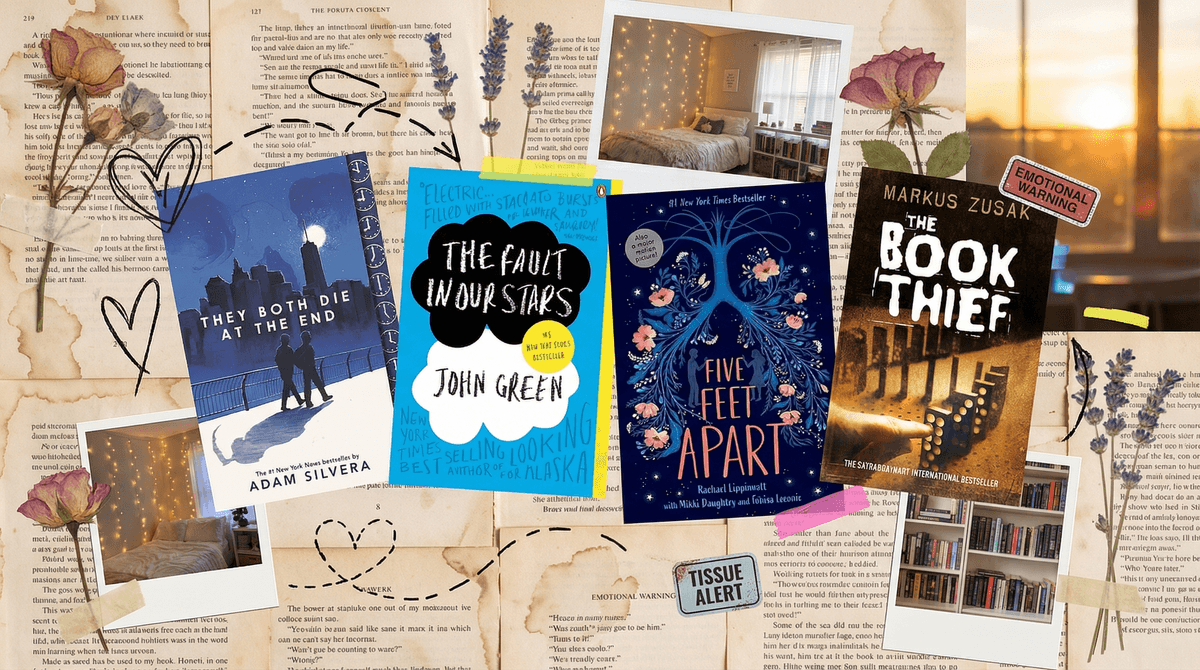
The Most Heartbreaking YA Books to Read After The Fault in Our Stars
If your teen loved The Fault in Our Stars and is ready for more emotional devastation (their words, not mine), here are the tear-jerkers worth their time:
- They Both Die at the End (Ages 14+) - The title spoils it, but somehow it still wrecks you
- Five Feet Apart (Ages 13+) - Cystic fibrosis love story that's basically TFIOS's spiritual successor
- The Book Thief (Ages 13+) - Death narrates WWII, need I say more
- All the Bright Places (Ages 15+) - Mental health, first love, and tissues required
- Me and Earl and the Dying Girl (Ages 14+) - Darkly funny until it's absolutely not
Your teen has discovered that crying over fictional characters is somehow... cathartic? Welcome to the wonderful world of sad YA lit. Let's talk about what comes after John Green broke their heart.
Here's what's actually happening: teens aren't just being dramatic (okay, not just being dramatic). Reading about grief, loss, terminal illness, and impossible love gives them a safe space to process big emotions. It's like emotional weightlifting—they're building their capacity to handle hard feelings through fiction before life inevitably serves up the real thing.
The Fault in Our Stars opened the floodgates in 2012 for a whole genre of "beautiful tragedy" YA that treats teen readers with respect. These books don't talk down to young people about mortality, mental illness, or the unfairness of life. And honestly? That's exactly what many teens are looking for.
Ages 14+ | LGBTQ+ themes
In a world where you get a phone call on the day you're going to die, two boys meet through an app and spend their last day together. Yes, the title spoils the ending. No, that doesn't make it hurt any less.
What parents should know: This one tackles mortality head-on with two gay Latino protagonists. There's some language, brief violence, and the underlying premise is inherently dark. But it's also about living fully, making connections, and choosing joy even when the clock is ticking. The LGBTQ+ representation is central and positive, which matters to many teens who felt seen by this book.
Content heads-up: Some sexual content (not explicit), death (obviously), mentions of past violence and family trauma.
Ages 13+
Two teens with cystic fibrosis fall in love but can't get close to each other due to cross-infection risk. If you thought TFIOS was sad, this one operates on the same wavelength—star-crossed lovers facing medical reality.
What parents should know: This is probably the most direct spiritual successor to TFIOS on this list. It's medically accurate about CF (the author worked with CF patients and organizations), which means it's realistic about illness, hospitals, and treatment. The movie adaptation is also solid if your teen prefers screen time.
Content heads-up: Medical procedures, hospital settings, some mild language, kissing, dealing with chronic and terminal illness.
Ages 13+
Narrated by Death himself during WWII Germany, this follows Liesel, a girl living with foster parents who steals books and shares them with others—including the Jewish man hiding in their basement.
What parents should know: This is the "literary" option on the list—it's beautifully written, historically grounded, and devastating in a different way than contemporary romance-focused tear-jerkers. It's longer (550+ pages) and requires more patience, but it's worth it. Many schools assign this one, so your teen might read it anyway.
Content heads-up: Holocaust themes, death (constantly, it's the narrator), bombing, war violence, some language. Heavy historical content that requires maturity.
Ages 15+ | Mental health themes
Two teens meet on a bell tower ledge, both contemplating suicide. They end up saving each other—until they don't. This one deals explicitly with mental illness, particularly bipolar disorder.
What parents should know: This book doesn't pull punches about depression, suicidal ideation, and the reality that love doesn't always "fix" mental illness. It's important and well-done, but it's also genuinely triggering for some readers. If your teen is struggling with mental health, this might be a conversation to have first .
.
Content heads-up: Suicide (on-page), depression, bipolar disorder, bullying, sexual content, abuse, self-harm references. This is the heaviest on the list.
Ages 14+
Darkly funny and self-aware, this follows Greg, a high school senior whose mom forces him to befriend Rachel, a classmate with leukemia. The narrator actively tells you this isn't a typical cancer love story. He's... mostly right.
What parents should know: This one subverts the genre while still being part of it. It's genuinely funny, the protagonist is refreshingly honest about being awkward and selfish, and it doesn't romanticize terminal illness. The humor makes it more accessible for some teens who find straight-up tear-jerkers too intense.
Content heads-up: Sexual humor, language (quite a bit), some drug references, cancer and death, teenage awkwardness cranked to 11.
If I Stay by Gayle Forman (Ages 13+) - Car accident, out-of-body experience, impossible choice. Shorter and slightly less devastating than the others.
The Sky Is Everywhere by Jandy Nelson (Ages 14+) - Grief after a sister's death, beautifully written, some sexual content.
We Are Okay by Nina LaCour (Ages 14+) - Quiet grief, LGBTQ+ themes, less about dying and more about living after loss.
Turtles All the Way Down by John Green (Ages 14+) - If they want more John Green but about OCD instead of cancer.
Ages 12-13: Start with Five Feet Apart or If I Stay. These deal with heavy topics but in slightly more accessible ways.
Ages 14-15: Most of these are fair game, but preview All the Bright Places if your teen has any mental health struggles.
Ages 16+: Everything's on the table. At this point, trust their judgment about what they can handle emotionally.
Your teen is probably part of BookTok or Bookstagram, where "I ugly cried for three hours" is basically a recommendation. This isn't concerning—it's community. They're sharing emotional experiences and processing feelings together.
The good news: Reading about grief, loss, and tragedy actually builds emotional resilience. It's exposure therapy through fiction. Teens who read these books often report feeling more equipped to handle real-life loss and disappointment.
The watch-out: If your teen is only reading devastatingly sad books and seems to be using them to wallow rather than process, that might be worth a gentle check-in. Here's how to talk about it without being weird about it.
Let's be real about what's in these books:
- Death and dying: Obviously. That's the whole genre.
- Medical content: Hospitals, procedures, illness progression—sometimes in detail
- Mental health: Depression, anxiety, suicidal ideation in several of these
- Sexual content: Ranges from kissing to more explicit scenes (though nothing graphic)
- Language: Most have some swearing, Me and Earl has quite a bit
- LGBTQ+ themes: Several feature queer protagonists (They Both Die at the End, We Are Okay)
None of this is gratuitous—it's all in service of authentic storytelling. But you should know what you're signing off on.
These books aren't "trauma porn" or unnecessarily sad. They're giving teens permission to feel big feelings and practice emotional literacy in a safe space. The Fault in Our Stars started a conversation about treating teen readers like they can handle complex, painful truths. These books continue it.
Start here: If your teen loved TFIOS, hand them They Both Die at the End or Five Feet Apart next. Both honor the same emotional territory while offering something new.
Watch for: Changes in mood that last beyond finishing the book, or fixation on death/dying themes that feels more concerning than cathartic. Trust your gut.
Remember: Crying over fictional characters is healthy. It's practice for real grief, a way to feel connected to something bigger, and honestly? Sometimes it just feels good to let it out. Your teen is going to be okay. Even if they're sobbing over a book at 2am.
Want more recommendations? Check out our guides on books about mental health for teens or LGBTQ+ YA books.