

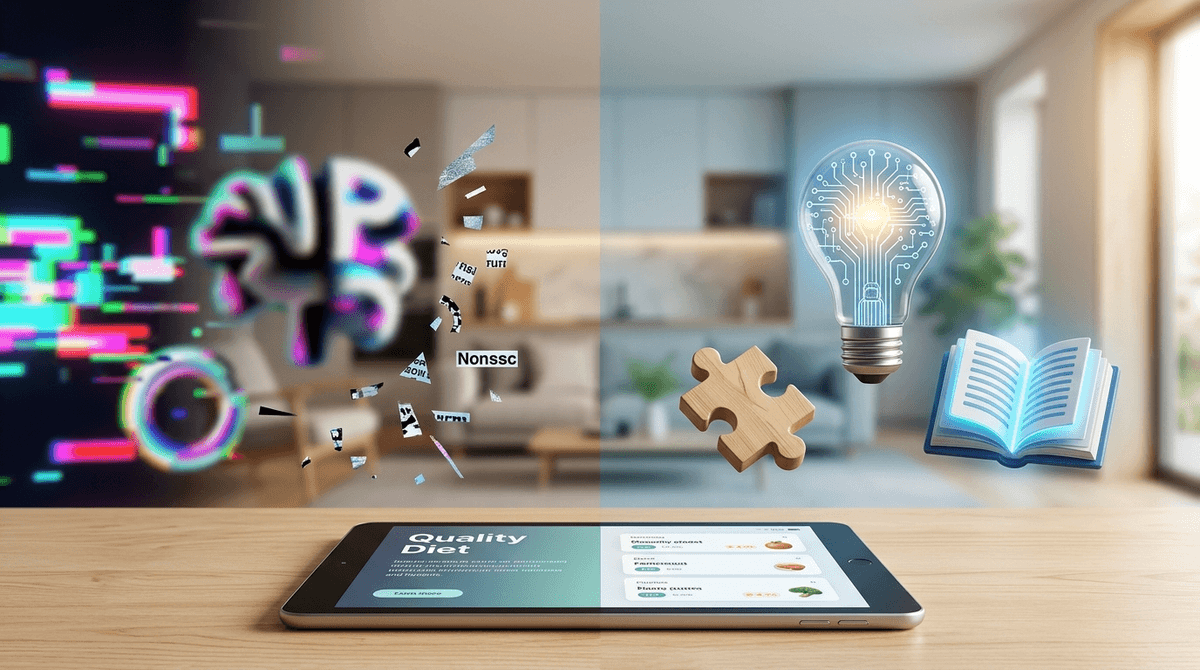
TL;DR: Not all screen time is created equal. While the "stopwatch" method of parenting is easy to track, it doesn't account for the difference between a kid building a logic gate in Minecraft and a kid watching 45 minutes of "Skibidi Toilet" memes. If you're short on time, here are the quick "Brain Gain" swaps:
- Swap TikTok scrolling for Scratch (coding) or Toca Life World (digital storytelling).
- Swap mindless YouTube unboxing for Brains On! or Storyline Online.
- Swap "Brain Rot" memes for strategic games like Stardew Valley or Catan.
We’ve all been there. You’re trying to get dinner on the table, your kid has been on their iPad for an hour, and you feel that creeping "bad parent" guilt. You look over, and they’re watching a video of a head popping out of a toilet singing a distorted song.
Welcome to the era of "Brain Rot." It’s the term kids use for the nonsensical, high-dopamine, low-substance content that populates YouTube and TikTok. It’s also the reason many of us have become "Stopwatch Parents," obsessing over the quantity of minutes rather than the quality of the content.
But here’s the no-BS truth: 30 minutes of Roblox where your kid is negotiating a trade or designing a house is infinitely more valuable for their brain development than 30 minutes of passive, algorithmic scrolling.
It’s time to move the conversation from "How much?" to "What exactly are they doing?"
In parent-speak, "Brain Rot" is basically the digital version of eating a giant bag of Cheetos for dinner. It’s content that is designed to be hyper-stimulating but requires zero cognitive effort.
Common symptoms include:
- The "Ohio" Meme: If your kid says everything weird is "only in Ohio," they’ve been in the trenches of YouTube Shorts.
- Skibidi Toilet: It’s a surreal series of videos that has become the poster child for "nonsense" content. It’s not necessarily dangerous, but it is the definition of empty calories.
- ASMR/Slime/Unboxing: These videos trigger a sensory response but don't ask the child to think, solve, or create.
The problem isn't that this content exists—we all need "junk food" sometimes—it’s when it becomes the entire diet. Research shows that passive consumption (just watching) has a very different effect on the brain than active consumption (playing, creating, or interacting).
Find a "Brain Gain" swap list for your kid's current favorite show
"Brain Gain" is any digital activity that requires agency. When a kid has to make a choice, solve a problem, or learn a skill, they are building neural pathways.
Think of it this way:
One is a spectator sport; the other is an engineering lesson.
If you want to shift your family's digital diet, look for media that falls into these three categories: The Creators, The Strategists, and The Storytellers.
The Creators: Building, Not Just Consuming
These apps and games turn the screen into a tool rather than a TV.
- Ages 8-16. Created by MIT, this is the gold standard for teaching kids to code. Instead of playing a game, they make the game. It’s the ultimate "Brain Gain."
- Ages 4-10. Think of this as a digital dollhouse. There are no levels or "winning," just open-ended play and storytelling. It’s great for younger kids who aren't ready for the social complexities of Roblox.
- Ages 2-8. If you’re going to do "educational" apps, this is the one. It’s high-quality, free, and actually backed by learning science, unlike a lot of "Phonics" apps that are just ad-delivery systems in disguise.
The Strategists: Critical Thinking & Problem Solving
Gaming gets a bad rap, but complex games are essentially giant logic puzzles.
- Ages 10+. This game is basically a physics simulator. To solve puzzles, kids have to build bridges, flying machines, and vehicles. It’s "Brain Gain" at its peak.
- Ages 7+. Okay, let’s be real: Roblox is a mixed bag. Some of it is brain rot "tycoon" games designed to drain your bank account. But games like Adopt Me! or Pet Simulator 99 teach basic economics and trade negotiation. If your kid is using Roblox Studio to make their own games, they’re basically learning a professional skill.
- Ages 6-12. It’s a fantasy RPG where the "battles" are solved by doing math problems. It’s one of the few "gamified" learning tools that kids actually want to play.
The Storytellers: Narrative & Empathy
Sometimes "Brain Gain" isn't about math or coding; it's about emotional intelligence.
- Ages 2-99. Seriously. Bluey is the best show on television for teaching imaginative play and conflict resolution. It’s the opposite of the loud, fast-paced "sensory" shows that overstimulate toddlers.
- Ages 6+. Based on the Wild Robot book, this is a masterclass in storytelling about nature, technology, and empathy. It’s a great example of "high-quality" screen time that sparks deep conversations.
- Ages 5-12. This is a podcast, but it counts. It’s funny, high-energy, and teaches actual science. It’s the perfect "screen-free" digital option for car rides.
According to Screenwise community data, by the time kids hit 5th grade, over 65% are playing Roblox weekly, and nearly 80% are watching YouTube.
If we just try to block these platforms, we lose the opportunity to guide our kids through them. The goal isn't to be a "No Screen" parent—that’s a losing battle in 2026. The goal is to be an "Intentional" parent who knows the difference between a "Brain Rot" rabbit hole and a "Brain Gain" opportunity.
- Ages 3-6: Focus on high-quality narrative (Bluey) and interactive play (Toca Life World). Avoid YouTube entirely if you can; the algorithm is too aggressive for this age group. Stick to PBS Kids.
- Ages 7-11: This is the Roblox and Minecraft era. Start talking about the "why" behind their choices. "Is this game making you frustrated, or are you actually building something?"
- Ages 12+: They’re going to see the brain rot. They’re going to see the "Ohio" memes. At this age, it’s about media literacy. Ask them: "Why do you think this video went viral? Is it actually funny, or is it just loud?"
Don't come at your kid with a lecture about "neural plasticity." They'll tune you out faster than a MrBeast jump cut.
Try these openers instead:
- "Hey, I noticed you've been watching a lot of those toilet videos. They’re pretty weird! Want to show me one that's actually creative?"
- "I’m okay with you having 30 extra minutes of screen time if you use it on Scratch or Minecraft instead of just scrolling TikTok."
- "What’s the coolest thing you’ve built in Roblox lately? Can you teach me how to do it?"
Learn more about navigating the Roblox economy with your kid
The stopwatch is a tool, but it shouldn't be the boss.
If your kid spends an hour watching Storyline Online, their brain is in a completely different state than if they spent an hour on YouTube Shorts.
Stop counting minutes and start counting agency. Does the content give your kid a choice? Does it make them think? Does it inspire them to go do something off-screen?
If the answer is yes, that's Brain Gain. If the answer is "I'm just watching a head in a toilet," maybe it's time for a pivot.
- Do a 24-hour Audit: Don't judge, just watch. What is your kid actually doing on that screen? Is it 90% passive or 90% active?
- Introduce a "Brain Gain" Option: Download Scratch or Stardew Valley and play with them for 20 minutes.
- Set Content-Based Boundaries: "You can have unlimited time on Khan Academy, but only 20 minutes on YouTube." Watch how quickly their habits change when the "good stuff" is more accessible.