

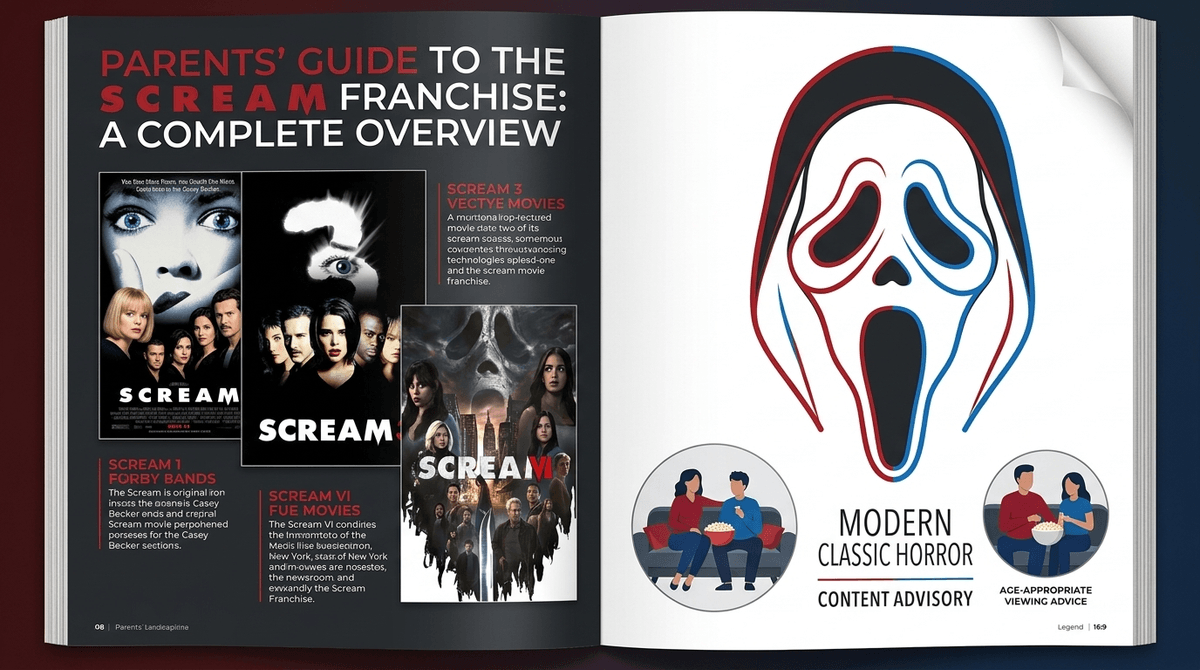
TL;DR: Scream 3 is widely considered the "lightest" entry in the franchise. If your teen is begging to join the hype train before Scream 7 hits theaters, this is often the "gateway" slasher. It trades heavy gore for Scooby-Doo mystery vibes and Hollywood satire. It’s still R-rated for violence and language, but it’s the most "PG-13" an R-rated movie can get.
See if your 14-year-old is ready for Scream movies
With Scream 7 currently dominating the cultural conversation—especially with the return of Neve Campbell as the ultimate "final girl" Sidney Prescott—you might find your middle or high schooler suddenly obsessed with Ghostface.
If they’ve already binged Wednesday or the Fear Street Trilogy on Netflix, they’re likely looking for the next level of "scary." Enter the Scream franchise. But while the original Scream (1996) is a masterpiece of tension and the newer Scream VI is a literal bloodbath in NYC, Scream 3 occupies a weird, almost safe middle ground.
Released in 2000, this movie was filmed in the shadow of the Columbine tragedy, which meant the studio (and the culture at large) was terrified of "realistic" movie violence. The result? A horror movie that feels more like an action-comedy with a few stabbings.
Scream 3 takes the action out of the fictional town of Woodsboro and moves it to Hollywood. The plot follows the production of Stab 3, a movie-within-a-movie based on the "real-life" Woodsboro murders.
Sidney Prescott is in hiding, working as a crisis counselor (ironic, right?), while a new Ghostface starts picking off the cast of the movie in the order they die in the script. It’s very "meta," very campy, and features a lot of early-2000s haircuts that are arguably scarier than the killer.
Horror is currently having a massive "meta" moment. Gen Z and Gen Alpha love media that knows it’s media. They grew up with Five Nights at Freddy's and M3GAN—movies that wink at the audience.
Scream 3 is the king of winking. It’s full of cameos, secret rooms behind movie sets, and characters who literally explain the "rules of a trilogy" while they’re in one. For a teen who likes puzzles and "solving" the mystery before the big reveal, this is basically a high-stakes escape room in movie form.
If you’re trying to decide if this is appropriate for your 13 or 14-year-old, here’s the breakdown:
1. The Violence (The "Safe" Slasher)
Compared to Scream 2 or the brutal Scream (2022), the kills here are relatively bloodless. There’s a lot of "stab and fall over." One character dies in a gas explosion that feels like it’s out of an A-Team episode. If your kid can handle the intensity of Stranger Things, they can handle this.
2. The Language
This is where the R-rating really comes from. There are plenty of F-bombs and "colorful" Hollywood talk. If your house is a "no-swearing" zone, this will definitely cross the line. If they’ve heard it all on the school bus, it’s nothing new.
3. The "Me Too" Themes
Interestingly, for a movie from 2000, Scream 3 deals with the "casting couch" culture of Hollywood. It’s not graphic, but it deals with the idea of powerful men exploiting young actresses. It’s a great jumping-off point for a conversation about industry ethics and consent, framed within a popcorn movie.
If you’re not quite ready to let them dive into R-rated slashers, but they want that "masked killer mystery" feel, try these:
- Totally Killer: It’s basically Back to the Future meets Scream. It’s rated R but leans heavily into the comedy.
- Happy Death Day: A PG-13 "Groundhog Day" slasher that is genuinely clever and much less gory.
- Goosebumps (Disney+ Series): For the 10-12 crowd, this provides the "group of friends solving a mystery" vibe without the R-rated baggage.
If you decide to let them watch Scream 3, use it as a moment to build some "media literacy" muscles. This movie is obsessed with how movies are made.
- Ask them about the "Voice Changer": In this movie, the killer has a device that can mimic anyone's voice perfectly. In 2000, this was sci-fi. In 2026, we call this AI deepfakes. It’s a perfect opening to talk about why we can’t always trust what we hear or see online anymore.
- Discuss the "Rules": The character Randy appears via a pre-recorded video to explain the rules of a trilogy (anybody can die, even the main character). Ask your kid: "What are the 'rules' of the games or shows you watch? How do creators keep you hooked?"
- The Hollywood Satire: Talk about how the movie portrays "fame." Everyone in the movie is desperate to be a star. Is that any different from the "influencer" culture they see on TikTok or YouTube?
Scream 3 is the "entry-level" slasher. It’s less traumatizing than the original and less mean-spirited than the modern sequels. If you have a teen who is curious about the genre, this is a relatively safe place to start—provided you’re okay with some 2000s-era profanity and the occasional jump scare.
It’s not "brain rot," but it’s not Citizen Kane either. It’s a campy, meta-mystery that serves as a great bridge to the more intense films in the series. Just be prepared: once they finish this, they’re going to want to see Scream 4, and that one cranks the gore back up to eleven.
- Watch it together: Horror is always better (and less scary) when shared. You can point out the ridiculous 2000s tech like pagers and giant cellular phones.
- Set boundaries: If they find this too scary, it’s a sign they aren't ready for the rest of the franchise.
- Check the stats: According to Screenwise community data, about 45% of parents with 14-year-olds allow the Scream sequels, but only after a "vibe check" of the first film.