

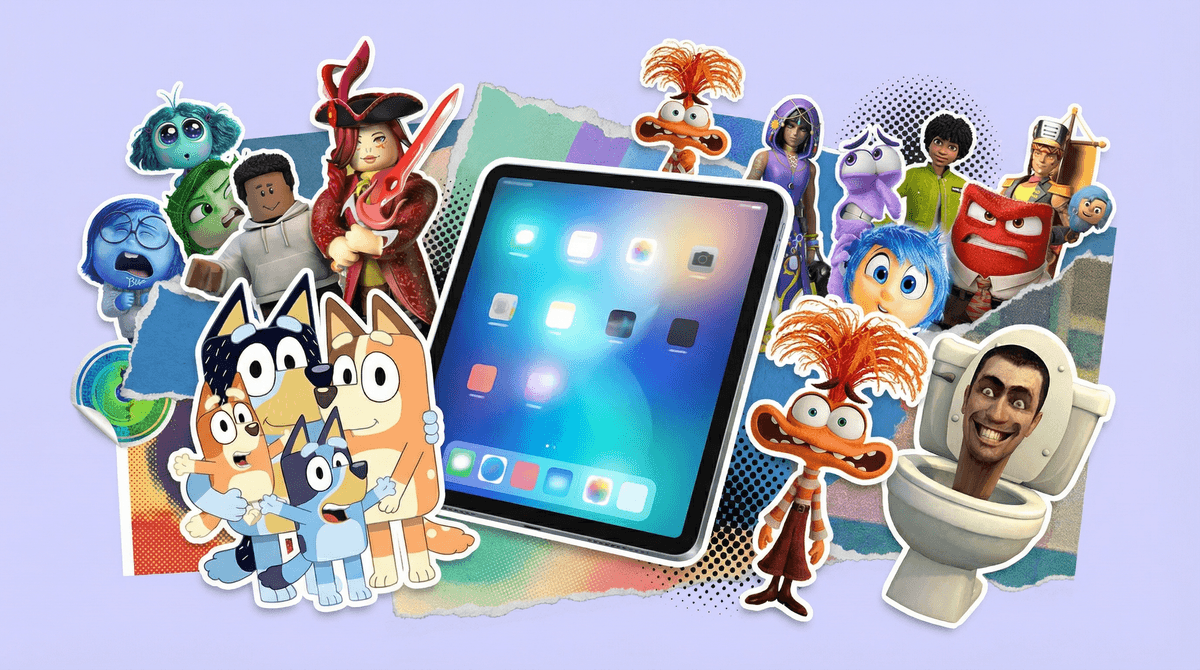
TL;DR: Don't let the term "brain rot" scare you. Even the weirdest viral trends like Skibidi Toilet and the "Ohio" meme can be springboards for talking about resilience, creativity, and social norms. Our top picks for turning screen time into character building include Bluey for emotional intelligence, Roblox for entrepreneurial spirit, and The Wild Robot for empathy.
Get a character-strength analysis of your kid's favorite show
If you’ve heard your kid say "Only in Ohio" or "Skibidi Rizz" and felt a piece of your soul leave your body, you aren't alone. "Brain rot" is the self-aware term Gen Alpha uses for the hyper-fast, surreal, and often nonsensical content that dominates TikTok and YouTube Shorts.
It looks like chaos. It feels like a fever dream. But beneath the singing toilets and the bizarre slang, there is a complex social language happening. When we dismiss it all as "garbage," we miss the chance to see what our kids are actually valuing: humor, persistence, community inside-jokes, and a very specific type of digital-native creativity.
We spend a lot of time worrying about what media does to our kids. We worry about attention spans and dopamine loops (rightfully so). But we often forget to look at what kids do with the media.
Identifying character strengths in pop culture isn't about "educational" content. It’s about finding the resilience in a character who keeps trying, the empathy in a viral story, or the critical thinking required to understand a complex meme. When you can spot these traits, you move from being the "screen police" to being a mentor who understands their world.
The Strength: Resilience and Innovation I know, I know. It’s a head in a toilet. But if you actually watch the progression of this series created by Alexey Gerasimov, it’s an epic, wordless saga of a war between the Toilets and the Camera-Heads. Why it works: The "Alliance" (the good guys) constantly loses. They get crushed, their tech fails, and they have to go back to the drawing board to build bigger, better "Titans." It’s a surprisingly pure story of technological innovation and persistence in the face of overwhelming odds. Learn more about the Skibidi Toilet phenomenon
The Strength: Entrepreneurship and Social Agency Roblox isn't one game; it's a million games. When your kid is playing Adopt Me! or Pet Simulator 99, they aren't just clicking. They are navigating a complex economy. The Flip Side: Yes, it can be a "bank account drain" if you don't have boundaries. But it also teaches negotiation, value assessment, and digital citizenship. If they’re building their own games in Roblox Studio, they’re learning basic Lua coding and UI design. That’s creativity with a side of career skills.
The Strength: Philanthropy vs. Performance
Jimmy Donaldson (MrBeast) is the king of YouTube. His videos often revolve around giving away millions of dollars.
How to talk about it: This is a perfect opening for a conversation about generosity. Is it still "kindness" if you film it for views? Does the motive matter if the person still gets a free house? It’s a masterclass in critical thinking and ethics for kids ages 8-14.
Check out our guide on MrBeast and the attention economy
The Strength: Emotional Intelligence and Play This is the gold standard. Whether your kid is 4 or 14 (honestly, even parents), Bluey models emotional regulation better than almost any show in history. It highlights empathy, conflict resolution, and the importance of imaginative play. It’s the "anti-brain rot."
The Strength: Self-Awareness and Anxiety Management If you have a middle schooler, this is required viewing. It tackles the introduction of Anxiety, Envy, and Ennui with surgical precision. It’s a tool for self-regulation and understanding that "bad" emotions aren't villains—they’re just parts of us that need to be managed.
When kids say something is "Only in Ohio" (meaning it’s weird, chaotic, or cursed), they are actually practicing social categorization. They are identifying what is "normal" vs. what is "outlier" behavior.
Instead of rolling your eyes, ask: "What makes that 'Ohio' to you? Is it because it's creative or just because it's breaking a rule?"
When they talk about "Rizz" (charisma), they are talking about social confidence. When they talk about "Mewing" (a tongue-posture meme about looksmaxxing), they are opening a door to talk about body image and the absurdity of internet beauty standards.
Ages 5-8: The Foundation
At this age, focus on pro-social behavior.
- Recommend: Tumble Leaf for curiosity or Storyline Online for literacy and empathy.
- The Conversation: "How did that character help their friend?"
Ages 9-12: The Transition
This is the peak "brain rot" era. They want to fit in with the memes.
- Recommend: Minecraft for collaboration and geometry. The Wild Robot by Peter Brown for kindness and adaptation.
- The Conversation: "I saw that Skibidi video. It’s wild. Why do you think the Camera-heads keep fighting even when they're losing?"
Ages 13+: The Critical Thinkers
Teenagers are ready for the "why" behind the media.
- Recommend: Marvel Snap for strategic thinking. The Good Place for ethics and philosophy.
- The Conversation: "How is that TikTok algorithm trying to change your mood right now?"
The goal isn't to make your kid only watch "high-brow" content. That’s impossible and honestly, a little boring. The goal is intentionality.
If they spend 30 minutes watching "brain rot," can they spend 5 minutes telling you what was funny about it? That transition from passive consumption to active reflection is where character is built.
Safety Considerations:
- Skibidi Toilet is generally fine but can be creepy/violent for very young kids.
- Roblox requires strict chat filters and "spending limits" to keep the "entrepreneurship" from becoming "extortion."
- TikTok/YouTube Shorts are the highest risk for "doomscrolling." Use built-in time limits.
Your kid's digital world is weird, but it isn't empty. Whether it’s the bravery of a character in Fortnite or the humor in a nonsense meme, there are strengths to be found.
Stop looking for "educational" labels and start looking for "character" moments. If they can explain a meme to you, they’re practicing communication. If they’re building a base in Terraria, they’re practicing planning.
- Watch one "brain rot" video with them. Don't mock it. Just ask, "What’s the lore here?" (Kids love explaining "lore").
- Identify one strength. Tell them, "I like how you and your friends collaborated to build that in Roblox. That’s great teamwork."
- Set the boundary. "We can do 20 minutes of Ohio memes, but then let's switch to something with a bit more story, like Avatar: The Last Airbender."
Take our Screenwise Survey to see how your kid's media diet compares to your community