

Let's clear something up right away: comics and graphic novels aren't "cheating" at reading. They're not training wheels. They're not what kids read when they can't handle "real books."
They're just... books. Books that tell stories using both words and pictures, which is actually how humans have been communicating since we were drawing on cave walls.
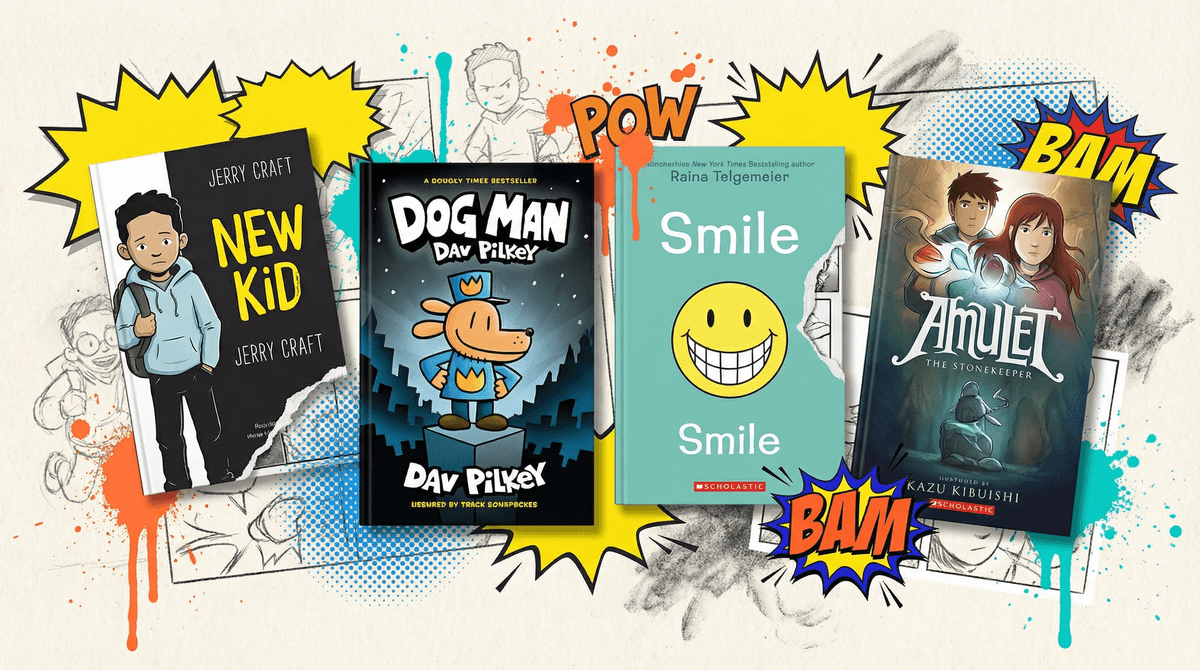
Comics are typically shorter, serialized stories (think Dog Man or Big Nate). Graphic novels are longer, complete stories in one volume (like Smile by Raina Telgemeier or Amulet). But honestly? The line is blurry and the distinction doesn't really matter for our purposes.
What matters is this: for a lot of kids who struggle with traditional chapter books, comics are the thing that finally clicks.
Here's what's happening when a kid reads a graphic novel:
They're reading A LOT. Yes, there are pictures, but there's also dialogue, narration, sound effects, and visual storytelling cues. Kids are processing multiple types of information simultaneously, which is actually a more complex cognitive task than reading straight prose.
Context clues are built in. When a kid encounters an unfamiliar word in a traditional book, they might skip it or get frustrated. In a comic, the illustration often provides immediate context. They can figure out what "anxious" means because they can see the character's facial expression and body language.
The pacing feels faster. Turning pages and seeing progress is motivating. A reluctant reader might look at a 200-page chapter book and feel defeated before they start. That same kid can finish a graphic novel in an afternoon and feel accomplished.
They're less intimidating. There's just more white space on the page. The text is broken up into manageable chunks. For kids with dyslexia, ADHD, or processing challenges, this format can be significantly easier to navigate.
Teachers and literacy experts have been saying this for years: graphic novels support reading development. They build vocabulary, comprehension, inference skills, and visual literacy. The American Library Association and the National Council of Teachers of English both recognize graphic novels as legitimate literature.
But honestly, you don't need academic studies to tell you what you can see with your own eyes. If your kid who "hated reading" is suddenly devouring The Baby-Sitters Club graphic novels or staying up past bedtime with a flashlight to finish Nathan Hale's Hazardous Tales, something is working.
Ages 5-8:
- Narwhal and Jelly by Ben Clanton (pure wholesomeness)
- Elephant & Piggie by Mo Willems (technically early readers, but perfect gateway)
- Hilda by Luke Pearson (also an excellent Netflix show)
Ages 8-12:
- Dog Man and Captain Underpants by Dav Pilkey (yes, they're silly, that's the point)
- Smile, Sisters, and Guts by Raina Telgemeier (emotional intelligence goldmines)
- New Kid by Jerry Craft (Newbery Medal winner, deals with race and identity thoughtfully)
- Amulet series by Kazu Kibuishi (epic fantasy adventure)
Ages 12+:
- Nimona by ND Stevenson (now also a Netflix movie)
- The Witch Boy by Molly Knox Ostertag (challenges gender norms in a fantasy setting)
- American Born Chinese by Gene Luen Yang (identity, culture, mythology)
This is the question that comes up constantly, and I get it. You're worried that if your kid only reads comics, they'll never develop the stamina for traditional novels.
Here's what actually happens: kids who read comics become readers. Period.
Some of them eventually transition to chapter books. Some of them become adults who read both graphic novels and traditional novels. Some of them stick primarily with comics and manga for life. All of these outcomes are fine.
The goal isn't to use comics as a stepping stone to "real reading." The goal is to help your kid discover that stories are amazing, that reading is enjoyable, and that books (in whatever format) can be a source of entertainment, comfort, and understanding.
If you want to encourage some variety, try:
- Books that mix formats, like Diary of a Wimpy Kid or Dork Diaries
- Graphic novel adaptations of chapter books, like Percy Jackson or Wings of Fire
- Let them read the graphic novel, then watch the movie/show adaptation, then see if they're curious about the original book
But don't force it. A kid who's reading comics is reading. Full stop.
If your kid is a reluctant reader, comics and graphic novels might be exactly what they need. Not as a compromise or a lesser option, but as legitimate, valuable literature that happens to work really well for a lot of young brains.
Visit your library (librarians are graphic novel evangelists and will load you up with recommendations), browse bookstore shelves together, or ask your kid's teacher what other kids are reading. Let your kid choose what looks interesting to them, even if it seems "too easy" or "too silly."
The best book for your kid is the one they'll actually read.
- Check out alternatives to traditional chapter books for more format options
- Curious about manga? Learn about age-appropriate manga series
- Want to balance screen time with reading time? Try these strategies for building reading habits
