

TL;DR
- The Problem: Apps are built using "Dark Patterns"—design choices that exploit human psychology to keep users engaged longer than they intended.
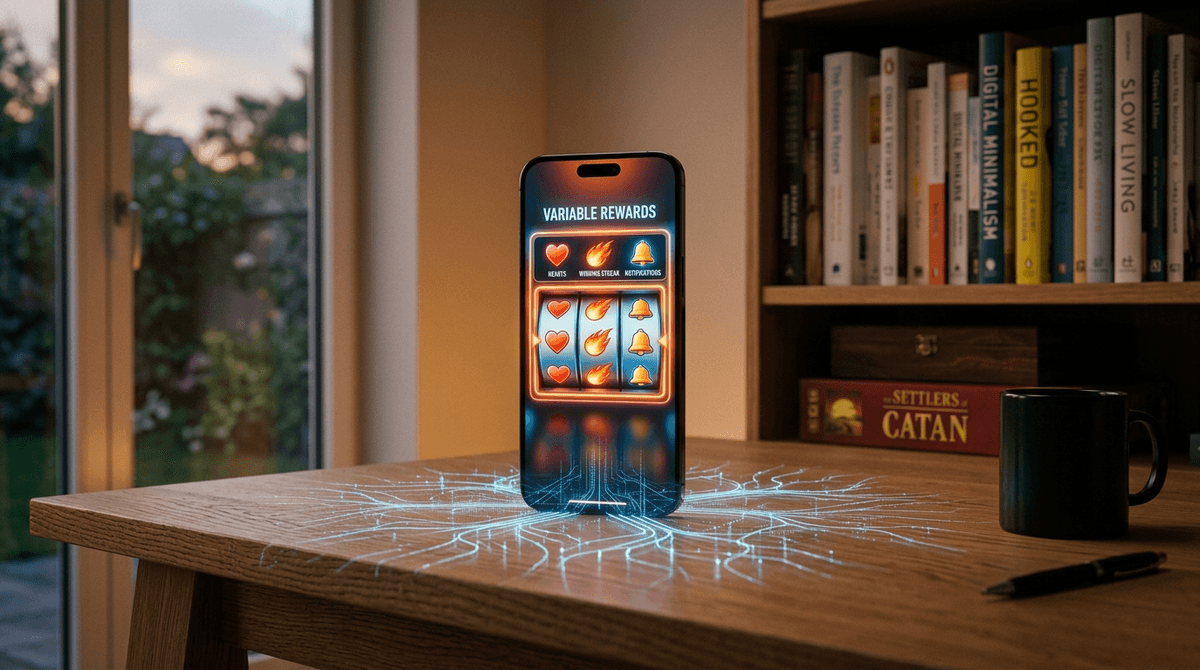
- The Biology: It’s all about dopamine. Apps use "variable rewards" (like a slot machine) to keep kids checking back.
- The Culprits: TikTok, Snapchat, and Roblox are the masters of this, but even "educational" apps like Duolingo use these tactics.
- The Fix: Move toward "linear" content (movies, books) or "creative" tech (coding, building) that has a natural stopping point.
- Quick Links: How to set up iPhone Screen Time, Understanding Roblox Robux, Best low-dopamine games for kids.
We’ve all been there. You tell your kid it’s time for dinner, and they look at you like you’ve just asked them to delete their entire digital existence. You see the glazed eyes, the frantic thumb-swiping, and the "just five more minutes" plea that inevitably turns into forty-five.
It’s easy to feel like a failure in these moments, or to think your kid just lacks self-control. But here’s the no-BS truth: Your kid isn't failing; they are being out-engineered.
On the other side of that screen are thousands of the world's smartest developers, psychologists, and data scientists whose entire job is to make sure your child does not put the phone down. They use "Dark Patterns"—design tricks that mess with our brain chemistry—to turn a quick check-in into a three-hour binge.
In the tech world, a "Dark Pattern" is a user interface designed specifically to trick or manipulate you into doing something you didn't intend to do—like spending money, giving up personal data, or staying on an app longer than you planned.
For kids, these patterns are particularly effective because their prefrontal cortex (the part of the brain responsible for impulse control) is still under construction. It’s like bringing a knife to a gunfight, except the knife is a 10-year-old’s willpower and the gun is a multi-billion dollar AI algorithm.
The Dopamine Loop (The Slot Machine Effect)
Ever wonder why TikTok is so much harder to quit than a regular TV show? It’s because of Variable Rewards.
When you watch a show like Bluey, you know what you’re getting. It’s predictable. But when a kid scrolls through YouTube Shorts, they don't know if the next video will be a hilarious Skibidi Toilet meme or something totally boring. That "maybe the next one is better" feeling is exactly how a slot machine works. Each "hit" of a good video releases a tiny squirt of dopamine in the brain. They keep scrolling to find the next hit.
The Infinite Scroll (The Bottomless Bowl)
Back in the day, when you finished a book or a magazine, you reached the end. Even Minecraft has a "The End" (sort of). But apps like Instagram and TikTok have no bottom.
Psychologists call this "removing stopping cues." If there’s no natural break, the brain stays in a flow state where time literally disappears. If your kid says they "only felt like five minutes passed" when it’s been an hour, they aren't lying. Their brain actually lost track.
Get tips on setting digital boundaries
Snapchat: The Stress of the "Streak"
If your middle schooler is obsessed with Snapchat, it’s likely because of Snapstreaks. A streak tracks how many consecutive days two people have messaged each other.
This isn't just a fun counter; it’s a psychological hostage situation. Kids feel an immense social pressure to keep the streak alive. If they go on vacation or get their phone taken away, they feel like they are failing their friends. It gamifies friendship in a way that creates genuine anxiety.
Roblox: The "Limited" Trap
Roblox is a masterclass in FOMO (Fear Of Missing Out). Many games within the platform use "limited time" items or pets (looking at you, Adopt Me!). If your kid doesn't log in today, they might miss the chance to get a "Legendary" neon pet. This creates a "daily check-in" habit that is incredibly hard to break.
Brawl Stars: Loot Boxes and "Near Misses"
Games like Brawl Stars or Genshin Impact use "Gacha" mechanics—essentially digital mystery bags. When a kid opens a box and almost gets the character they want, the brain reacts almost the same way as if they had won. This "near-miss" effect actually encourages them to try again immediately.
You’ve probably heard kids talking about "Ohio" or "Gyatt" or "Rizz"—half of which sounds like total gibberish. While every generation has its slang, the current "brain rot" content (rapid-fire, nonsensical, high-stimulation videos) is specifically designed to cater to a shortened attention span.
When a child’s brain is constantly fed high-dopamine, 15-second clips, "slower" activities like reading Percy Jackson or playing a Catan board game start to feel physically painful. Their baseline for boredom has been shifted.
We don't need to throw the iPads in the trash, but we can steer our kids toward media that respects their time and brain. Look for "Linear" content—things that have a beginning, a middle, and an end.
Stardew Valley (Ages 10+)
Instead of the frantic pace of Fortnite, Stardew Valley is a "cozy game" about farming. It has a day/night cycle that provides a natural "stopping cue." When the character goes to sleep for the night, it’s a perfect time for the kid to put the controller down.
Scratch (Ages 8-16)
If they love Roblox, try moving them to Scratch. It’s a coding platform where they are the creators, not just the consumers. It’s active brain work rather than passive scrolling.
The Mitchells vs. the Machines (Ages 7+)
This movie is a fantastic (and hilarious) look at family tech dynamics. It’s a great way to start a conversation about how much we rely on our devices without being preachy.
Wings of Fire (Ages 8-12)
If you're trying to reclaim their attention span, this book series is like "Game of Thrones" for kids (but appropriate). It has the high-stakes drama they crave from YouTube but requires the deep focus of reading.
- Ages 5-8: Focus on stopping cues. Use apps like PBS Kids that don't have ads or auto-play. Avoid "surprise egg" or "unboxing" videos on YouTube.
- Ages 9-12: Introduce the concept of persuasive design. Explain that the "red dot" notification is a trick to make them click. At this age, they love knowing when they're being "played" by adults.
- Ages 13+: Talk about the attention economy. Help them understand that their attention is the product being sold. Discuss the anxiety caused by Snapchat streaks.
Learn more about the effects of social media on teen mental health
Instead of saying, "You're addicted to that phone," try framing it as a "You vs. The Engineers" situation.
Try saying: "Hey, did you know that the people who made TikTok actually hired scientists to make sure you never want to stop scrolling? They use the same tricks as slot machines in Las Vegas. It’s pretty wild—they’re basically trying to hack your brain. Do you ever feel like you can't stop even when you want to?"
This shifts the blame from the child to the platform. It makes you an ally in helping them regain control, rather than an adversary trying to take away their fun.
The digital world is designed to be "sticky," and our kids' brains are the target. We can't expect them to have the willpower to resist these multi-billion dollar algorithms on their own.
Our job isn't to be perfect or to have a "no-screens" household (unless that's your vibe, no judgment here). Our job is to be intentional. By understanding the "why" behind the "one more minute," we can help our kids navigate these slot machines disguised as apps and get back to the things that actually matter.
Next Steps:
Take the Screenwise Survey to see how your family's habits compare to your community