

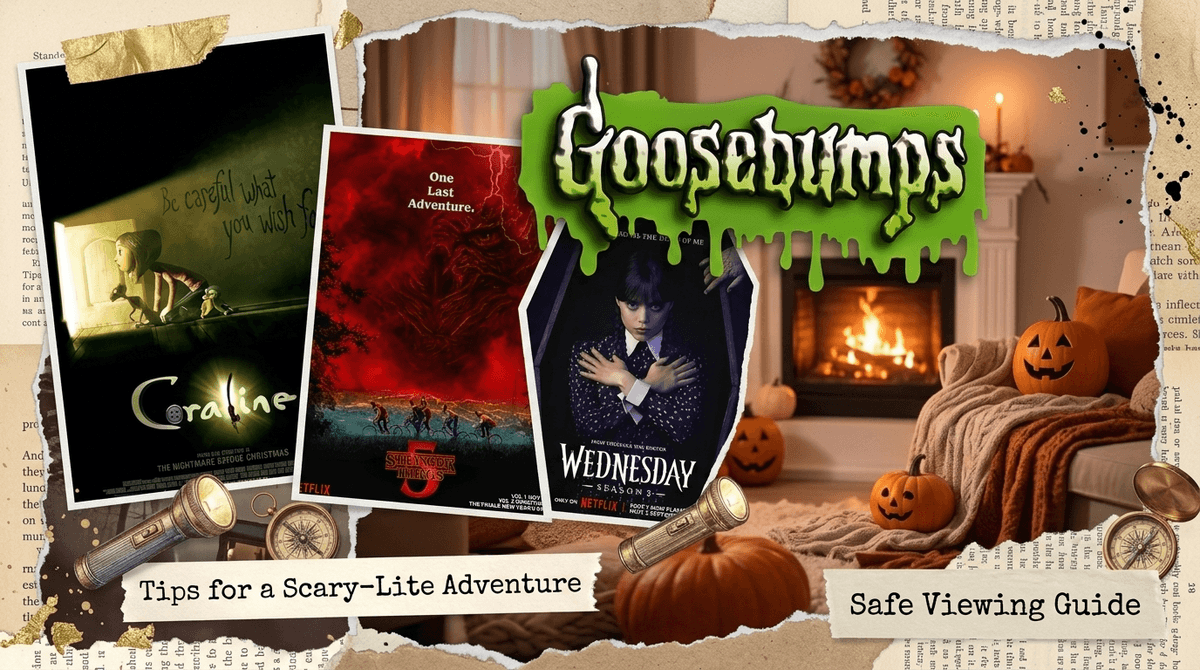
Spooky Season Without the Nightmares: Age-Appropriate Horror for Tweens
TL;DR: Your 10-year-old wants to participate in spooky season, but you're not ready for them to see actual horror. Here are the best gateway options that deliver thrills without trauma:
- Movies: Coraline, The House with a Clock in Its Walls, A Quiet Place (older tweens)
- Shows: Stranger Things (with caveats), Goosebumps, The Spiderwick Chronicles
- Books: Scary Stories to Tell in the Dark, Small Spaces by Katherine Arden
October hits and suddenly your tween is begging to watch horror movies with their friends. Their classmates are talking about Five Nights at Freddy's, they've heard about The Conjuring, and they want in on the cultural moment. But you've seen what happens after they watch something too scary—the nightmares, the anxiety, the refusal to go upstairs alone for three weeks.
The good news? There's a whole category of "spooky but not scary" content that lets tweens participate in Halloween season without the psychological aftermath. The trick is finding that sweet spot between Disney Junior and actual horror.
Real talk: tween horror is more about atmosphere and suspense than gore or jump scares. Think creepy rather than terrifying. Mysterious rather than graphic. The best tween horror:
- Builds tension slowly instead of relying on jump scares
- Has fantastical threats (monsters, ghosts, magic) rather than realistic violence
- Empowers kid protagonists who solve the mystery or defeat the threat
- Balances scary with humor or heart so it's not relentlessly dark
- Knows when to pull back on the truly disturbing stuff
The goal is to give kids that adrenaline rush of being scared in a safe environment—not to traumatize them or trigger genuine anxiety.
Ages 10+ | Animated, PG
This is the gold standard for tween horror. It's genuinely creepy (those button eyes!), but it's stop-motion animation which creates just enough distance. The Other Mother is legitimately menacing, but Coraline is brave and resourceful. Fair warning: some sensitive 10-year-olds might find this too intense, but most tweens eat it up. The visuals are stunning, the story is compelling, and it respects kids' ability to handle complex emotions.
Ages 9+ | PG
Jack Black and Cate Blanchett bring warmth to this story about a kid who discovers his uncle is a warlock. There are creepy moments (animated puppets, a ticking doomsday clock, some jump scares), but it's balanced with humor and heart. The scary parts feel contained and manageable, and the protagonist learns to be brave. This is a great starter horror movie for younger tweens.
Ages 12+ | PG-13
This is for your older, more mature tweens. It's intense—a family must stay silent to avoid blind monsters that hunt by sound. But here's why it works: the violence is mostly implied rather than shown, the family dynamics are beautiful, and the suspense is more about "will they stay quiet?" than graphic horror. That said, there are some genuinely scary moments and the opening scene is emotionally devastating. Watch it yourself first and know your kid.
Ages 8+ | PG
These are Halloween classics for a reason—they're spooky-lite. The Sanderson Sisters are campy villains, there's some mild peril, but it's all wrapped in comedy and nostalgia. Perfect for families with a wide age range who want something seasonal but not scary.
Ghostbusters (Original & Afterlife)
Ages 10+ | PG
The original 1984 film has some surprisingly creepy moments (that library ghost!), but it's mostly adventure-comedy. Ghostbusters: Afterlife is more modern and leans slightly scarier, but both prioritize humor and heart over genuine horror.
Ages 10+ | PG
A house that's literally alive and eating people? Sounds terrifying, but the animation style and kid protagonists make it manageable. There are some genuinely tense moments, but it's ultimately about kids being brave and clever. The motion-capture animation can be a bit uncanny valley, which some kids find creepier than the actual plot.
Ages 11+ | PG (but would be PG-13 today)
This 1984 classic is surprisingly dark for a PG rating—there's creature violence, some scary imagery, and the gremlins are genuinely menacing. But it's also campy 80s fun with practical effects that feel less realistic than modern CGI. Know your kid's tolerance before diving in.
Ages 12+ | TV-14
This is the show every tween wants to watch, and honestly? Seasons 1-2 are manageable for most 12+ kids who can handle suspense. The Upside Down is creepy, the Demogorgon is scary, but the core of the show is kids being brave and loyal. However: the violence and intensity ramp up significantly in later seasons, and there's some language and mature themes. This is a "watch together and discuss" show, not a "let them binge alone" situation. Learn more about navigating Stranger Things with tweens .
.
Goosebumps (2023 Disney+ series)
Ages 10+ | TV-PG
The new series is a fresh take on R.L. Stine's books, with better production values and more diverse characters than the 90s version. Each episode has self-contained scares that resolve by the end, which helps anxious kids process what they've seen. The scares are real but never gratuitous.
The Spiderwick Chronicles (Roku series)
Ages 10+ | TV-PG
Based on the beloved books, this series has fantasy creatures, family mystery, and some genuinely creepy moments. The goblins and ogres are menacing, but the focus is on siblings working together to protect their family. It's more dark fantasy than horror, which makes it perfect for tweens who want spooky without nightmares.
Ages 12+ | TV-14
Wednesday Addams at boarding school, solving a murder mystery. The aesthetic is deliciously dark, there's a monster, and some violence, but it's more gothic mystery than horror. The bigger concerns are some sexual content and mature themes that make this better for older tweens. Wednesday herself is an icon of deadpan humor and unapologetic weirdness.
Are You Afraid of the Dark? (Original & Reboot)
Ages 9+ | TV-PG
The anthology format means each episode is a self-contained scary story told around a campfire. Some episodes are genuinely creepy (that pool monster!), but knowing it ends in 22 minutes helps. The 90s original has nostalgic charm; the 2019 reboot has better effects but similar vibes.
Books are brilliant for tween horror because kids can control the pace. They can slow down during scary parts, skip ahead if it's too much, or put it down and come back later. Plus, reading scary content engages different parts of the brain than watching it—kids create the scary images themselves, which means they're naturally calibrated to their own tolerance level.
Ages 10+
The classic. Stephen Gammell's illustrations are legitimately nightmare fuel (seriously, that woman with the spider eggs in her face), but the stories themselves are short folklore and urban legends. Kids can read one story at a time, and the brevity means nothing overstays its welcome. These have been scaring kids for 40+ years for good reason.
Ages 9-12
A girl finds a mysterious book that warns her to "avoid large places at night, keep to small." When her class trip goes wrong, she and her classmates must survive the night while being hunted by creepy scarecrows. It's atmospheric and genuinely spooky, but the protagonists are smart and brave. The whole series (including Dead Voices and Dark Waters) maintains this perfect tween horror balance.
Ages 8-12
There are 200+ of these books, which means you can find the right level for your kid. Some are silly (the evil dummy), some are creepier (the haunted mask), but they're all designed to thrill without traumatizing. They're also quick reads, which is great for reluctant readers who want to feel accomplished.
Ages 10+
The book that inspired the movie is even creepier because your kid's imagination fills in the details. Gaiman is a master at unsettling imagery that stays just this side of too much. The Other Mother is terrifying, but Coraline's bravery is inspiring.
Ages 9-12
Three friends go on an adventure to bury a haunted doll. It's creepy and atmospheric, but it's also about growing up and the end of childhood. Holly Black is excellent at blending the supernatural with real emotional stakes.
Ages 8-10: Stick with clearly fantastical threats (witches, monsters, magic), humor mixed with scares, and stories where kids are empowered. Good options: Hocus Pocus, The House with a Clock in Its Walls, Goosebumps books.
Ages 11-12: They can handle more suspense, some jump scares, and darker themes as long as there's not graphic violence. Good options: Coraline, Stranger Things (early seasons), Small Spaces.
Ages 13+: Older tweens can handle more intense content, but watch out for graphic violence, sexual content, and truly disturbing imagery. A Quiet Place and Wednesday work here, but still watch together when possible.
Know your kid: Some 10-year-olds can handle Stranger Things; some 13-year-olds still have nightmares from Coraline. Anxiety levels, sensitivity to visual imagery, and previous exposure all matter more than age.
Let's be clear about what's NOT tween-appropriate, no matter how much they beg:
Five Nights at Freddy's: The game is everywhere, and the movie is PG-13, but it's got sustained tension and some genuinely scary imagery. Maybe for mature 13+, but younger tweens should wait.
The Conjuring/Insidious/Sinister universe: These are actual horror movies with demonic possession, graphic scares, and disturbing imagery. Hard pass for tweens.
It (either version): Pennywise is iconic, but the child murders, graphic violence, and truly disturbing imagery make this inappropriate for anyone under 15-16. Don't let the "but it has kids in it!" argument win.
Squid Game: Not horror per se, but tweens are obsessed and it's absolutely not appropriate. Graphic violence, disturbing themes, and mature content throughout. Read more about why Squid Game is problematic for tweens.
Co-viewing is your friend: Watch new content together, especially for first-time scary movie experiences. You can gauge their reactions, pause to discuss, and provide reassurance in real-time.
Daytime viewing: Watching scary content during the day reduces the likelihood of nightmares. Save the truly spooky stuff for Saturday afternoon, not right before bed.
Talk about the craft: Discuss how movies create scares—music, lighting, camera angles. Understanding the mechanics can reduce anxiety and increase appreciation for the art form.
Have an exit strategy: Agree beforehand that anyone can call for a pause or stop without judgment. "This is too much" should always be respected.
Follow up: Check in later that day and before bed. "Are you still thinking about that scene?" opens the door for processing.
Balance with humor: Follow a scary movie with something light and funny. The Great British Baking Show is the perfect palate cleanser.
Tween horror is a legitimate genre that serves an important developmental purpose—it lets kids practice being scared in a safe environment, builds resilience, and creates shared cultural experiences. The key is finding content that delivers thrills without trauma.
Start with the clearly fantastical (Coraline, Hocus Pocus), move to suspenseful but not graphic (The House with a Clock in Its Walls), and only graduate to more intense content (A Quiet Place, Stranger Things) when your tween is ready.
And remember: if they have nightmares, it doesn't mean you failed. It means you're helping them expand their comfort zone, and sometimes that's messy. Just maybe keep the nightlight handy.
Explore more age-appropriate Halloween content | Find alternatives to popular horror games