

TL;DR
- The Problem: Headsets create an "invisible room" where you can’t hear the toxic "trash talk," grooming attempts, or brain-rot memes (yes, more Skibidi) entering your kid’s ears.
- Hearing Safety: Stick to the 85dB limit. Permanent hearing loss is real and rising among teens.
- The Tech: If they are under 12, look for volume-limiting hardware like Puro Sound Labs.
- The Platforms: Discord is the primary hub for communication, but Roblox and Fortnite have built-in voice chat that is notoriously hard to moderate.
- Quick Links: How to set up Discord safety, Guide to Roblox voice chat, Best headsets for kids.
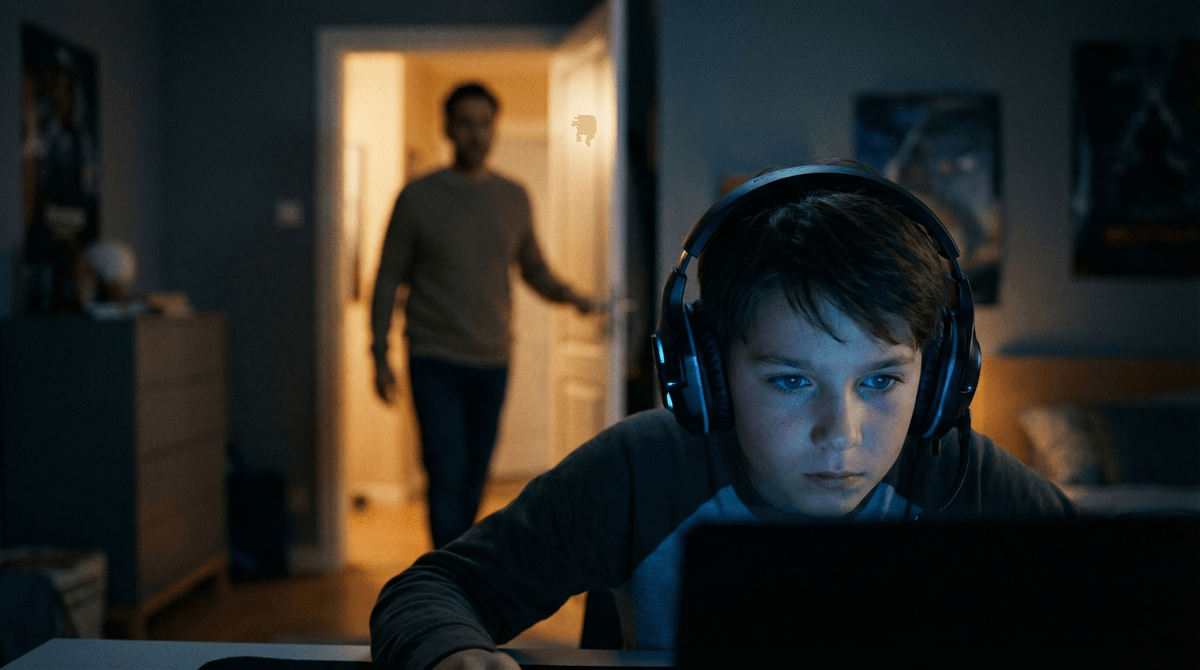
We’ve all been there: you walk past your kid’s room and they’re staring intensely at a screen, wearing a massive pair of glowing headphones, and shouting "That’s so Ohio!" or "Lrizz!" at a plastic microphone. To you, the room is quiet (aside from the shouting). To them, they are in a high-stakes, high-noise social environment.
The gaming headset is the final frontier of parental supervision. When your kid watches a show on the iPad, you can usually hear the dialogue. When they play Minecraft on the TV, you know what’s happening. But the moment those earcups go on, the communication becomes invisible. You are no longer privy to the "trash talk," the potential bullying, or the random 25-year-old in a Call of Duty lobby explaining why your kid "sucks at life."
It’s not just about what they’re saying; it’s about what’s being said to them. In 2026, online gaming isn't just a hobby; it’s the primary "third place" where kids hang out. And like any playground, it needs some fences.
Before we even get to the "stranger danger" stuff, let’s talk about the actual physical health of your kid’s ears.
The World Health Organization and audiologists generally agree that 85 decibels (dB) is the "safe" threshold for extended listening. For context, many gaming headsets can pump out 100dB or more. That is the equivalent of standing next to a lawnmower inside your ear canal.
Kids love to crank the volume because it helps them hear footsteps in Valorant or Fortnite. But their ears are more sensitive than ours, and Noise-Induced Hearing Loss (NIHL) is cumulative. Once those hair cells in the inner ear are dead, they don't come back.
The No-BS Advice: If your kid is under 12, do not trust them to "keep it down." They won't. You need hardware-level volume limiting. Check out our guide on the best volume-limiting headsets
In 2026, kids aren't just using the built-in chat of the games they play. They are layering multiple communication apps on top of each other.
This is the big one. Even if they are playing Among Us or Roblox, they are likely sitting in a Discord "voice channel" with their friends.
- The Good: It allows for private groups and high-quality audio.
- The Bad: It is a playground for "raiding" (where strangers flood a server with bad content) and has very little automated moderation for voice chat.
- The 2025 Reality: Discord is now integrated directly into PlayStation 5 and Xbox Series X, making it easier than ever for kids to bypass console-level parental controls.
Roblox introduced "Spatial Voice," which means if your character stands next to another character, you can hear that person talking. It’s meant to feel immersive, but it’s often just a place for older kids to bypass text filters by screaming profanities. Roblox claims to moderate this with AI, but let’s be real: the AI is losing the battle.
Fortnite and Overwatch 2
These games rely heavily on team coordination. If your kid is playing "Ranked" or "Competitive" modes, they will feel immense social pressure to be on mic. This is where the most toxic "trash talk" happens.
We have to talk about this because it’s becoming a huge trend. Kids are now using desktop apps that use AI to change their voices in real-time.
- The "Funny" Use: Sounding like SpongeBob or a popular YouTuber like MrBeast.
- The Risky Use: A 10-year-old can sound like a 25-year-old man, or vice versa. This makes "vibe-checking" who your kid is talking to almost impossible by sound alone. It also makes it easier for predators to mask their identity.
If you’re going to buy a headset, don’t just grab the cheapest one at Target. You’re looking for two things: Volume Limiting and Mic Quality (so they don't have to scream to be heard).
These are the gold standard for younger kids (Ages 6-12). They have a hard limit at 85dB, active noise cancelling (so they don't feel the need to turn it up to drown out the vacuum), and a decent mic. It’s a bit pricey, but cheaper than a hearing aid in ten years.
For teens (Ages 13+), these are great because they allow for "Dual Wireless." This means they can be connected to their PlayStation and their phone at the same time.
- Parent Hack: If they are on a "Discord probation," you can have them stream their phone audio to a speaker while they use the headset for game sound, so you can hear the "invisible room."
A great budget option for elementary-aged kids. They are sturdy, volume-limited, and don't look like "baby" headphones, which matters once they hit 3rd grade and start caring about their "aura."
- Ages 6-9: No headsets with microphones. If they are playing Minecraft or Roblox, keep the audio on the main speakers. They don't need to be talking to anyone online yet.
- Ages 10-12: Headsets allowed for "Friends Only" chat. This is the time for the Puro Sound Labs volume-limited sets. Strict "one ear out" policy so they stay grounded in the physical room.
- Ages 13+: Transition to standard headsets but with a "no Discord in the bedroom" rule. Use the SteelSeries or Razer brands they see on Twitch, but keep the conversation open about toxicity.
We need to have a real conversation about "trash talk." In gaming culture, a certain amount of competitive ribbing is expected. It’s the digital version of bench-clearing bickering in Little League.
However, there is a massive difference between "You're bad at this game" and "I'm going to find where you live."
How to Talk About It: Don't be the fun police. If you hear them get heated, don't just snatch the headset. Ask: "Is that person actually your friend, or are they just someone making the game less fun?"
Teach them the "Mute and Move On" rule. The most powerful tool in any game like Fortnite or Call of Duty isn't the legendary scar; it’s the mute button. If someone is being a "toxic NPC," mute them immediately. No debate, no comeback.
Gaming headsets aren't just accessories; they are gateways. They provide the immersion that makes gaming a wonderful, creative escape, but they also pull the curtain down on a child's social interactions.
Your job isn't to stand over their shoulder with a clipboard. It’s to ensure the hardware protects their physical hearing and the "software" (their brain) is equipped to handle the noise of the internet.
Next Steps:
- Check the settings: Go into Roblox or Fortnite and set voice chat to "Friends Only."
- Test the volume: Put the headset on yourself. If it’s painful or uncomfortably loud at 50% volume, it’s too loud for them.
- The "Open Ear" Policy: For younger kids, require them to keep one earcup off. It prevents that "zombie stare" and keeps them aware of their own volume (and your voice).
Find headset recommendations based on your kid's favorite games