

Look, we need to talk about something that might sound a bit cheesy at first: games that actually teach kids to be kind. Not in a "share your toys or else" lecture way, but through gameplay that genuinely rewards cooperation, empathy, and helping others.
These aren't your typical "defeat the bad guy" games. Instead, they're built around mechanics where success comes from understanding others, working together, or making the world (even a virtual one) a little better. Think less "destroy everything" and more "restore everything."
And here's the thing—they're actually fun. Kids aren't playing them because they're "educational." They're playing because the games are engaging, beautiful, and honestly? Kind of a relief from the constant combat and competition that dominates so much of gaming.
We're raising kids in a digital world where so much content rewards aggression, dominance, and individual achievement above all else. There's nothing inherently wrong with competitive games—but when that's the only model kids see, we're missing something important.
Games about kindness offer a different framework. They show kids that:
- Helping others can be the actual objective, not just a side quest
- Cooperation often gets you further than competition
- Understanding someone else's perspective is a skill you can practice
- Restoration and creation can be just as engaging as destruction
The research on this is pretty clear: kids who engage with prosocial games show increased empathy and helping behaviors. Not in some magical overnight way, but as part of a broader pattern of what they're consuming and how they're spending their time.
Let me break down some standout options across different ages and platforms:
For Younger Kids (Ages 5-8)
Toca Life World is basically a digital dollhouse where kids create stories and scenarios. There's no winning or losing—just imagination and narrative building. Kids naturally gravitate toward creating communities and relationships.
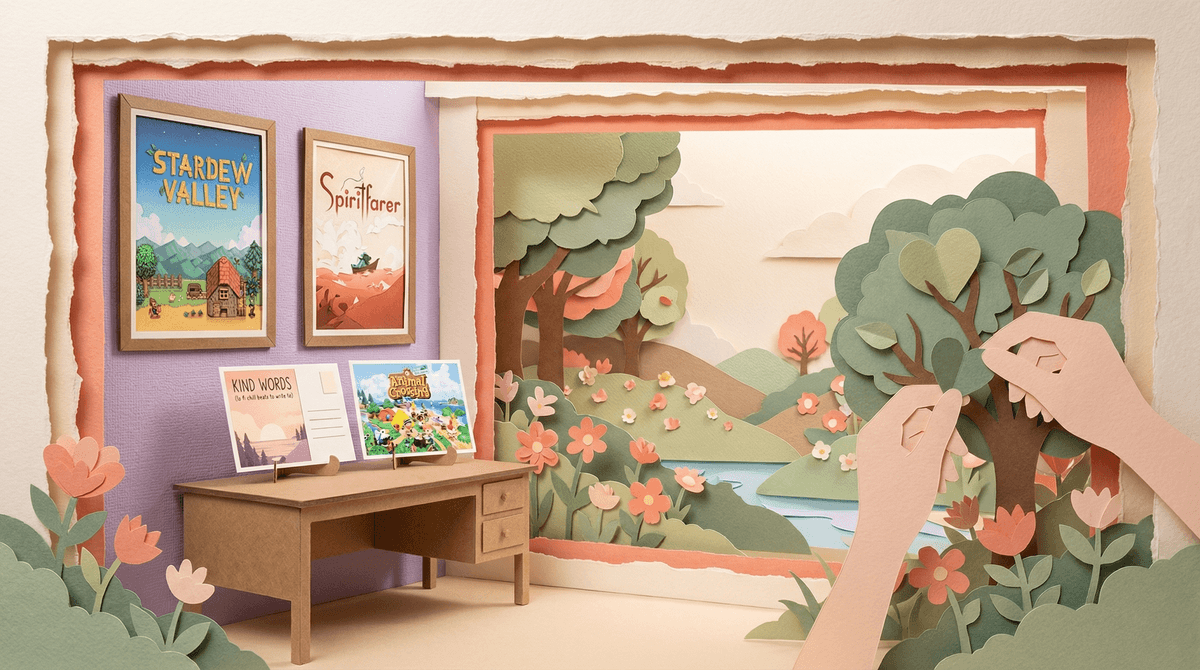
Animal Crossing: New Horizons (Switch) is the gold standard here. You're building a community, helping animal neighbors, and creating a beautiful island. The whole vibe is chill, cooperative, and centered around making others happy. Yes, your kid will spend 20 minutes deciding where to place a flower garden. This is a feature, not a bug.
Kind Words (PC, ages 8+) is beautifully simple: you write and receive anonymous letters to/from real people who need encouragement. It's moderated, it's safe, and it's genuinely moving. Kids learn that their words can matter to strangers.
For Middle Grades (Ages 9-12)
Spiritfarer is about helping spirits transition to the afterlife. It deals with death and loss in the most gentle, beautiful way imaginable. You're literally caring for others as your main gameplay loop—cooking for them, building them homes, listening to their stories. Fair warning: you might cry. Your kid might cry. It's okay.
A Monster's Expedition is a puzzle game about a cute monster exploring human artifacts with genuine curiosity and kindness. The whole tone is thoughtful and contemplative.
Unpacking tells a story entirely through unpacking boxes and arranging belongings across different life stages. It's meditative, empathetic, and teaches kids to notice the small details that tell someone's story.
For Teens (Ages 13+)
Gris is a platformer about processing grief and trauma through a watercolor world. There's no dialogue, no combat, no death—just a journey through difficult emotions that's absolutely stunning.
Celeste combines challenging platforming with a story about anxiety, depression, and self-compassion. The game literally teaches you to be kind to yourself when you fail (and you will fail—it's hard). The message is powerful: keep trying, be patient with yourself, ask for help.
Stardew Valley lets teens build a farm, yes, but more importantly build relationships with townspeople, help the community, and create something beautiful from scratch. It's become a cultural phenomenon because it offers something genuinely different from most games.
These games are slower. If your kid is used to the dopamine hit of Fortnite or fast-paced action games, kindness games might feel "boring" at first. That's actually kind of the point—they're teaching a different kind of engagement.
The lessons are subtle. Nobody's going to announce "KINDNESS ACHIEVED!" Your kid is learning through doing, through the game mechanics themselves rewarding prosocial behavior.
They work best as part of a balanced media diet. I'm not suggesting you ban all competitive games. But adding some kindness-focused games into the rotation creates variety and models different ways of engaging with challenges.
Multiplayer matters. Games like It Takes Two require cooperation between two players—perfect for siblings or parent-child gaming. You literally cannot progress without working together and communicating.
Some deal with heavy topics. Games like Spiritfarer and Gris tackle grief, loss, and mental health. This isn't a bad thing, but you might want to play alongside your kid or be available to talk about what comes up.
Games about kindness aren't going to single-handedly raise empathetic humans—that's still your job, sorry. But they can be a meaningful part of how kids practice emotional skills, learn cooperation, and experience narratives where helping others is the whole point.
The best part? These games are often the ones kids remember years later. Not because they were the most exciting or had the best graphics, but because they felt something real while playing them.
Start with one that matches your kid's age and interests. Play it with them if you can. And watch what happens when they realize that sometimes, the most satisfying victory is making someone else's day a little better.
Next Steps:
- Check out our guide on cooperative games for families for more multiplayer options
- Curious about the research behind prosocial gaming? Learn more about how games can build empathy
- Need help balancing different types of games in your house? Explore strategies for creating a varied gaming diet