

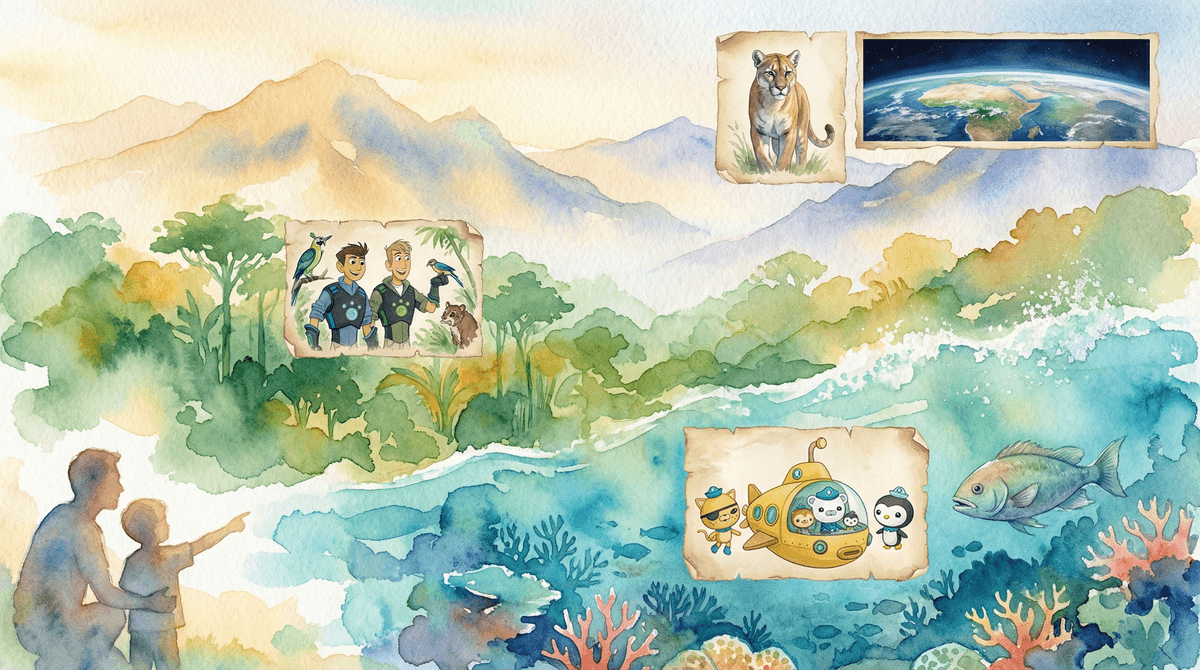
Environmental TV shows for kids run the gamut from "look at this cute penguin waddle!" to "here's exactly how many years we have left before coastal cities are underwater." And that range? That's actually the whole challenge.
We're talking nature documentaries, climate-focused series, wildlife shows, and eco-adventure content designed to help kids understand and appreciate the natural world. Think Our Planet on Netflix, Octonauts for the little ones, or A Life on Our Planet with David Attenborough.
The best environmental content walks a tightrope: building genuine connection to nature and awareness of real problems, without tipping kids into paralyzing anxiety about a future they can't control.
Here's the thing: we want kids to care about the planet. We want them to understand that climate change is real, that ecosystems are interconnected, that human choices have consequences. But we also don't want to steal their childhood or convince them the world is ending before they've even hit middle school.
Research shows that eco-anxiety is real and rising, especially among tweens and teens. A 2021 survey found that 59% of young people were "very worried" about climate change, and many felt betrayed, anxious, and powerless. That's not just concern—that's mental health territory.
But here's the flip side: connection to nature is protective. Kids who spend time outdoors and develop relationships with the natural world tend to be more resilient, more hopeful, and more likely to take meaningful action rather than spiraling into despair.
So the question isn't "should we show kids environmental content?" It's "which content, at what age, and with what kind of support?"
Ages 3-6: Wonder First, Problems Later
For preschoolers and early elementary, stick with pure wonder. This is the age for falling in love with animals, not learning about extinction rates.
Great picks:
- Octonauts - Underwater adventures with zero doom
- Bluey: Camping - That episode about nature connection is chef's kiss
- Puffin Rock - Gentle Irish island wildlife content
- If I Were an Animal - Playful BBC show about animal abilities
At this age, environmental education is just "wow, look at that." No conservation lectures needed.
Ages 7-10: Introduce Stewardship (Gently)
Elementary schoolers can start to understand that nature needs protection, but they still need agency and hope baked into the message. Look for content that shows problems and solutions, especially kid-sized solutions.
Solid choices:
- Wild Kratts - Adventure plus animal facts, light conservation themes
- Planet Earth III - Stunning visuals, some habitat loss discussion but not overwhelming
- Jane - Documentary about Jane Goodall that emphasizes one person making a difference
- Our Planet - With caveats: Some episodes are intense (walrus cliff scene, anyone?). Preview first and maybe skip certain segments.
Watch out for: Content that dwells on destruction without showing solutions or action steps. If your kid finishes a show feeling helpless rather than inspired, that's a red flag.
Ages 11+: Real Talk, Real Solutions
Tweens and teens can handle—and deserve—honest information about climate change, habitat loss, and environmental challenges. But they still need context, nuance, and pathways to action.
Strong options:
- A Life on Our Planet - David Attenborough's witness statement that's sobering but ultimately hopeful
- Our Planet - Full series is appropriate now
- Chasing Coral - Reef bleaching doc that shows scientists taking action
- Breaking Boundaries - Climate science explained clearly
Critical addition: Pair documentary watching with discussion about what they can actually do. Join a cleanup, change a habit, write to representatives, support organizations. Action is the antidote to anxiety.
The "walrus scene" problem: Our Planet has an infamous scene where walruses, confused by habitat loss, fall off cliffs. It's devastating. It's real. And it's traumatized plenty of kids (and adults). Preview nature documentaries before family viewing, even ones with G ratings. "Nature" doesn't mean "gentle."
David Attenborough isn't neutral: His recent work has shifted from pure nature appreciation to explicit climate advocacy. That's not bad—he's earned the right to sound the alarm—but know that newer Attenborough content (A Life on Our Planet, later Planet Earth series) includes more direct environmental messaging than older stuff.
Balance screen-based nature with actual nature: The irony of learning about the outdoors from a TV screen isn't lost on anyone. Environmental shows work best when they inspire kids to go outside, not replace outdoor time. Use documentaries as a springboard: "We just watched about tide pools—want to visit one?"
Watch for eco-anxiety signs: If your kid starts having nightmares about climate change, expresses hopelessness about the future, or becomes obsessively worried about environmental issues, that's eco-anxiety. It's real, it's increasing, and it might mean scaling back the heavy content and focusing more on what they can control and contribute .
.
Environmental TV shows can be incredible tools for building empathy, scientific literacy, and environmental stewardship. But they're not all created equal, and age-appropriateness isn't just about violence or language—it's about emotional readiness and the presence of hope.
The formula that works: Wonder + awareness + agency. Show them the beauty, help them understand the challenges, and give them ways to contribute to solutions.
Start with awe. Let kids fall in love with the natural world before asking them to save it. A kid who thinks octopuses are cool at age 5 is more likely to care about ocean health at age 15 than a kid who was lectured about plastic pollution before they could spell "ecosystem."
Co-view when possible, especially with heavier content. Your presence helps process difficult information and prevents spiraling. Plus, these shows are genuinely gorgeous—you might actually enjoy them.
And remember: the goal isn't to raise perfect little environmentalists who never use a plastic straw. It's to raise humans who understand they're part of an interconnected world and believe they can make it better.
That's not too much screen time to ask for.
- Preview any nature documentary before showing younger kids—even the "family friendly" ones can have intense moments
- Create a family "action list" after watching environmental content: one thing you'll do this week, this month, this year
- Balance documentary viewing with actual outdoor time
- Check out alternatives to screens for nature learning when you need a break from BBC cinematography
- If eco-anxiety becomes an issue, here's how to talk about climate change with kids in age-appropriate ways