

Let's get real: when your kid asks for "just 30 more minutes" of gaming for the third time today, you're probably not thinking about cognitive benefits. You're thinking about whether you're raising a future basement-dweller who can't hold a conversation without a controller in their hands.
But here's the thing—and I promise I'm not here to gaslight you into thinking unlimited Fortnite is actually brain food—video games do have legitimate benefits. Not all games, not in unlimited quantities, and not as a replacement for, you know, actual life. But the research is pretty clear: gaming isn't the cognitive wasteland we were told it was.
The key word here is intentional. Just like how screen time isn't all created equal (an hour of Bluey hits different than an hour of YouTube unboxing videos), not all gaming is created equal either.
Researchers have been studying gaming for decades now, and the findings are surprisingly nuanced. Here's what holds up:
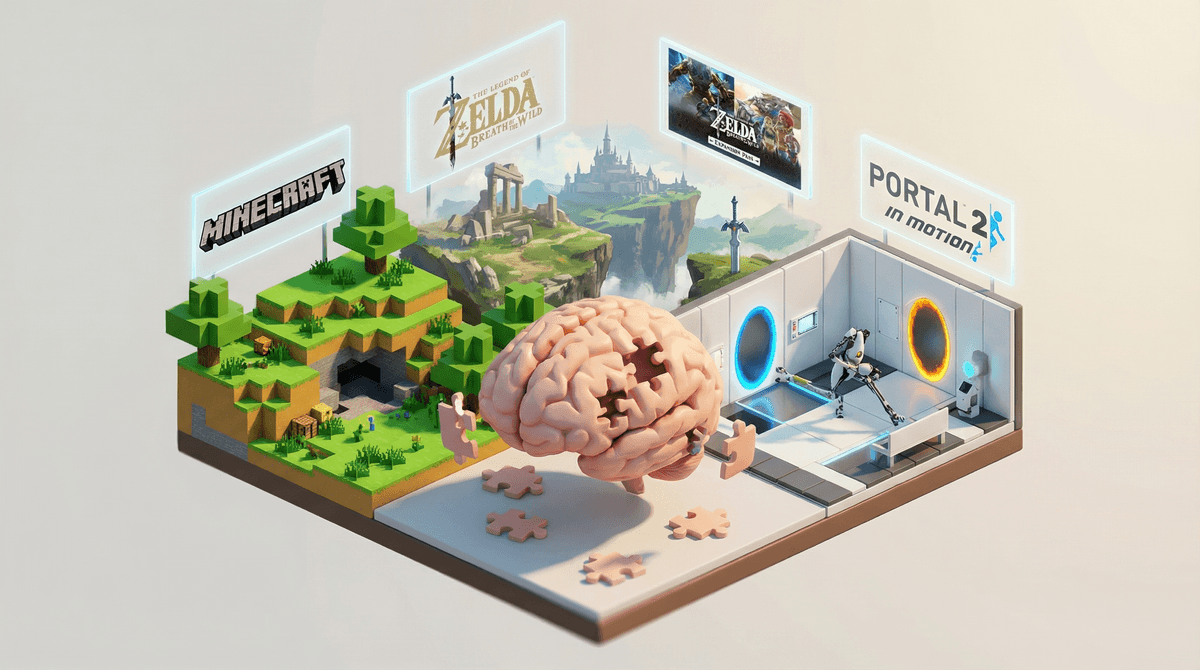
Problem-Solving and Critical Thinking: Games like Minecraft, Portal 2, and The Legend of Zelda: Breath of the Wild require players to experiment, fail, and iterate. That's basically the scientific method in disguise. Kids learn to break down complex problems, test hypotheses, and adapt strategies—skills that transfer to math homework and, eventually, actual jobs.
Spatial Reasoning: Action games and 3D platformers improve spatial awareness and mental rotation skills. Studies show gamers are better at tasks like reading maps, packing a car trunk efficiently (finally!), and even certain surgical procedures. Surgeons who game make fewer errors in laparoscopic procedures. Wild, right?
Social Skills (Yes, Really): This one surprises parents the most. Multiplayer games—especially cooperative ones like Overcooked, Among Us, or team-based modes in Rocket League—require communication, collaboration, and negotiation. Kids learn to work with strangers, resolve conflicts, and coordinate complex strategies. For shy or neurodivergent kids especially, gaming can be a lower-pressure way to practice social interaction.
Persistence and Resilience: Games are literally designed around failure. You die, you respawn, you try again. That's a powerful lesson in perseverance that many kids struggle to learn elsewhere. The feedback loop is immediate and the stakes are low—perfect conditions for building a growth mindset.
Reading and Literacy: Plot-heavy games like Stardew Valley, Undertale, or Pokémon involve tons of reading. Kids who claim to hate books will happily read thousands of words of dialogue to advance the story. It counts.
Before you hand over the iPad and call it educational:
Not all games are created equal. A puzzle game like The Witness exercises different skills than a gacha game designed to extract money through psychological manipulation. Check out what makes a game actually beneficial .
.
Benefits plateau. The cognitive gains from gaming max out at around 1-2 hours per day. After that, you're not getting additional benefits—just opportunity costs from not doing other things.
Context matters. Gaming solo in a dark room at 2am is different than gaming with family on a Saturday afternoon. The social and emotional context changes the experience entirely.
The business model matters. Free-to-play games with loot boxes and battle passes are designed to be psychologically addictive. That's not a bug, it's the business model. Roblox might teach entrepreneurship, but it also teaches kids that social status costs money.
Ages 5-8: Focus on games that teach basics—reading, counting, patterns. Animal Crossing, Kirby games, and LEGO games are solid. Co-play is huge here—you're there to help with reading and model healthy play.
Ages 8-12: This is prime time for problem-solving games. Minecraft, Zelda, Portal 2, and strategy games like Civilization. Social gaming starts to matter more—expect friend drama to spill over from Roblox or Fortnite.
Ages 12+: Teens can handle more complex narratives and moral choices. Games like The Last of Us, Hades, or Celeste can actually spark meaningful conversations about ethics, identity, and perseverance. Just maybe check the ESRB rating first.
Play together sometimes. You don't have to love it, but showing interest matters. Ask questions. Let them teach you. You'll learn what they're actually doing and they'll feel seen.
Talk about what they're learning. "How did you figure that puzzle out?" "What's your strategy for that boss fight?" Make the metacognition explicit.
Balance genres. If they're only playing competitive shooters, suggest a puzzle game or story-driven adventure. Variety exercises different cognitive muscles.
Set boundaries around the manipulative stuff. Battle passes, loot boxes, and daily login rewards are designed to create compulsion. Name it. Talk about how these mechanics work.
Use gaming as a bridge, not a destination. Love Minecraft? Great—now try redstone circuits, then actual coding. Into Pokémon? Cool—here's a book about game design or evolutionary biology.
Video games aren't vegetables, but they're not poison either. They're more like... pizza. Can be part of a balanced diet. Shouldn't be the only thing you eat. Quality matters a lot.
The benefits are real: problem-solving, spatial reasoning, social skills, persistence, even reading. But they're maximized when gaming is intentional, time-limited, and balanced with other activities.
Your job isn't to eliminate gaming or feel guilty about allowing it. Your job is to help your kid develop a healthy relationship with it—to enjoy gaming without it taking over their life, to recognize manipulative design, and to transfer those skills to the real world.
And honestly? That's the same job you have with food, money, relationships, and basically everything else in parenting. Gaming is just one more thing to figure out.
- Audit current games: Are they mostly exploitative free-to-play stuff or actually engaging experiences? Here's how to tell the difference.
- Try one co-play session: Pick a game your kid loves and genuinely engage for 20 minutes. Ask questions. You might be surprised.
- Explore alternatives: If you want gaming with more obvious benefits, check out educational games that don't suck or puzzle games for kids.
Gaming isn't going anywhere. Might as well figure out how to make it work for your family.