

How to Raise a Reader in the Age of Screens
Let's be honest: books are competing with literally the most addictive technology ever designed. TikTok has teams of PhDs optimizing how long your kid watches. Roblox has an entire economy built on keeping kids engaged. Even educational apps use the same dopamine-triggering mechanics as slot machines.
And here you are, trying to get your kid excited about... pages with words on them.
It's not a fair fight. But here's the thing: it's also not a fight you need to win through force. The goal isn't to ban screens and make reading the only option (that's just going to create resentment). The goal is to help kids discover that reading can be its own kind of magic—one that sticks with them for life.
Before we get into the how, let's talk about why this is worth the effort beyond "reading is good for you."
Kids who read for pleasure develop better emotional intelligence. They practice perspective-taking in a way that even the best shows don't quite replicate. They build attention spans that can handle complexity and delayed gratification. They develop internal worlds that aren't dependent on external stimulation.
Plus, and this is the part nobody talks about enough: readers have a built-in boredom solution for life. That's huge. Kids who love reading are never truly stuck—not on long car rides, not in waiting rooms, not during power outages, not when they're too old for their childhood toys but too young to drive.
Most kids don't hate reading. They hate:
- Being forced to read books that bore them
- Reading being positioned as homework or a chore
- The physical discomfort of struggling to decode text
- The comparison to screens that offer instant gratification
- Being told they "should" like books their friends find boring
If your kid says they hate reading, what they usually mean is: "The reading experiences I've had so far haven't been worth the effort."
That's fixable.
Ages 3-6: This is your golden window. Read aloud constantly. Make it cozy and special—not a bedtime stalling tactic, but an actual ritual. Let them see you reading for pleasure. Yes, even if it's on a Kindle. Yes, even if it's romance novels or fantasy or whatever. They need to see reading as something adults choose to do.
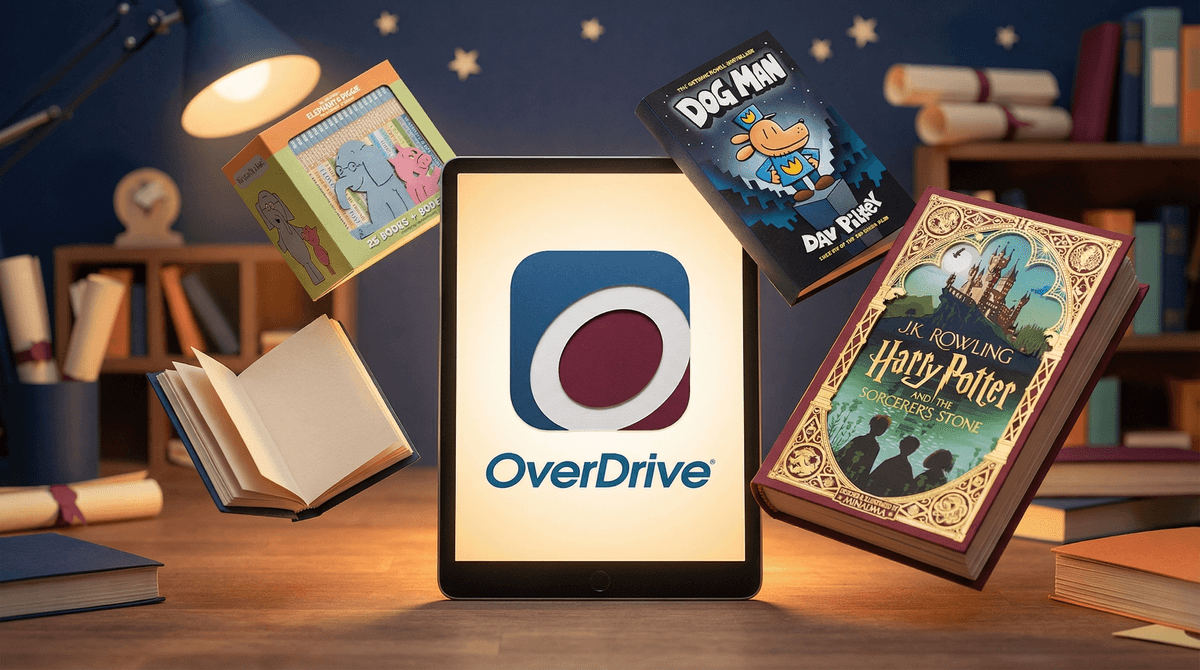
Good bets: Pete the Cat, Elephant & Piggie, anything by Mo Willems really.
Ages 7-9: This is where it gets tricky. They're learning to read, which means reading is HARD. It's cognitive work. Meanwhile, Bluey is right there, requiring zero effort.
The secret? Audiobooks and read-alouds of books above their reading level. Let them experience great stories without the decoding struggle. Harry Potter, Percy Jackson, Wings of Fire—these are gateway drugs. The goal is to make them desperate to know what happens next.
Also: graphic novels count. Dog Man, Amulet, Hilda—these are reading. Anyone who tells you otherwise is a snob.
Ages 10-13: They can read anything now, but they're also deep in social media, gaming, and YouTube. The competition is fierce.
Your job is to be a book matchmaker. Find books about what they're already obsessed with. Into Minecraft? There are Minecraft novels. Obsessed with soccer? There are books about that. Love true crime YouTube? I Survived series or A Good Girl's Guide to Murder.
Ages 14+: At this point, they're either readers or they're not. If they're not, you're playing the long game. Keep books around. Don't nag. Model reading. Mention books you loved at their age. Leave interesting books lying around. Sometimes a kid who "doesn't read" will pick up The Hunger Games or Six of Crows at 15 and suddenly they're a reader.
1. Make Books as Accessible as Screens
If your kid has to ask permission to download a book but can open YouTube whenever, you've already lost. Get a library card. Set up Libby. Give them a Kindle with one-click purchasing (with reasonable limits). Make books the path of least resistance.
2. Let Them Quit Books
The fastest way to kill reading joy is to force them to finish books they hate. Adult readers quit books all the time. Kids should too. You can learn more about why this matters here .
.
3. Read the Same Book
Not at the same time—just both read it. Then talk about it. This works especially well with older kids. "I'm reading the book everyone's talking about" is very different from "Mom says I should read this."
4. Protect Reading Time
This is the hard part. If reading only happens when there's nothing else to do, it'll never happen. Some families do "everyone reads for 20 minutes after dinner." Some do "no screens until you've read for 30 minutes." Some do "quiet time on Sunday afternoons where everyone picks their own activity" (and screens aren't an option).
Find what works, but make it structural, not aspirational.
5. Use Screens to Build Reading
Controversial take: screens can help create readers. Kids who love Avatar: The Last Airbender might love the Kyoshi novels. Kids obsessed with Stardew Valley might love cozy fantasy books. Kids who watch BookTok might actually want to read those books.
Meet them where they are.
6. Make It Social
Book clubs aren't just for wine moms. If your kid has friends who read, facilitate that. Group chats about books. Trading books. Reading the same series. Check out how to start a kids' book club.
❌ Bribing them to read. You're teaching them reading is work that deserves compensation, not pleasure.
❌ Only allowing "quality literature." Let them read "trash." Series books, books about YouTubers, novelizations of movies, whatever. Reading is reading.
❌ Making it a punishment alternative. "No screens, go read a book" teaches them books are the consolation prize.
❌ Comparing them to other kids. "Your sister read at your age" is a great way to make them hate both reading and their sister.
Your kid doesn't need to read for 2 hours a day. They don't need to only read classics. They don't need to read instead of screens.
They just need to discover that books can be as compelling as anything on a screen—and that takes the right book at the right time, plus enough space to let it happen.
Some kids are natural readers. Some kids need more support. Some kids won't become readers until they're adults, and that's okay too.
But if you want to stack the deck in favor of reading: make books accessible, let them choose what they read, protect time for it, and for the love of god, let them see you reading too.
- Get a library card if you don't have one (or dig yours out of your wallet and actually use it)
- Set up Libby or your library's digital app
- Ask your kid what they're interested in, then find books about that thing
- Read something yourself—not parenting books, something you actually want to read
- Explore age-appropriate book recommendations
The goal isn't perfection. It's just putting books in their path and hoping one of them sticks.