

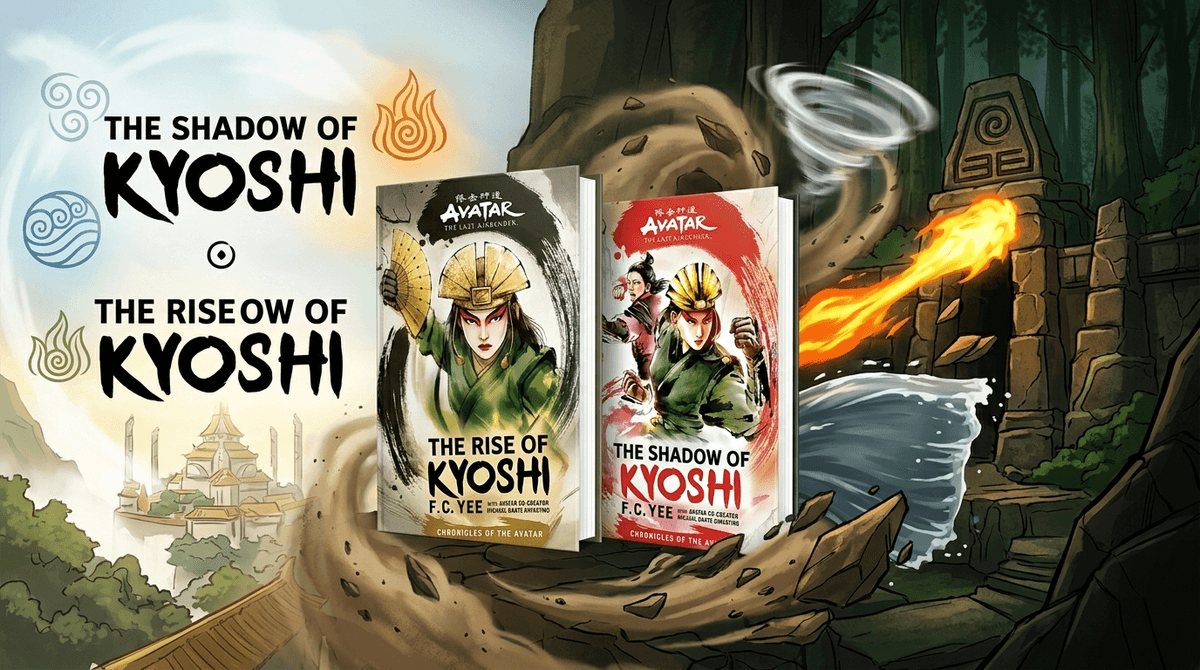
TL;DR
If your teen is obsessed with Avatar: The Last Airbender and wants more, the Kyoshi novels—The Rise of Kyoshi and The Shadow of Kyoshi—are the logical next step. But fair warning: these aren't the lighthearted "cabbage man" adventures you remember. They are gritty Young Adult (YA) novels featuring graphic violence, political assassinations, and complex moral dilemmas. Best for ages 13-14 and up.
Check out our full breakdown of the Avatar timeline
Ask our chatbot if your 11-year-old is ready for YA fantasy
The Kyoshi novels, written by F.C. Yee, are a duology that serves as an origin story for Avatar Kyoshi, the legendary (and famously ruthless) Earth Kingdom Avatar who lived centuries before Aang. While Avatar: The Last Airbender was a Nickeldeon show designed for a broad family audience, these books were written specifically for the YA market.
They follow Kyoshi from her humble, difficult beginnings as an abandoned child to her rise as a powerful, albeit reluctant, world leader. The series dives deep into the "Daofei" (outlaw) culture of the Avatar world, showing a side of this universe that is much darker, poorer, and more desperate than what we see in the animated series.
For kids who grew up with Aang or Korra, these books offer a "leveling up" of the lore. Kyoshi has always been a cult favorite because she’s the "Avatar who actually gets things done," often through force.
Teens are drawn to:
- The "Underdog" Story: Kyoshi isn't a natural prodigy; she struggles significantly with her bending and her identity.
- Moral Ambiguity: Unlike the clear-cut "Fire Nation is bad" dynamic of the original show, these books deal with internal corruption, class warfare, and the idea that sometimes there is no "perfect" choice.
- The Stakes: Because it’s a novel and not a TV-Y7 cartoon, the consequences of bending are shown with terrifying realism.
This first book introduces us to a world of crime syndicates and political betrayal. It’s significantly more violent than the shows. We’re talking about characters being buried alive, throats being slit, and bending being used to freeze people's internal organs. It’s visceral.
The book also explores Kyoshi’s identity. She is bisexual, and her primary romantic relationship is with her firebending bodyguard, Rangi. Their relationship is central to the plot, handled with great depth, and is widely praised for its representation.
The sequel ramps up the political intrigue. Kyoshi has to navigate the "Spirit World" in ways that feel much more haunting and dangerous than the colorful versions seen in The Legend of Korra. The body count remains high, and the emotional toll on the characters is heavy. It deals with themes of grief, the burden of leadership, and the reality of having to kill to maintain peace.
Learn more about LGBTQ+ representation in the Avatar universe
Most librarians and media critics tag these for ages 13 or 14+.
If you have a 10 or 11-year-old who is a voracious reader and has seen every episode of Avatar, they will likely beg for these. Whether they are "ready" depends on their sensitivity to descriptive violence. In the show, when someone gets hit by a rock, they fly backward and get back up. In these books, when someone gets hit by a rock, bones shatter and internal bleeding is described.
Comparison Guide:
- Avatar: The Last Airbender: Ages 7+ (Safe for almost everyone, light violence).
- The Legend of Korra: Ages 10+ (Darker themes, some onscreen deaths).
- The Kyoshi Novels: Ages 13+ (Graphic descriptions, complex politics, YA romance).
There isn't "safety" in the digital sense here—it's a book, no one is going to slide into their DMs—but there are heavy themes you might want to talk about:
- Justice vs. Vengeance: Kyoshi spends a lot of the first book seeking revenge. It’s a great opening to talk about the difference between holding someone accountable and just wanting to hurt them back.
- Class and Poverty: The books show a very stratified Earth Kingdom. It’s an opportunity to discuss how wealth and power influence who the "law" actually protects.
- The Cost of Power: Kyoshi hates being the Avatar for a long time because of the choices she has to make. You can talk about the "burden of leadership" in a way that feels real to a teenager.
If your teen finishes the Kyoshi books and is still hungry for more Earth Kingdom lore, the series continues with the Yangchen novels (the Air Nomad Avatar before Kyoshi) and the Roku novels.
- The Dawn of Yangchen: Focuses on espionage and political maneuvering.
- The Reckoning of Roku: The newest addition, exploring the early life of Aang's predecessor.
- Avatar: The Last Airbender Comics: If the novels are too heavy, the Dark Horse graphic novels bridge the gap between Aang and Korra and are much closer to the TV show's tone.
The Kyoshi novels are excellent pieces of literature that happen to be set in a "kids' show" universe. They are well-written, intense, and deeply moving. If your teen is a fan of The Hunger Games or Six of Crows, they will likely love these. Just don't hand them to your second-grader expecting a fun romp with Momo—you'll be dealing with some very intense questions about ancient Earth Kingdom execution methods by chapter three.
See our full list of the best YA books for 2026 Check out our guide on the Netflix live-action Avatar series