

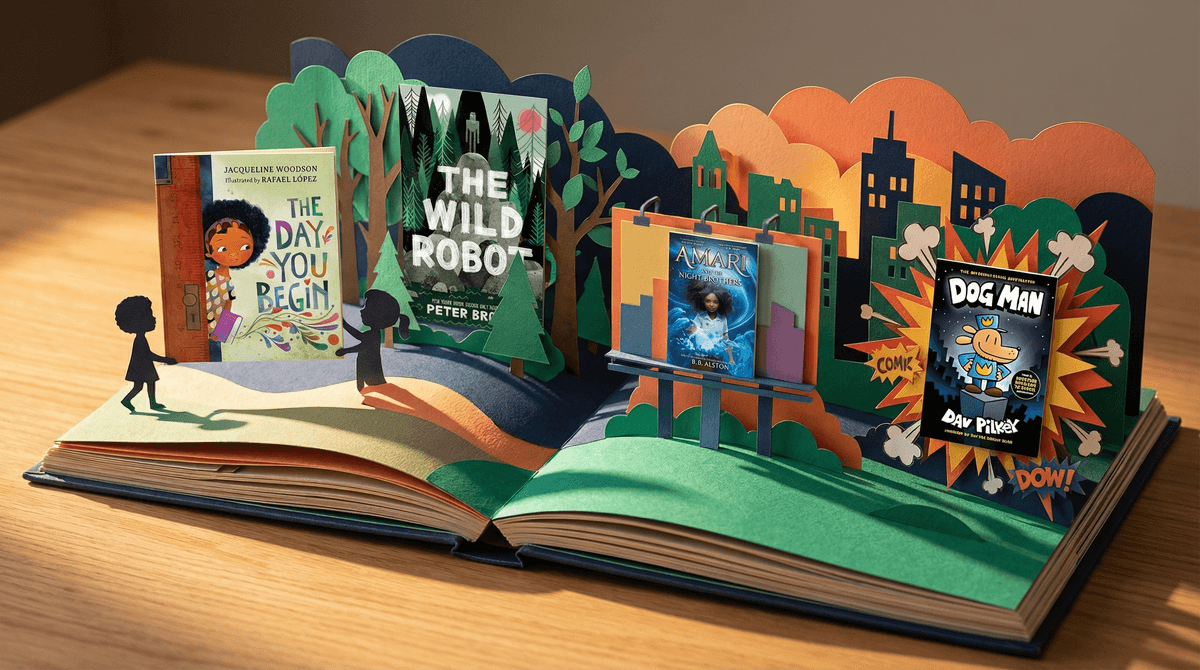
Look, I know we're supposed to be the generation helping our kids navigate screens wisely, but can we talk about how satisfying it is when they actually pick up a physical book? There's something deeply validating about seeing a kid so absorbed in a story that they don't hear you calling them for dinner.
This guide is a curated roundup of the best new picture books and novels that have recently hit shelves—the ones that are actually worth the hype, that kids are genuinely excited about, and that won't make you want to fake-lose the book after the third bedtime reading.
Whether you're looking for picture books that toddlers will demand on repeat, middle-grade novels that can compete with YouTube for attention, or YA books that tackle real issues without being preachy, this is your starting point.
Here's the thing: I'm not going to pretend that books are inherently superior to all screen content. Bluey teaches emotional intelligence better than most parenting books. Some YouTube channels are genuinely educational. Minecraft can teach problem-solving and creativity.
But books offer something unique:
- Sustained attention without algorithmic manipulation - No autoplay, no "next video" rabbit hole
- Imagination building - Kids create the visuals in their heads
- Vocabulary development - Written language is consistently richer than spoken dialogue
- A break from the attention economy - No one is trying to monetize your kid's eyeballs
Plus, reading before bed actually helps kids wind down, unlike screens which disrupt sleep patterns .
.
"The Rabbit Listened" by Cori Doerrfeld
This one's a few years old now but still making rounds because it's genuinely excellent. When a child's block tower gets destroyed, different animals offer different types of comfort—but the rabbit just listens. It's a beautiful lesson in emotional support that adults could frankly use too.
Why it works: Simple illustrations, profound message, doesn't talk down to kids.
"Hair Love" by Matthew A. Cherry
Based on the Oscar-winning short film, this picture book celebrates Black hair, father-daughter relationships, and the learning curve of parenting. A dad learns to style his daughter's natural hair for a special occasion.
Why it works: Representation matters, and this book shows it without making it the "lesson"—it's just a sweet family story.
"The Day You Begin" by Jacqueline Woodson
About feeling different and finding courage to share your story. Whether it's a different family structure, cultural background, or just feeling like the odd one out, this book validates those feelings.
Why it works: Woodson's prose is lyrical without being overwrought, and Rafael López's illustrations are stunning.
"Dragons Love Tacos" (series) by Adam Rubin
Okay, this is pure fun. Dragons love tacos but hate spicy salsa. That's basically the plot. Kids lose their minds over it.
Why it works: It's silly, it's repetitive (in the good way), and kids can "predict" what happens, which makes them feel smart.
"The Last Last-Day-of-Summer" by Lamar Giles
Two best friends discover their town has a secret—summer can loop endlessly if you know how to control it. It's got adventure, mystery, and actually clever plotting.
Why it works: Diverse protagonists, fast-paced enough to compete with screens, and the kind of friendship dynamics that feel real.
"New Kid" by Jerry Craft (Graphic Novel)
This won the Newbery Medal for good reason. Jordan navigates being one of the few kids of color at a prestigious private school, dealing with microaggressions, code-switching, and finding his people.
Why it works: It's a graphic novel (more accessible for reluctant readers), tackles real issues, and is genuinely funny. Kids who don't "look like readers" often connect with this format—check out alternatives to traditional novels if your kid is graphic-novel-curious.
"The Wild Robot" series by Peter Brown
A robot named Roz washes ashore on an island and must learn to survive in the wilderness. It's part survival story, part found-family narrative, part environmental tale.
Why it works: Appeals to kids who love technology AND nature. The themes about belonging and adaptation are surprisingly moving.
"Amari and the Night Brothers" by B.B. Alston
Amari discovers a secret supernatural organization while searching for her missing brother. Think: Black girl magic meets Men in Black meets Percy Jackson.
Why it works: Fast-paced, diverse cast, and the protagonist is a Black girl who's brilliant and powerful without it being her entire personality. If your kids loved Percy Jackson, they'll devour this.
"The Poet X" by Elizabeth Acevedo
Written entirely in verse, this follows Xiomara, a Dominican-American teen in Harlem who discovers slam poetry as her voice. It tackles religion, sexuality, family expectations, and identity.
Why it works: The verse format makes it accessible even for kids who find dense prose intimidating. Acevedo doesn't shy away from real issues but never feels exploitative.
"Cemetery Boys" by Aiden Thomas
A trans brujo (witch) tries to prove himself to his traditional Latinx family by summoning the ghost of his murdered cousin—but accidentally summons the wrong ghost.
Why it works: It's a paranormal romance with genuine LGBTQ+ representation where being trans is part of the character's identity but not the entire plot. Plus, it's actually romantic and fun.
"Clap When You Land" by Elizabeth Acevedo
Two girls discover they're half-sisters when their father dies in a plane crash—he'd been living a double life between New York and the Dominican Republic.
Why it works: Tackles grief, cultural identity, and complicated family dynamics. Written in verse (alternating perspectives), so it moves quickly.
"The Hate U Give" by Angie Thomas
Starr witnesses her unarmed friend being shot by a police officer. The book follows her navigation of grief, activism, code-switching between her Black neighborhood and her predominantly white private school.
Why it works: It's become required reading in many schools for a reason. Thomas doesn't pull punches but also doesn't make Starr a martyr—she's a fully realized teenager who likes The Fresh Prince and basketball and also happens to be dealing with trauma.
Parent note: This book deals with police violence and includes some strong language. It's important and age-appropriate for teens, but you might want to read it first if you're unsure about your family's readiness for these conversations.
Let's be real: some kids just don't vibe with traditional books, and that's okay. Here are some strategies:
Graphic novels count as reading. Full stop. New Kid, Smile by Raina Telgemeier, Dog Man by Dav Pilkey—these are legitimate literature.
Audiobooks are reading. If your kid will listen to a story but won't sit with a physical book, that still builds literacy skills, vocabulary, and narrative comprehension. Check out the best audiobooks for kids.
Let them read "below their level." A 12-year-old reading Diary of a Wimpy Kid is still reading. Don't shame them into more "challenging" books if they're not ready.
Series are your friend. Once a kid connects with characters, they'll often devour an entire series. Percy Jackson, Wings of Fire, The Baby-Sitters Club graphic novels—find what clicks.
Model it. Kids who see adults reading are more likely to read themselves. If you're always on your phone (no judgment, we all are), they'll notice.
Create a reading environment. Cozy reading nooks, good lighting, access to books. Make it easy and appealing.
Library cards are magic. Seriously, if your kid isn't into a book, no money lost. Let them experiment without pressure.
No forced reading logs. I know schools love these, but tracking minutes can suck the joy out of reading. If your kid loves a book, they'll read it. If they don't, forcing 20 minutes of hate-reading isn't helping.
Connect books to their interests. Kid obsessed with Roblox? There are books about game design. Love Bluey? There are Bluey books. Into true crime (yes, even tweens)? There are age-appropriate mystery novels.
Bedtime reading is non-negotiable in many families—and for good reason. It's a wind-down routine that doesn't involve blue light, and it's quality time. Even if your teen insists they're "too old" for read-alouds, many secretly love it.
Picture books (Ages 2-8): These are straightforward. Read together, talk about the pictures, let them tell you the story after a few readings.
Early chapter books (Ages 6-9): This is the bridge between picture books and novels. Magic Tree House, Junie B. Jones, Ivy + Bean—these build confidence.
Middle-grade (Ages 8-12): This is where kids start reading independently and developing their own taste. Let them choose, even if their choices seem "too young" or "too mature." Trust their instincts (within reason—obviously skim anything you're unsure about).
YA (Ages 12+): Young Adult literature deals with real issues—sex, drugs, violence, mental health, identity. That's the point. These books help teens process complex emotions and situations in a safe way. That said, you know your kid. If you're worried about content, read it first or check Common Sense Media reviews.
Books aren't a virtue signal. Your kid reading Dog Man for the 47th time isn't "better" than a kid who's deeply engaged with a well-made educational show. The goal is raising humans who can think critically and engage with stories—that happens through multiple mediums.
Diverse books matter. Kids need mirrors (books that reflect their own experience) and windows (books that show them other perspectives). This isn't "political"—it's just reality. The world is diverse, and books should be too.
Don't force "classics." If your kid hates The Hobbit, that's okay. There are a million other fantasy books. Maybe they'll come back to it later, maybe they won't. Forced reading kills the love of reading faster than anything else.
Content warnings are helpful, not censorship. Knowing that a book deals with suicide, sexual assault, or eating disorders isn't about banning it—it's about being prepared to support your kid through those conversations if needed.
Reading slumps are normal. Sometimes kids (and adults) just don't feel like reading. Don't panic. Offer audiobooks, graphic novels, or just let them take a break. Forcing it will backfire.
The "best" book is the one your kid will actually read.
Yes, there are brilliantly written, award-winning novels that tackle important themes with nuance and grace. But if your kid won't pick it up, it doesn't matter.
Start with what they're interested in. A kid who loves Minecraft might love The Wild Robot (survival + technology). A kid who's into social dynamics might love New Kid or The Baby-Sitters Club graphic novels.
The books listed here are genuinely excellent—well-reviewed, kid-approved, and likely to hold attention in a world of infinite digital distractions. But they're starting points, not mandates.
Hit the library. Let your kid wander the stacks and pull whatever looks interesting. Librarians are also incredible resources—they know what kids are actually checking out and can make personalized recommendations.
Try a book subscription box if you want curated options delivered monthly (like OwlCrate Jr. or Bookroo).
Join a book club or create one. Some kids are more motivated to read when there's a social element.
Ask your kid's teacher or school librarian what's popular right now in their grade. Kids are more likely to read what their friends are reading.
And if you want more personalized recommendations based on your kid's specific interests and reading level, Find book recommendations for your kid—it can help narrow down options based on your family's values and your kid's preferences.
Happy reading. 📚