

Let's be honest: "quality media" sounds like something a Pinterest mom would say while serving organic kale chips. But here's the thing—there's actually something to it, and it's not about being precious or performative.
Quality media just means content that gives your kid something to think about beyond the immediate dopamine hit. It's the difference between a show that makes them laugh and then evaporates from their brain, versus one that makes them ask "wait, why did that character do that?" or "would I have made the same choice?"
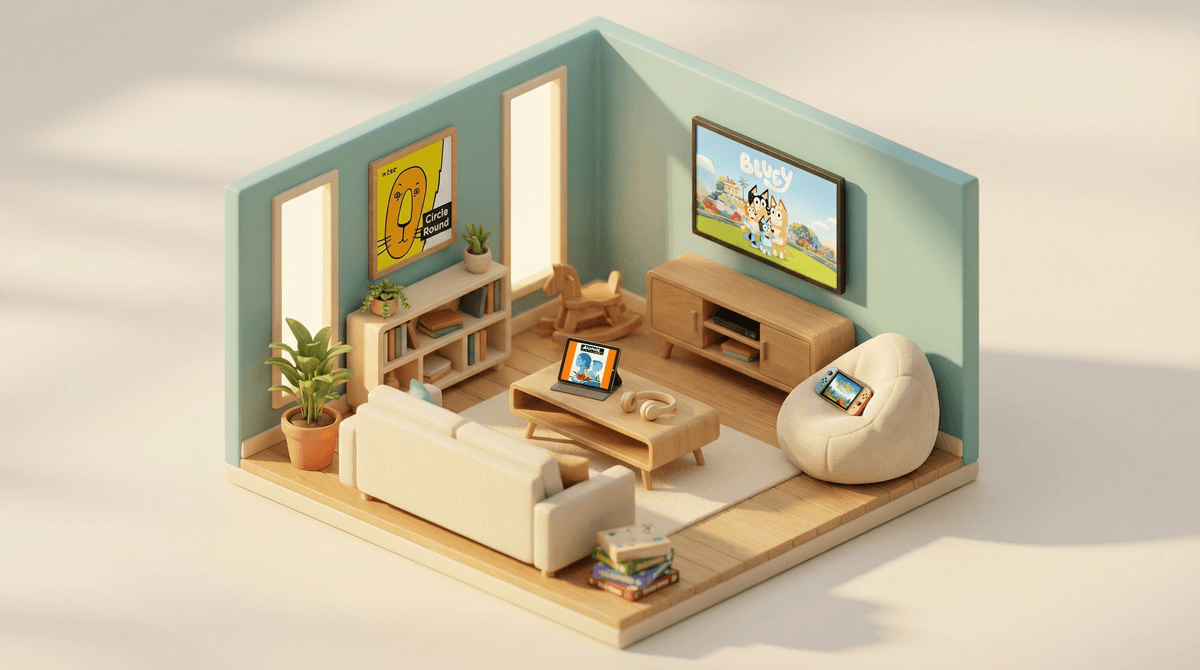
And look, I'm not saying every piece of content needs to be an after-school special. Bluey is delightful partly because it doesn't feel like it's trying to teach you anything—but then suddenly your kid is processing big feelings about disappointment or learning that parents mess up too.
The goal isn't to turn screen time into homework. It's to use the stuff they're already consuming as a jumping-off point for conversations about who they are and who they want to be.
Your kid is building their internal operating system right now. Every story they consume, every game they play, every podcast they listen to is feeding into their understanding of how the world works and what kind of person they want to be in it.
The research is pretty clear: kids who regularly discuss media with their parents develop stronger critical thinking skills and are better at recognizing manipulation (whether that's from advertisers, peers, or algorithms). They're also more likely to seek out diverse perspectives and less likely to just absorb whatever the algorithm serves up.
But here's what really matters: media you experience together becomes shared language for your family. When you've both watched Avatar: The Last Airbender, you can reference Uncle Iroh when talking about choosing wisdom over revenge. When you've played Stardew Valley together, you have a framework for discussing capitalism, community, and what makes a good life.
Forget the idea that "quality" means boring or educational in that heavy-handed way. Here's what actually makes media worth your time:
Complex characters who make real choices. Not good guys vs. bad guys, but people who struggle with actual dilemmas. The Dragon Prince does this brilliantly—characters make mistakes, deal with consequences, and grow.
Stories that don't wrap up too neatly. Real life is messy. Media that acknowledges this—like Hilda—gives kids practice sitting with ambiguity.
Representation that feels natural, not preachy. The Owl House has LGBTQ+ characters who are just... characters. Their identity isn't their whole personality or a "very special episode."
Humor that doesn't rely on cruelty. There's a huge difference between clever comedy and humor that punches down. Abbott Elementary (for older kids) shows how you can be funny while still respecting everyone's humanity.
Ages 4-7: Look for media that names emotions and models problem-solving. Daniel Tiger's Neighborhood is the gold standard here—it's not subtle, but it doesn't need to be. For podcasts, Circle Round tells folktales from around the world with gorgeous production.
Ages 8-11: This is prime time for stories about friendship, fairness, and standing up for what's right. Encanto tackles family expectations and generational trauma in a way that's accessible but not dumbed down. For games, Kind Words lets kids practice empathy by writing encouraging letters to real people (all moderated).
Ages 12-14: They're ready for moral complexity and stories that don't have easy answers. The Hunger Games (book first, then movie) opens up conversations about propaganda, inequality, and the cost of survival. Celeste is a platformer about climbing a mountain that's really about anxiety and self-compassion.
Ages 15+: Go deeper. Everything Everywhere All At Once explores nihilism, meaning, and family trauma with genuine depth. Hades is a roguelike about family dysfunction and forgiveness that happens to have stellar gameplay.
The magic isn't in the media itself—it's in what you do with it together. Here's what actually works:
Co-view/co-play when possible. Even just being in the room changes the experience. You can pause and discuss, or just absorb it together and talk later.
Ask open-ended questions. Not "did you like it?" but "what would you have done differently?" or "which character did you relate to most?" or even "what was the weirdest part?"
Share your own reactions. "I actually thought that character was being selfish there" opens up space for them to agree or push back. You're modeling critical thinking, not demanding they see it your way.
Connect it to their life. "Remember when you were deciding whether to tell the teacher about what happened? That reminds me of when [character] had to choose between loyalty and honesty."
Don't force it. If they're not in the mood to discuss, let it go. The goal is conversation, not interrogation.
Here's the truth: your kid will consume some garbage. That's fine. The goal isn't a perfectly curated media diet—it's teaching them to recognize the difference between cotton candy and actual nutrition.
Sometimes the garbage is even useful. Watching a truly terrible YouTube video together and then discussing why it's manipulative or poorly made is actually valuable media literacy practice. Want to understand why some content is designed to be addictive?
The ratio matters more than perfection. If most of what they're consuming has some substance, the occasional brain-rot session isn't going to derail their development.
Building character through media isn't about restricting everything or only allowing PBS documentaries. It's about being intentional about some of what you watch, play, and listen to together, and then actually talking about it.
You're not trying to control what they think—you're giving them tools to think critically about everything they consume. That's the skill that matters when they're 16 and encountering content you can't monitor or control.
Start small. Pick one show to watch together this week, or one game to play together, or one podcast to listen to in the car. Then just... talk about it. Ask what they noticed. Share what you thought. See where it goes.
The conversations you have now about fictional characters' choices become the framework they'll use to make their own choices later. That's worth way more than any screen time limit.
Ready to find something to watch together? Check out our guide to the best family shows by age or explore cozy games that spark conversation.
Want to dig deeper into specific content? Search any title in Screenwise to see our WISE scores, age recommendations, and what other parents in your community are saying.
Not sure where to start the conversation? Try this: tonight, ask your kid about the last thing they watched or played. Not "was it good?" but "what happened?" and then just... listen. You'll figure out the rest.