

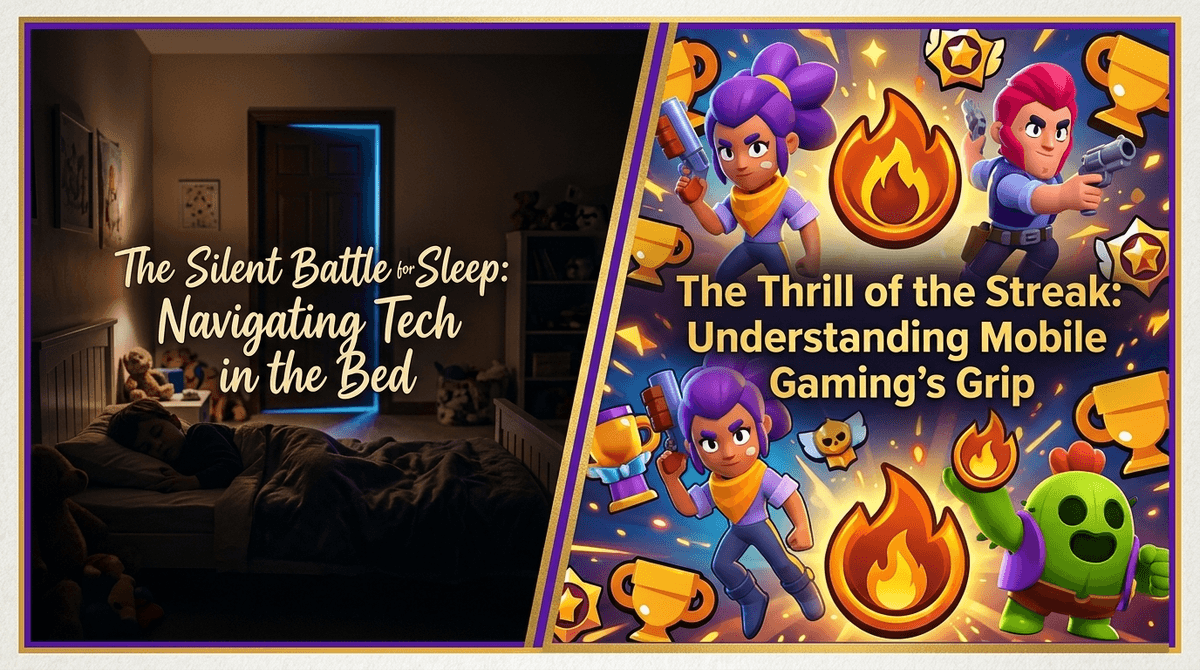
TL;DR: Your kid isn't just "being addicted" when they refuse to put down Brawl Stars at 9:00 PM. They are likely caught in a perfect storm of Trophy League resets, Win Streak maintenance, and Club event deadlines. The game is designed with "short-loop" mechanics that make "one more match" feel like a low-stakes commitment, but the social and competitive pressure makes it a high-stakes battle for their digital status.
Quick Links:
It’s 9:30 PM. The lights are out, but there’s a familiar blue glow emanating from under your kid's door. You walk in, and instead of a sleeping child, you find a frantic thumb-tapper who looks like they’re diffusing a bomb.
When you tell them to turn it off, they don't just groan—they look genuinely panicked. "I can't! I'm on a 9-win streak!" or "The season ends in ten minutes!"
If you feel like you’re losing the bedtime battle to a cartoon cactus and a guy with a magic shovel, you aren't alone. Brawl Stars is currently the "it" game for the 8-to-14-year-old demographic, and its late-night pull is a masterpiece of behavioral engineering.
Developed by Supercell (the same geniuses behind Clash of Clans), Brawl Stars is a fast-paced "hero shooter." Players pick a "Brawler," jump into a 3-vs-3 arena, and try to complete objectives like grabbing gems or kicking a ball into a goal.
The matches are short—usually 2 to 3 minutes. This is the game's greatest strength and its most dangerous feature for parents. It’s the "TikTok-ification" of gaming. Because a match is so short, the barrier to entry for "just one more" is incredibly low.
Why is the pressure so much higher at night? It’s not just that they’re being defiant. The game uses several "event-based" triggers that often peak during the evening hours.
1. The Trophy League Reset
Every few weeks, the "Trophy League" ends. If a player has Brawlers above a certain trophy count, those trophies are reset, and they are given "Bling" (a currency for skins) in return. Kids feel a desperate need to "push" their Brawlers to the next tier before the timer hits zero. If they stop at 749 trophies instead of 750, they miss out on the higher reward. To a 10-year-old, that feels like leaving money on the table.
2. Win Streaks (The Newest Villain)
Supercell recently added a "Win Streak" mechanic. The more matches you win in a row, the more bonus trophies you get per win. If you lose, the streak resets to zero. This creates an intense "gambler’s high." When your kid is on a 7-win streak at 9:15 PM, asking them to quit feels like asking a poker player to walk away from a heater.
3. Limited-Time Events (Mega Pig and Godzilla)
Brawl Stars frequently runs weekend events like "Mega Pig." These require players to use a certain number of tickets to win matches for their "Club" (their social group in the game). These events often end on Monday mornings. If your kid procrastinated on Friday and Saturday, Sunday night becomes a high-pressure "grind" to ensure they don't let their friends down.
We need to talk about the "Just One More" fallacy. In a game like Fortnite, a match can last 20 minutes. If you tell a kid "this is your last one" at the start of a match, you’ve got a clear window.
In Brawl Stars, a match is over in the blink of an eye. The transition from the "Victory" screen back to the "Matchmaking" screen takes about three seconds. The game is designed to keep the dopamine flowing without a natural "stop" point.
Furthermore, if they lose a match, they want to play one more to "get their trophies back." If they win, they want to play one more to "keep the streak alive." It’s a loop that doesn't care about your house's bedtime rules.
Ages 7-9: At this age, the emotional regulation isn't there yet. The "tilting" (getting angry after losing) is real. We recommend strict "hard stops" where the device goes into a charging station in the kitchen 30 minutes before bed. They don't have the internal clock to manage these short match loops yet.
Ages 10-12: This is the peak Brawl Stars age. They are very focused on "skins" and social standing. This is a great time to talk about "sunk cost fallacy"—explaining that the 10 trophies they might lose aren't worth the hour of sleep they're losing.
Ages 13+: At this point, it’s about performance. If they want to be "pro" or "Ranked," they need to understand that playing tired leads to losing. Help them see that the late-night grind actually hurts their stats in the long run.
The "Ranked" Mode Stress
Brawl Stars has a "Ranked" mode (formerly Power League) that uses a "pick and ban" system similar to professional esports. These matches take longer because there are multiple rounds. If your kid says, "I'm in a Ranked match," they actually can't leave without being penalized by the game (potentially getting banned from the mode for a period).
The Financial Drain
Is Brawl Stars draining your bank account? The game is "free," but the "Brawl Pass" and "Gems" are the primary ways kids get the coolest Brawlers. Unlike Roblox, where the quality of games varies wildly, Brawl Stars is a high-polish product that knows exactly how to make a $9.99 skin look like a necessity.
Ask our chatbot about Brawl Stars spending and in-app purchases
Social Dynamics
The "Club" chat is generally safer than Discord, but it's still unmoderated human interaction. Kids can be mean when a teammate "throws" a match (plays poorly). If your kid is staying up late, they might be doing it because their "Club" is active and they want to prove their worth to the group.
Instead of "Turn that garbage off," try a more informed approach. It signals to them that you understand the stakes.
- The "Check-In": "I know the Trophy League reset is coming up. How many more trophies are you aiming for before bed?" (This sets a concrete goal rather than an arbitrary time).
- The "Win Streak" Rule: "If you lose your streak, the tablet goes away immediately. No 'revenge matches' to get the trophies back."
- The "Wind Down" Alternative: Suggest a game that doesn't have a competitive "hook" for the last 15 minutes of the night. Something like Stardew Valley or Townscaper.
Brawl Stars is a well-made game. It’s not "brain rot" in the sense that it requires strategy, reflexes, and teamwork. However, its "event-driven" architecture is fundamentally at odds with a healthy sleep schedule.
The "Late-Night Trophy Push" isn't a sign that your kid is addicted; it's a sign that they are responding exactly how the game's designers intended. By acknowledging the specific pressures—the resets, the streaks, and the club obligations—you can move from being the "screen time police" to being a consultant who helps them navigate a very loud, very bright digital world.
- Check the Season Timer: Open the app and look at the "Brawl Pass" or "Ranked" screen. It will tell you exactly how many days/hours are left in the season. Use this to anticipate "high-pressure" nights.
- Set a "No-Ranked" After 8 PM Rule: Since Ranked matches are longer and more stressful, make them a "daytime only" activity.
- Audit the Spending: If they are grinding at night to earn rewards, they might be trying to avoid asking you for money. Sometimes, a one-time "Brawl Pass" purchase can actually reduce the late-night grind because they don't feel the need to "earn" every single reward through play.
Learn how to set up Apple Screen Time for specific apps
Ask our chatbot for a Brawl Stars "Contract" for your family