

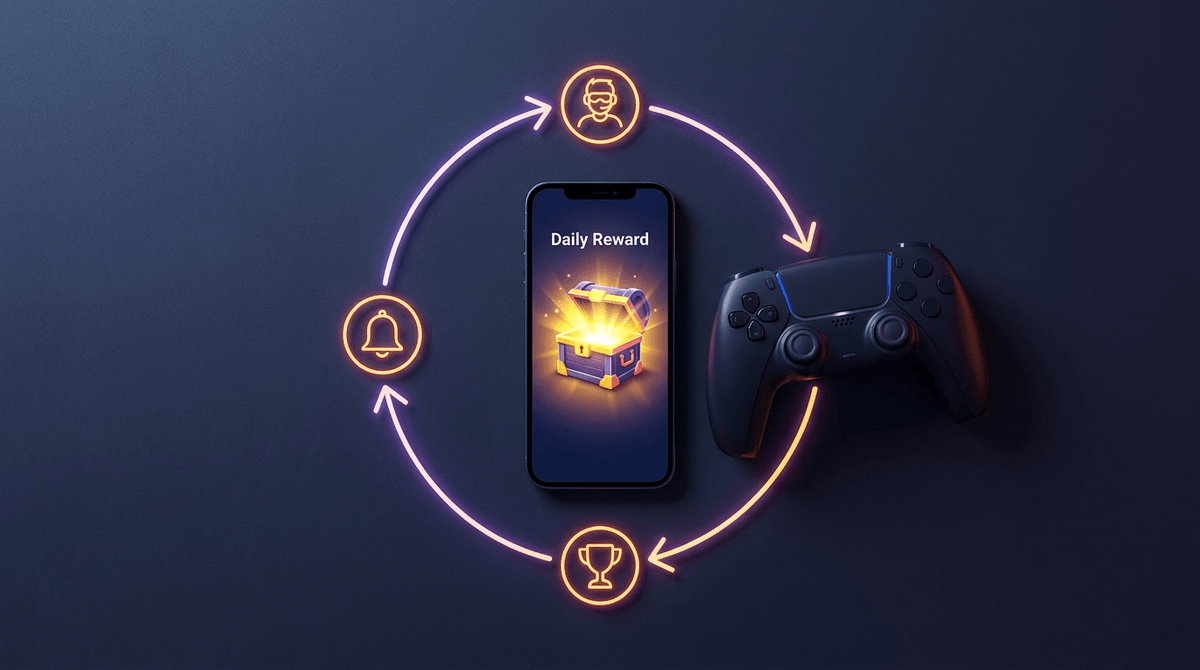
TL;DR: Gaming companies hire neuroscientists to design "dopamine loops" that make it physically hard for kids to put the controller down. It’s not a lack of willpower; it’s a design feature. To fight back, look for "finite" games like Stardew Valley or Monument Valley, set "event-based" boundaries rather than strict timers, and teach your kids how the "casino" works.
We’ve all been there. It’s 6:00 PM, dinner is on the table, and you’ve given the "five-minute warning" three times. But when you walk into the living room, your kid is hunched over, eyes dilated, muttering about a "Legendary drop" or a "streak" they can't break.
You feel like a broken record. They feel like you’re ruining their life.
It’s easy to write this off as "kids these days" or a lack of discipline. But there is something much more calculated happening behind the glass. Modern gaming isn't just "fun"—it’s engineered. Specifically, it’s built around dopamine loops, a psychological trick borrowed straight from the floor of a Las Vegas casino and repackaged for the iPad.
Dopamine is the "anticipation" chemical in our brains. Contrary to popular belief, it’s not about the pleasure of getting something; it’s about the thrill of waiting for it.
A dopamine loop follows a simple three-step cycle:
- The Cue: A notification, a blinking "Daily Reward" chest, or a "Battle Pass" progress bar.
- The Action: Playing one more round, opening a loot box, or checking a digital shop.
- The Variable Reward: This is the kicker. If the reward is the same every time, the brain gets bored. But if the reward is sometimes amazing and sometimes trash (like a slot machine), the brain goes into overdrive.
This is why your kid can play Brawl Stars for three hours and come away feeling exhausted and grumpy rather than refreshed. They weren't playing because they were having "fun"—they were chasing the next hit of dopamine.
Your child’s prefrontal cortex—the part of the brain responsible for impulse control and saying "Okay, that's enough"—isn't fully developed until their mid-20s.
When a game like Roblox throws a "limited time offer" or a "daily login streak" at a 10-year-old, it’s an unfair fight. Their "go" system is fully operational, but their "brakes" are still being installed. To them, losing a 100-day streak in Snapchat or a game feels like a genuine social or personal crisis.
Not all games are created equal. Some are beautiful works of art; others are essentially digital skinner boxes. Here are the red flags:
1. Loot Boxes and Gacha Mechanics
In games like Genshin Impact or Overwatch 2, players spend currency (often bought with real money) to open "crates" or "packs" with random items. This is gambling-lite, full stop. The flashy lights and "near-miss" sounds are designed to trigger a massive dopamine spike.
2. The Battle Pass Grind
Fortnite pioneered this. You pay for a "season," and you only get the cool skins if you play enough hours before the season ends. This turns gaming into a job and creates massive "FOMO" (Fear Of Missing Out).
3. Daily Streaks and "Energy" Bars
If a game like Candy Crush Saga tells your kid they have to wait 30 minutes for more "lives" or "energy"—unless they pay $1.99—it’s using artificial scarcity to keep them thinking about the game even when they aren't playing.
If you want to break the loop, you need to look for "Finite Games." These are games with a beginning, middle, and end. They don't use daily login bonuses, and they don't try to sell your kid a digital hat every five minutes.
A farming RPG that is the gold standard for "cozy gaming." While it has its own "one more day" pull, it’s driven by creativity and planning, not casino mechanics. Ages 7+
A stunning puzzle game based on M.C. Escher-style geometry. It’s short, beautiful, and has a definitive ending. It’s the digital equivalent of a calming picture book. Ages 5+
Sometimes the best way to break a gaming loop is to pivot to a different medium entirely. This story (also a great book) explores the connection between technology and nature in a way that actually prompts deep conversation.
For younger kids, this is a digital dollhouse. There are no "levels" to beat or "lives" to lose. It’s pure open-ended play. Ages 4-10
Check out our full list of "Non-Toxic" games for elementary kids
Elementary School (Ages 5-10)
At this age, kids have almost zero defense against dopamine loops.
- The Strategy: Avoid "Free to Play" mobile games. They are the biggest offenders. Stick to paid apps or Nintendo Switch games that don't have in-game shops.
- The Talk: "The people who made this game are trying to trick your brain into staying longer so they can show you more ads. Let’s see if we can spot the tricks."
Middle School (Ages 11-13)
This is the peak of social gaming. Roblox and Fortnite are the town square.
- The Strategy: Use "Event-Based" limits. Instead of "30 minutes," say "two matches" or "one mission." It’s much easier for a brain in a dopamine loop to stop at a natural breaking point than when a timer suddenly dings.
- The Talk: Discuss the "Sunk Cost Fallacy." Just because they spent 20 hours earning a digital cape doesn't mean they have to spend 20 more to get the next one.
High School (Ages 14+)
By now, they know the tricks, but they might still struggle with the "grind."
- The Strategy: Focus on "Digital Wellness." Ask them how they feel after a marathon session. Are they actually happy, or just "zombified"?
- The Talk: Talk about the "Economy of Attention." Their attention is the most valuable thing they own, and billion-dollar companies are fighting to steal it.
Let’s be real: some of these games are just "brain rot." If your kid is playing Skibidi Toilet themed "tycoon" games on Roblox, they aren't learning coding or entrepreneurship. They are being farmed for ad views.
It is okay to say, "This game is designed poorly, and it's making you moody. We’re deleting it and finding something better." You don't have to be "fair" to a predatory app.
However, don't demonize the kid. If they are struggling to quit, it’s because the game is working exactly as intended. They aren't being "bad"; they are being "hacked."
Instead of "Get off that junk!" try:
- "I noticed that when you play Brawl Stars, you seem really stressed afterward. What’s going on in the game that feels so high-stakes?"
- "Do you feel like you're playing because you want to, or because the game is making you feel like you have to?"
- "Let’s look at the 'Shop' together. Why do you think they put a countdown timer on that item?"
Ask our chatbot for a script to talk to your kid about gaming addiction
Dopamine loops are the "hidden architecture" of the digital world. Once you see them, you can't unsee them. Your goal as an intentional parent isn't to ban all gaming—it's to help your kids move from being "users" (who are being used by the game) to "players" (who are in control of the experience).
Start by swapping one "loop-heavy" game for a "finite" one. Turn off the notifications. And most importantly, give them a graceful way to exit the loop—because their brain is literally fighting to stay in it.
- Audit the Apps: Look at your kid's most-played games. Do they have "Daily Rewards"? Do they have "Loot Boxes"?
- Set the Save Point Rule: Instead of a hard time limit, allow them to finish the specific level or match they are in.
- Model the Behavior: If you’re scrolling TikTok or Instagram at the dinner table, you’re in a dopamine loop too. Put your phone in the "parking lot" first.
Take the Screenwise Survey to see how your family's gaming habits compare to your community