

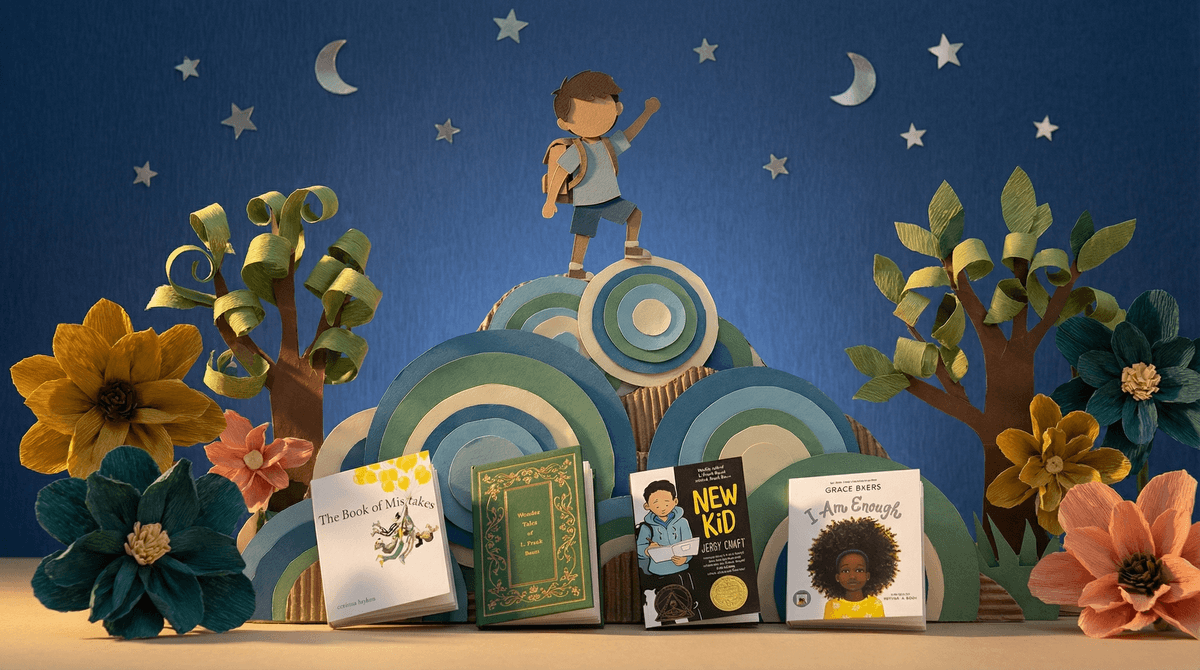
Look, we all want our kids to walk into a room and feel like they belong there. Not in an obnoxious way, but in that deep-down "I'm okay being me" way that makes everything else easier. And while we can't helicopter-parent our way to confident kids (trust me, the opposite actually), we can put the right stories in their hands.
Books that build confidence aren't the ones that scream "YOU'RE SPECIAL!" on every page. They're the ones where kids see characters mess up, feel different, face scary things, and come out the other side still standing. They're stories about being the new kid, having a body that doesn't look like everyone else's, failing spectacularly, or discovering that your weird thing is actually your superpower.
Here's what's wild: kids don't build confidence from being told they're great. They build it from seeing themselves in stories where someone struggles with the exact thing they're struggling with—and figures it out. It's like permission to be imperfect, wrapped in a narrative they can't put down.
The best confidence-building books do a few things really well:
- They normalize struggle - The protagonist isn't perfect, and that's the whole point
- They show multiple paths to success - Being confident doesn't mean being loud or popular
- They validate different kinds of kids - Introverts, kids with disabilities, kids who don't fit the mold
- They're actually good stories - Because preachy books get abandoned on page 12
Ages 4-7: Building the Foundation
The Book of Mistakes by Corinna Luyken is basically a masterclass in reframing failure. An artist makes "mistakes" and then incorporates them into increasingly creative solutions. It's gorgeous, and kids get it immediately.
The Girl Who Never Made Mistakes by Mark Pett and Gary Rubinstein follows a perfectionist kid who finally makes a public mistake—and discovers the world doesn't end. This one hits different for the overachievers.
I Am Enough by Grace Byers is one of those books that manages to be affirming without being cheesy. It's about inherent worth, not achievement. Read it when your kid is spiraling about not being the fastest/smartest/whatever-est.
Ages 8-11: The Middle-Grade Sweet Spot
Wonder by R.J. Palacio—yeah, everyone recommends it, but that's because it works. Auggie's story about navigating middle school with a facial difference is about way more than appearance. It's about choosing kindness when the world is unkind, and finding your people.
Fish in a Tree by Lynda Mullaly Hunt is for every kid who's ever felt "stupid" because their brain works differently. The protagonist has dyslexia, but the real story is about discovering that different doesn't mean less.
The Wild Robot by Peter Brown is sneakily profound. A robot learning to survive on an island becomes a story about adaptation, belonging, and defining yourself on your own terms. Plus it's a page-turner, so reluctant readers will actually finish it.
New Kid by Jerry Craft (it's a graphic novel) follows Jordan as he navigates being one of the few kids of color at a prestigious private school. It's funny and real about code-switching, microaggressions, and staying true to yourself when everything feels off.
Ages 12+: The Big Feelings Years
The Poet X by Elizabeth Acevedo is written in verse and follows Xiomara, a Dominican-American teen finding her voice through slam poetry. It's about religious expectations, first love, and claiming space in a world that wants you quiet.
Speak by Laurie Halse Anderson is intense—it deals with sexual assault and trauma—but it's also about reclaiming your voice after it's been taken. Not for every kid, but for the right kid at the right time, it's transformative. Read more about age-appropriateness for tough topics .
.
The Hate U Give by Angie Thomas follows Starr after she witnesses police violence. It's about finding the courage to speak up when it's dangerous to do so, and navigating multiple identities. Heavy but essential.
Not every book will land. Sometimes you'll hand your kid what you think is the perfect confidence-booster and they'll shrug. That's fine. Keep offering, but don't force it.
Representation matters, but it's not everything. Kids benefit from seeing themselves in books AND from seeing experiences different from their own. Both build empathy and perspective.
Talk about the books (but don't interrogate). Instead of "What did you learn?" try "What would you have done if you were [character]?" or "Have you ever felt like that?" Open-ended questions that invite conversation, not book reports.
Some of these books deal with hard stuff. Bullying, discrimination, trauma, failure. That's kind of the point—confidence comes from seeing characters navigate hard things. But know your kid. If they're in the middle of their own crisis, maybe save the heavy stuff for later.
Confidence isn't something you can gift-wrap and hand to your kid. But you can fill your house with stories about imperfect people doing brave things, weird kids finding their people, and characters who fall down and get back up.
The goal isn't to raise kids who never doubt themselves—it's to raise kids who know that doubt is part of the process, that different is often better than same, and that their voice matters even when it shakes.
Start with one. Pick a book from the age range above that matches where your kid is right now—not where you wish they were.
Make it available, not required. Leave it on the coffee table, read it yourself and mention it casually, or suggest it for bedtime reading. The second it feels like homework, you've lost them.
Check out more books that build resilience or graphic novels for reluctant readers if you need more options.
And remember: you reading this guide and thinking about this stuff? That's already doing the work. You're good.