

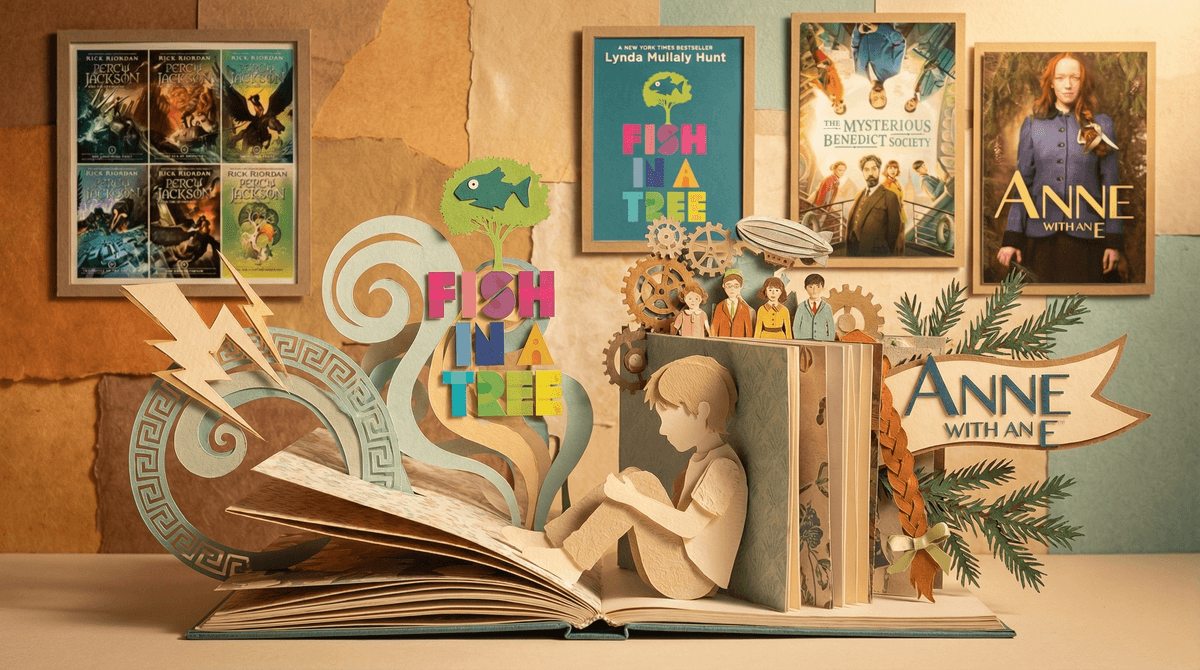
We're talking about stories where characters have dyslexia, ADHD, processing challenges, or other learning differences—and these traits aren't plot problems to be "fixed." They're just part of who the character is. Think Percy Jackson discovering his dyslexia helps him read ancient Greek, or Anne with an E showing how Anne's vivid imagination (hello, ADHD traits) is both a challenge and a superpower.
These stories matter because they show kids who struggle with reading or focus that they're not broken—they're just wired differently. And for kids who don't have learning differences? They build empathy and understanding for classmates who might need extra time on tests or audiobooks instead of printed pages.
Here's the thing: about 1 in 5 kids has a learning difference, but you wouldn't know it from most media. Kids who struggle with reading often internalize shame before they even understand what's happening in their brain. They think they're "dumb" when they're actually just processing information differently.
And with streaming being huge in most households—80% of families in our community use Netflix, and another 80% have Disney+—there's real opportunity here. Kids are watching anyway. Why not make some of that screen time do double duty as representation and conversation starters?
The bonus? These stories often normalize accommodations. When kids see Percy using audiobooks or a character getting extended time on tests, it destigmatizes the tools that help struggling readers succeed.
Elementary (Ages 6-10):
-
Thank You, Mr. Falker by Patricia Polacco — A picture book about a girl who struggles to read and the teacher who finally helps her understand she has dyslexia. Makes kids cry in the best way.
-
Fish in a Tree by Lynda Mullaly Hunt — Middle grade novel where Ally has spent her whole life hiding that she can't read. When a new teacher recognizes her dyslexia, everything changes. This one's a game-changer for 3rd-5th graders.
-
The Miscalculations of Lightning Girl by Stacy McAnulty — Lucy is a math genius with OCD. Not specifically about reading, but excellent for showing how different brains work differently.
Middle School (Ages 10-14):
-
Percy Jackson series by Rick Riordan — The gold standard. Percy has ADHD and dyslexia, and these traits are reframed as demigod advantages. Can't overstate how powerful this is for struggling readers who love adventure stories.
-
Wonder by R.J. Palacio — While Auggie's facial differences are the main focus, his sister Via deals with feeling invisible and academic pressure. Great for conversations about different kinds of challenges.
-
Hoot by Carl Hiaasen — Roy is dealing with dyslexia while also trying to save some owls. Environmental activism meets learning differences.
Disney+ (which 50% of families in our community watch together) has some solid options:
-
Percy Jackson and the Olympians (TV series) — The new Disney+ adaptation does a great job showing Percy's ADHD and dyslexia as integral to who he is, not obstacles to overcome.
-
Anne with an E — Available on Netflix (which 40% of families let kids watch independently). Anne's imaginative, impulsive nature reads very ADHD, though it's never explicitly named. Beautiful show about being different.
Netflix options:
-
Matilda the Musical — While Matilda herself is a super-reader, the story is ultimately about kids who don't fit the mold and teachers who either crush or nurture different learners.
-
The Baby-Sitters Club — Claudia Kishi has dyslexia and is a brilliant artist. The show does a nice job showing how she navigates school while being incredibly talented in other areas.
Amazon Prime (which 32% of families in our community use with supervision):
- The Mysterious Benedict Society — Features neurodivergent kids with different strengths and challenges working together. Sticky has anxiety, Constance is gifted but struggles socially.
Don't make it homework. Just... watch or read together. Let the story do the work. You don't need to pause every five minutes to point out "See? He has ADHD like you!"
But DO create space for conversation. After finishing, you might ask: "What did you think about how Percy's brain works?" or "Have you ever felt like Ally, trying to hide something that's hard for you?"
Normalize accommodations. When characters use audiobooks or get extra time, mention it casually: "That's smart that she uses audiobooks. Whatever helps you learn, right?"
For kids without learning differences, these stories build empathy. You might ask: "What do you think it would be like if reading was really hard for you?" or "How do you think you could be a good friend to someone who learns differently?"
Ages 6-8: Stick with picture books and shows where differences are presented matter-of-factly. At this age, kids are concrete thinkers—they just need to see that some brains work differently and that's okay.
Ages 9-12: This is prime time for Fish in a Tree and Percy Jackson. Kids this age are developing more complex understanding of fairness and difference. They're also old enough to recognize if they're struggling and might need help.
Ages 13+: Teens can handle more nuanced stories about advocacy, self-acceptance, and systemic barriers. They might appreciate learning about how famous successful people have learning differences .
.
These stories aren't just for kids with diagnosed learning differences. Plenty of kids struggle without formal diagnoses. And honestly? Every kid benefits from seeing that there are multiple ways to be smart and successful.
Representation matters, but it's not therapy. If your kid is really struggling with reading, these books and shows can help them feel less alone—but they're not a substitute for evaluation and support. Learn more about when to seek an evaluation.
The audiobook question: Some parents worry that letting struggling readers use audiobooks means they'll never improve at reading. But here's the thing—audiobooks let kids access grade-level content and stay engaged with stories while they're building reading skills. Percy Jackson himself uses audiobooks. It's an accommodation, not a cop-out.
Sibling dynamics: If one kid has a learning difference and the other doesn't, these stories can help the whole family understand each other better. The neurotypical sibling gets to see their brother or sister as the hero of the story.
You don't need to turn screen time into a teachable moment every single time. But when 80% of families are already streaming, why not occasionally choose something that might help your kid feel seen—or help them see their classmates more clearly?
These stories won't solve everything. They won't make reading suddenly easy for a dyslexic kid or help an ADHD kid focus on homework. But they might make a kid feel a little less alone. They might give you language to talk about hard stuff. And they might just show your kid that different doesn't mean less-than.
If you're just exploring: Start with Percy Jackson (book or show) or Thank You, Mr. Falker. See what resonates.
If your child is struggling: Consider reading Fish in a Tree together and talk to their teacher about what you're noticing.
If you want to dig deeper: Check out our guide to ADHD and screen time or explore how different learning styles affect media consumption.
The right story at the right time can change how a kid sees themselves. That's worth a family movie night.