

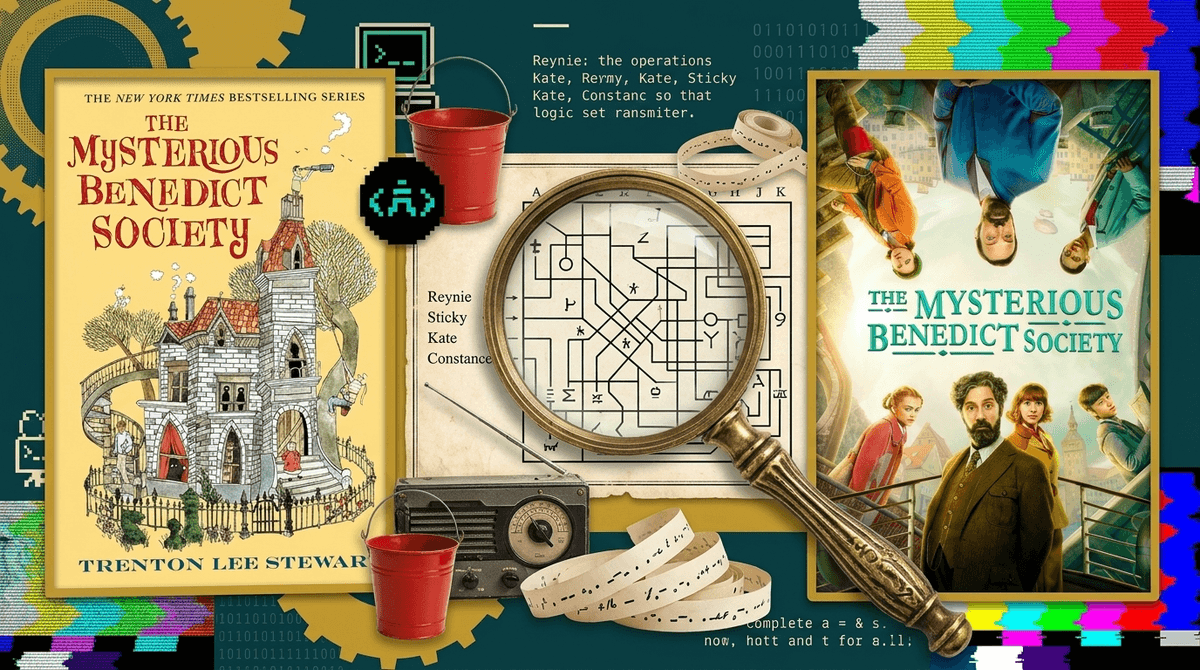
TL;DR: The Mysterious Benedict Society is essentially a "how-to" manual for raising kids who can think for themselves in an era of deepfakes, TikTok "brain rot," and manipulative algorithms. If you want your kids to stop saying "Ohio" because a YouTube short told them to and start questioning why they’re seeing what they’re seeing, this is the series to get them into.
Quick Links:
At its core, The Mysterious Benedict Society by Trenton Lee Stewart is about four "gifted" orphans—Reynie, Sticky, Kate, and Constance—who are recruited by a quirky, narcoleptic genius named Mr. Benedict. Their mission? To go undercover at a prestigious boarding school called the Learning Institute for the Very Enlightened (L.I.V.E.) to stop a global crisis known as "The Emergency."
"The Emergency" is a constant state of fear and anxiety being felt by the public, fueled by cryptic messages broadcast through television and radio. The villain, Mr. Curtain, is using a machine called "The Whisperer" to plant subliminal messages in people's minds, making them more susceptible to control.
If that sounds a little too close to home in 2026, that’s because it is. Whether it’s the YouTube algorithm pushing increasingly weird content or the way TikTok trends like "Skibidi Toilet" or "Ohio" memes take over a kid's entire vocabulary, the "media noise" the kids are fighting in the book is a perfect metaphor for the digital manipulation our kids face every day.
We talk a lot about "digital wellness" and "screen time limits," but the reality is that we can’t be over our kids' shoulders 24/7. Eventually, they’re going to see a deepfake on Instagram or a predatory ad in Roblox.
What The Mysterious Benedict Society does so well is champion critical thinking as a superpower. The characters don't win because they have laser eyes or super strength; they win because:
- Reynie looks for patterns and reads people's true intentions.
- Sticky remembers every fact he’s ever read (pure information literacy).
- Kate is insanely resourceful with her red bucket of tools (problem-solving).
- Constance is stubbornly skeptical (the ultimate defense against "The Whisperer").
When kids read these books or watch the show, they aren't just consuming a story; they’re seeing a roadmap for how to resist "The Whisperer" in their own lives. It’s about teaching them to ask: Is this true? Who is telling me this? Why do they want me to feel this way?
Ages 8-12 The books are, frankly, superior. They are dense with puzzles, riddles, and logic games that actually require the reader to slow down and think. In an age of 15-second YouTube Shorts, getting a kid to sit with a 500-page book that rewards patience is a massive win for their attention span. The prose is sophisticated but accessible, and the stakes feel real without being traumatizing.
Ages 7+ The TV adaptation is actually quite good—which is saying something, because Disney+ can be hit or miss. It has a very Wes Anderson-lite aesthetic (vibrant colors, symmetrical framing) that makes it visually engaging without being overstimulating.
- The Good: Tony Hale is fantastic playing both Mr. Benedict and the villainous Mr. Curtain. It’s a great family watch.
- The "Meh": Like any adaptation, it loses some of the complex internal logic of the puzzles found in the books. If your kid is a "completionist," have them read the book first so they don't feel "spoiled" by the show's faster pacing.
Ages 9-12 If they like the "competent orphans vs. incompetent/evil adults" trope, this is the gold standard. It’s darker and more cynical than Benedict Society, but it’s excellent for vocabulary building and teaching kids about irony and gaslighting.
Ages 8-11 This is a bit lighter and more "game-focused." It’s perfect for the kid who loves Minecraft or Roblox because it treats a library like a giant escape room. It’s less about "media manipulation" and more about pure logic and teamwork.
Grade 3-4 (Ages 8-10): This is the perfect entry point. They might need help with some of the more complex vocabulary, but they will deeply identify with Kate and Reynie.
Grade 5-6 (Ages 11-12): This is where the themes of "The Emergency" really hit. Kids this age are starting to navigate social media (or at least seeing it on their friends' phones). They are the primary targets for the kind of "subliminal messaging" the book warns about.
Safety Considerations: There is very little to worry about here in terms of "traditional" red flags. No gore, no sexual content, and very mild "peril." The biggest "risk" is that your kid might start questioning why you’re telling them to brush their teeth (Constance’s stubbornness is relatable, but can be a bit too inspiring for some kids).
Check out our guide on navigating peer pressure and social media
You don't need to turn this into a school lesson, but The Mysterious Benedict Society provides a perfect opening to talk about digital wellness.
Try these conversation starters after a few chapters or episodes:
- "Mr. Curtain uses 'The Whisperer' to make people feel anxious so they’ll listen to him. Do you ever feel like certain apps or videos try to make you feel worried or like you’re missing out?" (This is a great way to talk about FOMO and "doomscrolling").
- "Reynie is really good at noticing when something doesn't 'feel' right, even if it looks normal. Have you ever seen a video or an ad that felt a little 'off' or fake?" (Intro to deepfakes and misinformation).
- "Which of the four kids would you be in the Society? The one with the facts (Sticky), the one with the tools (Kate), the one who figures out the 'why' (Reynie), or the one who just says 'no' to everything (Constance)?"
The Mysterious Benedict Society is one of those rare gems that manages to be "educational" without being boring. It’s a direct antidote to the mindless consumption of "brain rot" content. By framing critical thinking as a secret agent skill, it empowers kids to be the protagonists of their own digital lives rather than just passive users of a platform.
If you’re looking for a way to bridge the gap between "put the phone down" and "here is why it's important to think for yourself," this is your starting point.
Next Steps:
- Grab the first book at the library or buy it here.
- Plan a "Family Movie Night" for the first two episodes of the show on Disney+.
- Learn more about how to spot AI-generated content with your kids
