

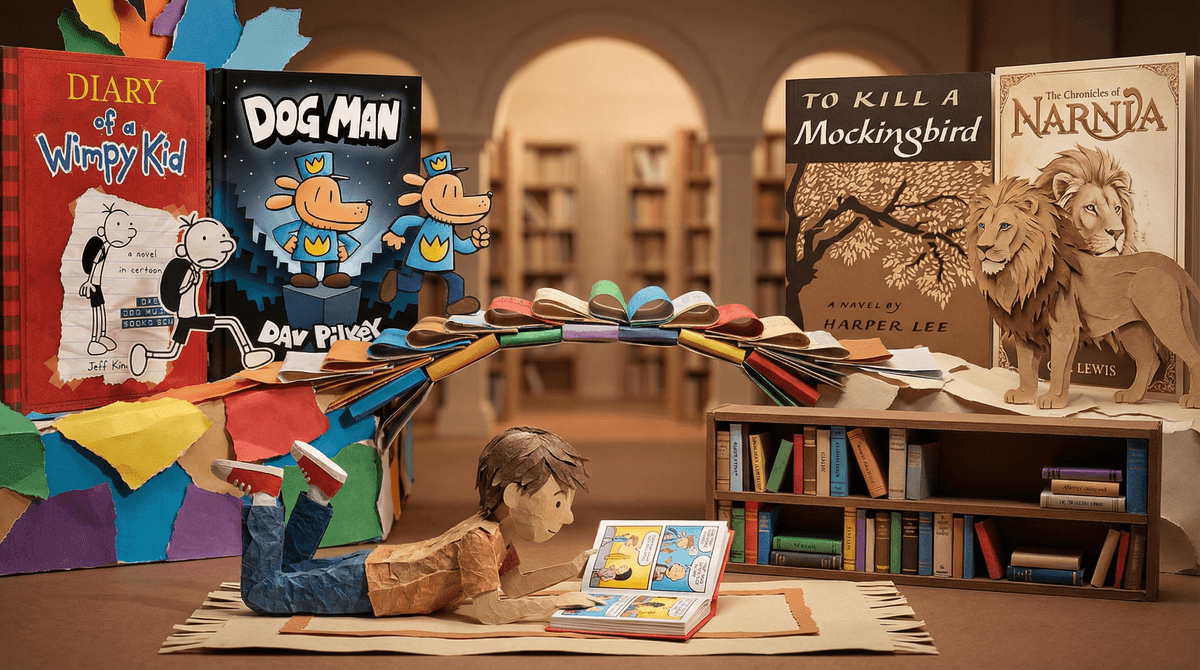
The Books Kids Actually Read vs. the Classics We Wish They'd Love
TL;DR: In 2026, kids are reading an average of 20.7 books a year—way more than most adults—but they're choosing Diary of a Wimpy Kid and Marcus Rashford biographies over the literary canon we keep pushing on them. Reading enjoyment is at a 20-year low, with only 32.7% of kids saying they actually enjoy reading in their free time. The gap between what we think they should read and what they actually want to read is killing their love of books. Here's how to bridge it without turning into a literature snob or giving up entirely.
Quick picks that actually work:
- Dog Man series (Ages 6-10)
- Percy Jackson (Ages 9-14)
- The Hunger Games (Ages 12+)
- Wonder by R.J. Palacio (Ages 8-12)
- Heartstopper (Ages 12+)
Renaissance Learning just dropped their 2025 "What Kids Are Reading" report based on data from over 1.2 million students, and it's a reality check for every parent who's ever bought their kid a leather-bound classic for their birthday.
Kids in structured reading programs are still crushing it—20.7 books per year, which is almost seven times more than the UK adult median of three books. But here's the kicker: they're not reading what we think they should be reading. They're reading Diary of a Wimpy Kid, sports biographies, and contemporary series that would make your high school English teacher weep.
And you know what? They're comprehending these books better than the classics we force on them. The data shows kids score highest on the titles they actually choose, not the ones we assign from our nostalgic "must-read" lists.
Meanwhile, the National Literacy Trust's 2025 survey is flashing red lights: reading enjoyment is at its lowest point in two decades. Only about a third of 8-18 year-olds say they enjoy reading in their free time. That's not just sad—it's a crisis.
The disconnect is pretty straightforward. We grew up in a different world. Many of us have fond memories of curling up with Charlotte's Web or The Secret Garden, and we want to pass on that magic. The problem? Today's kids are competing with TikTok, YouTube, Roblox, and literally every other form of instant gratification known to humanity.
The NLT survey pinpoints what actually motivates kids to pick up a book in 2026:
- 38% want books linked to TV shows or films (hello, Wednesday fans reading the Addams Family)
- 37% want titles that match their hobbies or interests (gaming lore, sports bios, true crime)
- 31% are drawn to eye-catching covers or titles (sorry, dusty hardcovers with tiny print)
Notice what's NOT on that list? "Because it's a timeless classic that shaped Western literature." Kids don't care about literary pedigree. They care about whether the book looks interesting, connects to something they already love, or has a cover that doesn't scream "this will be boring."
Let's get specific. The books dominating kids' actual reading lists in 2026:
Ages 7-12
Still going strong after nearly 20 years. The hybrid graphic novel format, relatable humor, and short chapters make it the gateway drug for reluctant readers. Is it high literature? No. Does it get kids reading voluntarily? Absolutely.
Ages 6-10
From the creator of Captain Underpants, these graphic novels are pure chaos and kids devour them. The illustrations, flip-o-rama pages, and bathroom humor aren't winning any Newbery medals, but they're creating readers.
Sports Biographies (Marcus Rashford, Megan Rapinoe, etc.)
Ages 8-14
Kids who claim they "hate reading" will happily read 200 pages about their favorite athlete. These books connect to their existing interests and often include photos, stats, and real-world context that makes reading feel relevant.
Ages 9-14
This is the sweet spot—a series that gets kids hooked on reading while actually sneaking in mythology, vocabulary, and complex themes. The Disney+ show has created a whole new generation of fans. This is what "gateway to classics" actually looks like.
Ages 12+
Still a powerhouse. Dystopian fiction speaks to teens' sense that the world is broken and adults aren't fixing it. The themes are actually pretty sophisticated, even if English teachers don't consider it "real literature."
Graphic Novels and Manga
Ages 8-16
Heartstopper, Smile by Raina Telgemeier, and manga adaptations are crushing it. Some parents still think graphic novels "don't count," but the research is clear: they absolutely count and often lead to traditional novels later.
You know the list. It's probably sitting on a shelf in your house right now, gathering dust:
- To Kill a Mockingbird
- The Chronicles of Narnia
- Little Women
- Treasure Island
- Anything by Dickens
These books are genuinely great. The problem isn't the books—it's the approach. When we lead with "this is important literature you should read," we're basically guaranteeing they won't touch it. And when we assign these books in school before kids are developmentally ready for the themes, pacing, or language, we create readers who associate classics with boredom and confusion.
A 9-year-old who loves Wings of Fire isn't ready for the social commentary in To Kill a Mockingbird. A 7-year-old obsessed with Dog Man isn't going to sit still for Dickens's Victorian prose. That doesn't mean they'll never be ready—it means we need to meet them where they are.
The goal isn't to choose between "brain rot" series and literary classics. It's to create readers who love reading enough that they'll eventually explore both.
Start With Their Interests, Then Branch Out
If your kid loves Minecraft, start with Minecraft novels or gaming-adjacent books. If they're obsessed with Avatar: The Last Airbender, the graphic novels and companion books are a natural next step. Once they're reading voluntarily, you can gently suggest related titles that stretch them a bit.
Use Screen Adaptations Strategically
38% of kids are motivated by books linked to shows or movies—so use that. Watching the Percy Jackson series on Disney+? Read the books together. Loved the Wonka movie? Try Charlie and the Chocolate Factory. The Netflix adaptation of A Series of Unfortunate Events has turned countless kids into Lemony Snicket fans.
This isn't cheating—it's smart parenting. You're creating positive associations with reading by linking it to something they already love.
Don't Trash Their Choices
When your kid is excited about Captain Underpants and you respond with "that's not a real book" or "why don't you read something better," you're teaching them that their taste is wrong and reading is a chore. Even if you think Diary of a Wimpy Kid is mind-numbing, keep that opinion to yourself.
The research is clear: kids who read high-interest books (even if they're "low quality" by adult standards) develop into stronger readers than kids who don't read at all because they're stuck on books that bore them.
Create a Reading Culture, Not a Reading Assignment
Kids who see adults reading for pleasure are more likely to read themselves. If the only time they see you with a book is when you're forcing them to do homework, reading looks like work. If they see you genuinely enjoying books, scrolling through Goodreads, or talking about what you're reading, it looks like something people actually choose to do.
Family reading time where everyone reads their own book (yes, graphic novels count, yes, manga counts) is more effective than any assigned reading list.
Introduce Classics Through the Side Door
Want your kid to eventually read classic literature? Don't start with the book—start with why it matters.
- Before The Odyssey, read Percy Jackson (which is basically Greek mythology fan fiction)
- Before Dickens, try A Christmas Carol graphic novel adaptation
- Before The Hobbit, watch the movies or play LEGO Lord of the Rings
- Before Shakespeare, watch West Side Story or The Lion King (Hamlet with lions)
You're building context and interest before hitting them with the actual text. By the time they get to the "real" version, they already care about the story.
Respect Their Readiness
Some kids are ready for Harry Potter at 8, others at 12. Some teens will love 1984, others will find it preachy and boring until college. That's okay. Forcing a book before a kid is ready is the fastest way to create a non-reader.
If you try a classic and your kid hates it, put it away for a year and try again later. Or accept that maybe they'll never love that particular book, and that's fine too. Not everyone has to love Moby Dick.
Ages 6-8: Focus entirely on building the habit and making reading fun. Dog Man, Elephant and Piggie, early graphic novels. Zero pressure about quality.
Ages 8-10: Start introducing series that have more substance while still being high-interest. Percy Jackson, Wonder, The Wild Robot. You can gently suggest books, but let them choose.
Ages 10-13: This is when you can start introducing some classics through adaptations or related contemporary books. If they're reading The Hunger Games, they might be ready for Lord of the Flies. If they loved Harry Potter, try A Wrinkle in Time.
Ages 13+: Let them lead. Offer suggestions, but respect their taste. If they want to read Colleen Hoover (controversial, I know), that's between them and their therapist. At least they're reading.
Reading counts as reading, full stop. Graphic novels, manga, Minecraft handbooks, sports magazines, fanfiction—it all counts. The goal is to create humans who choose to read, not humans who can recite the literary canon but never pick up a book after graduation.
The classics aren't going anywhere. If your kid becomes a reader now, they'll have their entire life to discover Austen, Dickens, and Tolstoy. If they don't become a reader because you forced classics too early, they'll never read any of it.
Comprehension matters more than prestige. The Renaissance data shows kids score highest on books they actually choose. A kid who reads and understands Diary of a Wimpy Kid is developing better reading skills than a kid who struggles through Oliver Twist and hates every minute.
The reading crisis is real. With enjoyment at a 20-year low, we can't afford to be snobs about what kids read. Every book a kid chooses voluntarily is a win right now.
Your kid reading 20 books a year that you think are trash is infinitely better than your kid reading zero books because you insisted on classics they weren't ready for. The path to loving literature runs through Dog Man and Percy Jackson, not around them.
Meet them where they are. Celebrate what they choose. Sneak in the good stuff through side doors. And maybe—just maybe—stop worrying so much about whether they're reading the "right" books and start celebrating that they're reading at all.
The classics will still be there when they're ready. Right now, in 2026, with screens screaming for attention from every corner, any book your kid picks up voluntarily is the right book.
- Let them browse: Take your kid to a bookstore or library and let them choose based on covers, interests, or what their friends are reading
- Connect books to screens: Watch a show together, then grab the book series (Percy Jackson, Wednesday, Avatar)
- Ask about their interests: Gaming? Sports? Animals? True crime? There's a book series for that
- Read what they're reading: You don't have to love Diary of a Wimpy Kid, but reading it helps you understand what appeals to them
- Check out graphic novels for reluctant readers if your kid claims they hate reading
Want more specific recommendations based on your kid's interests? Get books for your specific situation or explore our full guide to building a family reading culture.