

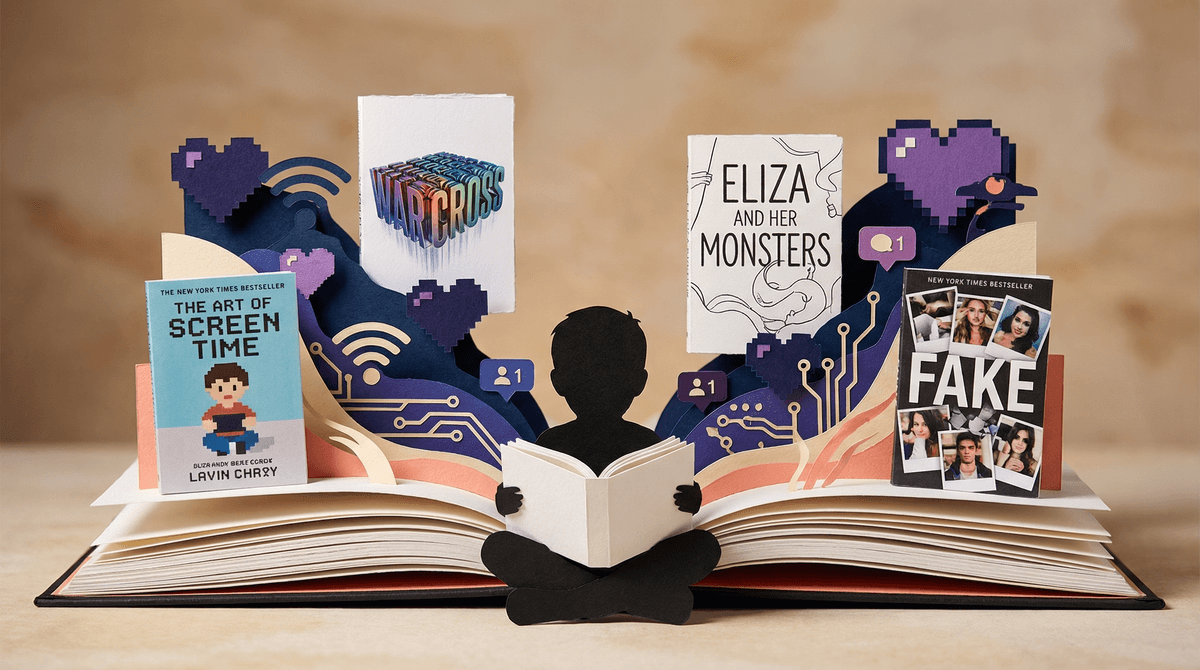
Look, we can lecture our kids about screen time until we're blue in the face, or we can hand them a story where the protagonist learns the hard way that their Instagram feed isn't real life. Books about digital life are exactly what they sound like: fiction and nonfiction that tackle technology, social media, gaming culture, online identity, and all the messy, complicated stuff that comes with growing up in a world where "touch grass" is legitimate advice.
These aren't your dusty "stranger danger on AOL" books from the 90s. Modern digital life books get it. They understand that a Minecraft server can be where real friendships form, that a viral TikTok can destroy someone's reputation overnight, and that AI isn't just science fiction anymore—it's writing your kid's English essay if you're not paying attention.
The best part? Books create space for conversations that feel impossible to start. It's way easier to say "wow, that character really messed up by sharing that photo" than "WHAT ARE YOU POSTING ON INSTAGRAM?!"
Here's the thing: most kids are living significant portions of their lives online, but we're not giving them nearly enough stories that reflect that reality. We've got a million books about first crushes and friendship drama, but where are the books about getting cancelled in the group chat? About comparing yourself to filtered influencers? About the weird parasocial relationship with a YouTube creator?
Books about digital life do something crucial—they normalize talking about technology as part of life, not separate from it. They help kids (and honestly, us) develop critical thinking about:
- Online vs. offline identity - Who are you when you can curate everything?
- Digital citizenship - What does it mean to be a good person online?
- Tech ethics - Just because we can do something with technology, should we?
- Screen time balance - How do you know when you're spending too much time online?
- Privacy and safety - What information is actually dangerous to share?
Plus, for kids who feel like their parents "just don't get it," these books can be validating. Yes, your Roblox friendships are real. Yes, it hurts when you're left out of the Discord server. Yes, the pressure to perform online is exhausting.
Ages 8-12: Building Digital Literacy
The Friendship Experiment by Erin Teagan - A middle schooler tries to make friends using scientific methods and social media. It's sweet, funny, and gets at the heart of how kids use technology to navigate social dynamics without being preachy.
Restart by Gordon Korman - Okay, this isn't explicitly about digital life, but it brilliantly tackles online bullying, viral videos, and reputation management when the protagonist gets amnesia and has to piece together his past through social media and other people's phones.
Fake by Donna Cooner - A girl catfishes someone online and things spiral. This one doesn't pull punches about the consequences of online deception, but it's age-appropriate for mature tweens.
Gamer Squad series by Kim Harrington - Kids solve mysteries using gaming skills. It's fun, validates gaming culture, and shows both positive and negative aspects of online gaming communities.
Ages 13-16: Getting Real About Social Media
The Silence of Bones by June Hur - Wait, this is historical fiction set in 1800s Korea. Why is it here? Because it's a masterclass in how information spreads, who controls narratives, and the danger of rumors—all directly applicable to social media culture. Sometimes the best digital life books aren't explicitly about phones.
Eliza and Her Monsters by Francesca Zappia - A teen runs a massively popular webcomic anonymously while struggling with anxiety. This book GETS online creative culture, fandom, and the weird pressure of internet fame. It's also a beautiful story about mental health.
Followers by Megan Angelo - This one's more for older teens (16+). It's speculative fiction that alternates between 2015 and 2051, exploring influencer culture, surveillance, and what happens when our online lives become our only lives. It's dark but so, so relevant.
You'd Be Home Now by Kathleen Glasgow - Tackles addiction, but also how social media amplifies shame, how viral moments can destroy families, and how performative "support" online often masks real cruelty.
This Is Where It Ends by Marieke Nijkamp - Heavy content warning here (school shooting), but it's told partially through social media posts and texts. It's a powerful look at how tragedy unfolds in real-time online and how we process trauma through screens.
Nonfiction That Actually Works
Technically Wrong by Sara Wachter-Boettcher - For older teens and parents. Explains how tech products are designed and who gets harmed when designers don't think about diverse users. Eye-opening.
The Art of Screen Time by Anya Kamenetz - This one's for you, parents. Research-based, non-panicky approach to screen time that actually respects the complexity of modern life.
Irresistible by Adam Alter - Also for parents and older teens. Explores behavioral addiction and why apps are designed to be so hard to put down. Learn more about how tech companies design for addiction .
.
Not every book needs to be a cautionary tale. Some of the best digital life books simply show technology as part of life—not inherently good or bad. Kids need stories where characters game together, share memes, and have group chats, just like they do.
Your kid's reading level matters less than their emotional maturity. A technically strong reader might not be ready for books about cyberbullying or online predators. Trust your gut on what your specific kid can handle.
Read them too. Or at least skim them. These books are conversation starters, not replacements for actual conversations. When you can say "remember in that book when..." you're building a shared language for talking about hard stuff.
Don't expect instant revelations. Your kid isn't going to read Eliza and Her Monsters and immediately delete Instagram. But they might start thinking more critically about online personas. They might feel less alone in their struggles. They might bring something up three months later that connects back to the book.
Graphic novels count. Books like Guts by Raina Telgemeier or Invisible Emmie by Terri Libenson tackle anxiety and online/offline identity in formats that some kids find more accessible.
Book club style - Read the same book and discuss it. Not in a forced "what's the moral of the story" way, but genuinely. "What do you think about how that character handled the group chat drama?"
Leave them lying around - Sometimes the best way to get a kid to read something is to make it seem like it's not specifically for them. "Oh, I'm reading this book about a girl who runs a webcomic, it's pretty good..."
Connect to their interests - Gamer kid? Try the Gamer Squad series or Warcross by Marie Lu. YouTube-obsessed? Eliza and Her Monsters. Into true crime? Sadie by Courtney Summers uses podcast format brilliantly.
Don't force it - If your kid hates reading, an audiobook about screen time isn't going to suddenly convert them. But maybe a graphic novel will. Or maybe they'd rather watch a show that tackles similar themes—The Social Dilemma is a documentary that hits many of the same notes.
Books about digital life aren't magic solutions to the challenges of raising kids in a digital world. Your kid can read every book on this list and still make questionable TikToks. But these stories do something important: they validate that the digital world is real, that online experiences matter, and that it's worth thinking critically about how we use technology.
They also give us a common language. Instead of "you're on your phone too much," you can have conversations about identity, authenticity, pressure, and balance that feel less like lectures and more like... well, like talking about a good book.
The best part? While your kid is reading about someone else's digital drama, they're off their phone. The irony is not lost on me.
Start with one book that matches your kid's interests and reading level. Don't overthink it.
Check out alternatives to screen time for more ideas on how books fit into a balanced digital life.
Join or start a parent book club focused on digital life books—reading the same books as other parents in your community creates space for comparing notes on how your kids are handling this stuff.
And hey, if your kid isn't into reading? That's okay too. There are other ways to build digital literacy. See other approaches for teaching digital literacy that might work better for your family.