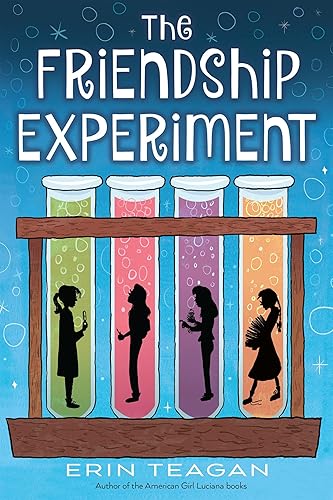
The Friendship Experiment

The Friendship Experiment

book

2019, Children's Books, Growing Up & Facts of Life

WISE
80%

WISE Score

4.6

Amazon

A science-loving girl treats middle school friendship drama like lab experiments—until her secret notebook of observations gets exposed.

Amazon4.6
Common Sense Media

Where to Read

Our reviews and ratings are 100% unbiased, but as an Amazon Associate, Screenwise earns an affiliate fee if you buy a book or game by clicking one of our links. We don't get any credit if you just Google it instead :)

Screenwise Verdict

This is a solid, well-executed middle grade novel that takes the standard "new school, new friends" premise and gives it a science-lab twist. Maddie is a likable protagonist who feels real—awkward, grieving, analytical, and trying her best.

The book doesn't break new ground in children's literature, but it does what it sets out to do well. The grief processing is honest without being overwhelming, the friendship drama feels authentic, and the STEM framing is genuinely clever rather than forced. It's the kind of book that might help a science-loving kid see that social skills are also learnable—just like experiments.

Not a must-read classic, but a good, enriching choice for the target age that combines emotional growth with a protagonist kids will root for. The 4.6 Amazon rating suggests it connects with its audience, which matters more than critical acclaim for this age group.
Age Fit

Perfect for ages 9-13, especially kids starting or navigating middle school. The scientific angle makes it particularly appealing to STEM-minded readers who might not usually gravitate toward friendship stories. Upper elementary and middle schoolers will recognize the social dynamics.

WISE Breakdown
Wholesome
82

Handles grief, friendship loss, and middle school transitions with emotional honesty. Maddie's journey through her grandfather's death and social struggles is age-appropriate and models working through difficult feelings. The story shows consequences when she writes unflattering observations about peers in her notebook, teaching empathy without being preachy.

Imaginative
74

The scientific framing is clever—Maddie approaches social problems like experiments, writing Standard Operating Procedures in her lab notebook. It's a fresh angle on the middle school friendship story, encouraging analytical thinking about relationships. However, it's still fundamentally a realistic contemporary story, not wildly inventive or world-building.

Safe
92

Extremely safe content. Deals with grief and social awkwardness but no mature themes, violence, or inappropriate content. Common Sense Media confirms it's appropriate for the target age. The main 'conflict' is Maddie's secret notebook being discovered—relatable middle school drama without anything shocking or triggering.

Enriching
79

Strong STEM representation with a girl protagonist who loves science and lab work. Explores grief processing, friendship dynamics, and the consequences of objectifying people versus seeing them as complex individuals. The notebook discovery creates genuine ethical questions about privacy and empathy. Solid emotional intelligence building for the age group.

Parent Info
✓

Why It Might Be Great

  • STEM girl protagonist who wants to work in her dad's research lab instead of dealing with social drama—refreshing and relatable for science-minded kids
  • Handles real grief (loss of grandfather) and friendship loss without being heavy-handed or overly sentimental
  • The notebook premise is clever: Maddie writes clinical observations about her peers, which backfires spectacularly when discovered
  • Teaches empathy and perspective-taking through natural consequences rather than lecturing
  • Strong Amazon rating (4.6/5) suggests kids actually enjoy reading it
⚠

What to Watch For

  • Grief is a central theme—Maddie is processing her grandfather's death throughout, though it's handled gently
  • Social embarrassment when the notebook is discovered might be uncomfortable for sensitive readers who've experienced similar situations
  • Some kids might find the pacing slow if they're expecting action over character development

Conversation Starters

  • "Maddie treats people like science experiments at first. Have you ever felt like you were observing people from the outside instead of really connecting?"
  • "What would you do if someone was writing observations about you in a secret notebook? How would that feel?"
  • "Maddie really misses her grandfather. What are some ways people in your life help you when you're sad or missing someone?"
  • "Do you think it's easier to understand science or understand people? Why?"

Ask Anything

Get a personalized guide on any topic