Beyond the Ready Player One Hype
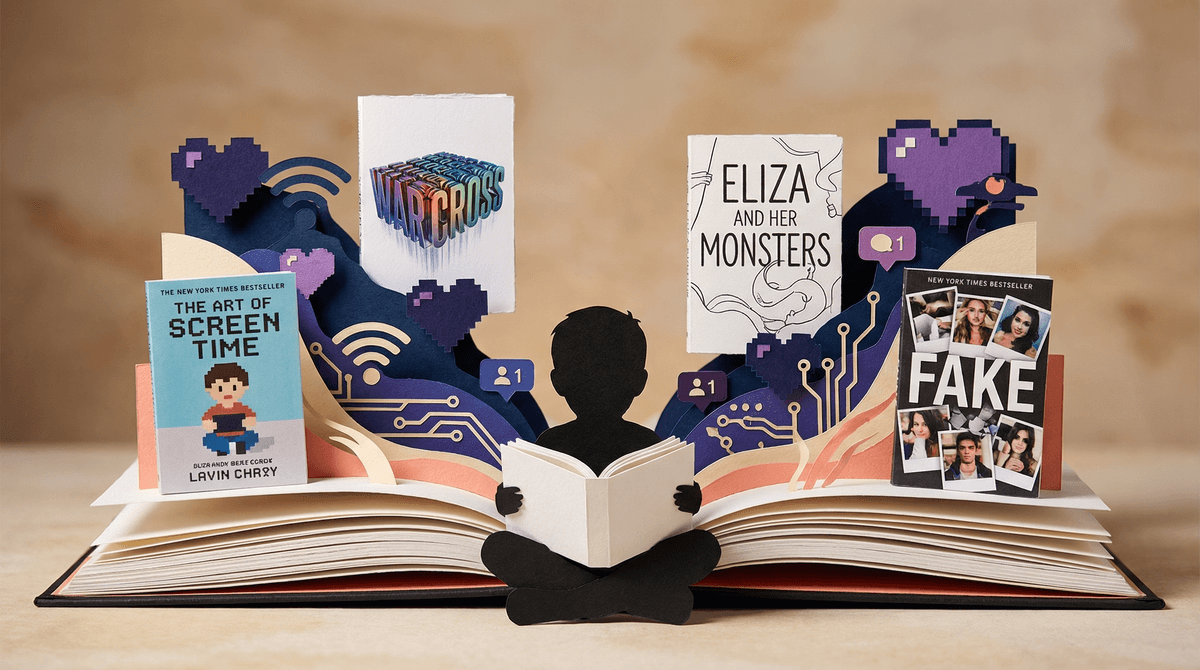
Everyone compares this to Ready Player One, but that’s a bit of a lazy shorthand. While both involve high-stakes virtual reality, Warcross feels much more current. It’s less about 80s nostalgia and more about the "five minutes from now" reality of bounty hunting, gig-economy survival, and the total integration of tech into our physical lives. If your kid lives in a hoodie and thinks in terms of Discord pings and Twitch streams, this world will feel like home.
As far as science fiction books for kids go, this one is particularly good at making the "analog" act of reading feel as fast-paced as a first-person shooter. Marie Lu writes with a cinematic eye—the descriptions of the Tokyo setting and the neon-soaked VR arenas are vivid enough that you can practically see the anime adaptation in your head. It’s a top-tier strategy for motivating middle school readers who usually claim books are too slow compared to gaming.
The "Cool Coder" Trope Done Right
We’ve all seen the "hacker" character who just mashes a keyboard for five seconds and says "I’m in." Warcross handles this with more respect. Emika Chen feels like a real programmer. She deals with glitches, exploits, and the actual logic of how a massive global simulation might be vulnerable.
For parents, this is a great entry in our list of books about digital life because it doesn't just treat the internet as a scary place or a playground. It treats it as a tool. Emika uses her skills to solve her very real financial problems, which opens the door for a conversation about how "screen skills" translate to the real world. She isn't a chosen one because of a prophecy; she’s a chosen one because she’s better at her craft than anyone else.
Navigating the PG-13 Edge
You might see some reviews claiming this belongs in the adult section. Take that with a grain of salt. That critique usually comes from the fact that the book deals with some heavy themes—surveillance, the ethics of "improving" humanity through tech, and the moral gray area of working for a billionaire who might be a villain.
The swearing is the most "adult" thing about it, but it’s consistent with how actual 18-year-olds talk when they’re stressed. It’s not gratuitous, but it’s there. The romance between Emika and Hideo Tanaka is a slow burn that adds tension without veering into "spicy" territory. It’s the kind of "forbidden love" plot that keeps the pages turning for teens who are starting to move past middle-grade fiction but aren't quite ready for the darker corners of adult sci-fi.
Why it Sticks
The ending of this book is a genuine gut-punch. It flips the script on the typical "hero wins the tournament" narrative and forces the reader to think about who actually owns the digital spaces we inhabit. If your kid finishes this and immediately starts asking about the sequel, use that momentum. Ask them if they’d trade their privacy for a perfect gaming experience. That’s the central question of the book, and it’s one they’re already answering every time they click "Accept" on a new app’s terms of service.