

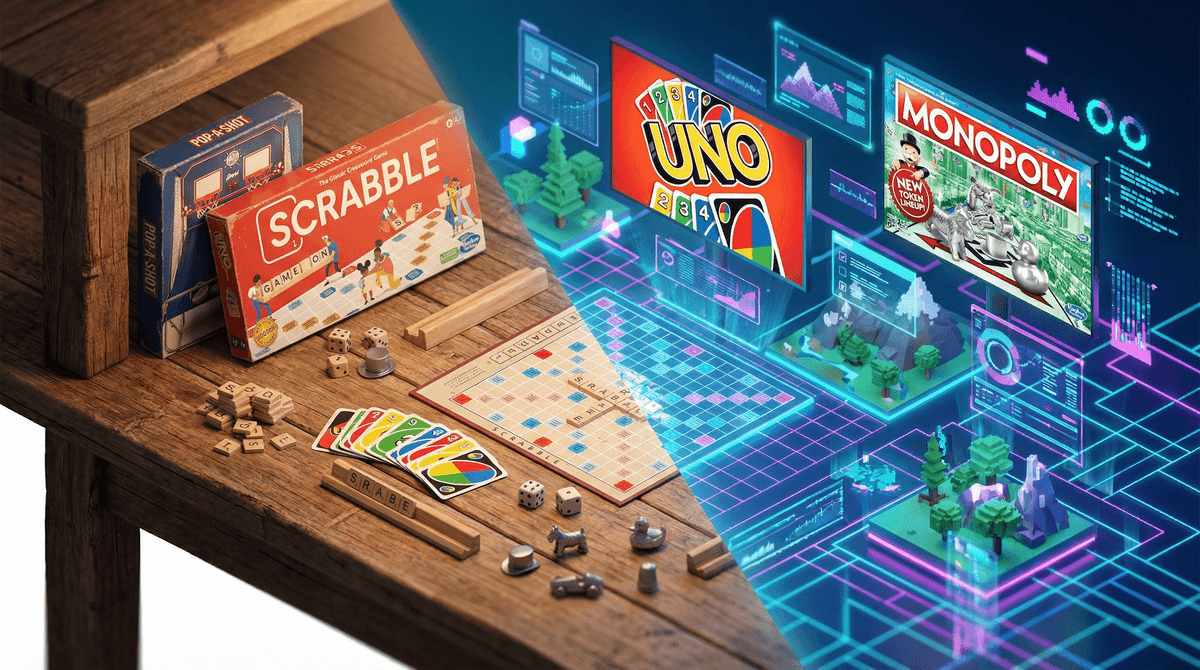
Remember when family game night meant actually sitting around a table, arguing about Monopoly rules, and watching your kid "accidentally" knock over the Sorry! board when they were losing? Well, those same games are now on Xbox, PlayStation, and Nintendo Switch, and the experience is... different.
Digital versions of classic board games like Monopoly, Uno, Clue, Risk, and Scrabble are everywhere now. Some are pretty straightforward translations, while others add animations, mini-games, and features that would make the original creators do a double-take. And here's the thing: 55% of families in your community are already gaming on consoles, so chances are this has come up in your house.
Let's be real: kids aren't begging to play digital Monopoly because they suddenly developed a passion for real estate strategy. Here's what's actually appealing:
The computer does the boring parts. No more counting money, shuffling cards, or arguing about whose turn it is. The game handles all that automatically. For kids (and honestly, for parents too), this removes a lot of friction.
It's faster. A game of Monopoly that would normally take 3 hours can be done in 45 minutes when the computer handles transactions and enforces rules automatically.
Visual appeal. These aren't just static boards on screens. Digital versions often have animated characters, sound effects, and visual flourishes that make the game feel more "alive" to kids raised on high-production-value media.
Online play with friends. Your kid can play Uno with their cousin in another state, which is genuinely pretty cool.
No cleanup. This one speaks for itself.
Here's where it gets interesting. When a board game goes digital, some things improve and some things... well, they disappear entirely.
What you gain:
- Accessibility features - Many digital versions include colorblind modes, text-to-speech, and other accommodations that physical games don't offer
- Rule enforcement - The computer won't let you cheat (intentionally or otherwise), which can actually help kids learn the real rules
- Solo play options - Kids can play against AI when no one else is available
- No lost pieces - That tiny Clue wrench will never disappear under the couch again
What you lose:
- Physical manipulation and fine motor skills - Shuffling cards, moving pieces, and handling game components are actually valuable developmental activities for younger kids
- Face-to-face social interaction - Even when playing in the same room, everyone's looking at screens instead of each other
- Spontaneous rule negotiations - Those "house rules" that made your family's version of Monopoly unique? Gone. The digital version is the digital version.
- Reading body language - Part of games like Clue or Risk is watching your opponent's reactions. Much harder when you're staring at avatars.
This is where it gets tricky. With average screen time in your community sitting at 4.2 hours per day, adding gaming to the mix requires some thought.
Is playing digital Scrabble for 30 minutes the same as watching YouTube for 30 minutes? Not really. Is it the same as playing physical Scrabble? Also not really. It's somewhere in between.
The key difference: active vs. passive engagement. Strategic board games, even digital ones, require problem-solving, planning, and decision-making. That's different from passive content consumption. But it's still screen time, and it still doesn't offer the same physical and social benefits as the tabletop version.
Ages 5-8: At this age, the physical manipulation of game pieces is actually really valuable for development. If you're going digital, make it occasional rather than the default. Games like Candy Land or Chutes and Ladders don't gain much in digital form anyway.
Ages 9-12: This is where digital versions can actually shine. Kids this age can appreciate the strategic depth without getting bogged down in rule management. Ticket to Ride, Catan, and Carcassonne have excellent digital versions that maintain the spirit of the originals.
Ages 13+: Teens can handle more complex digital board games and might genuinely prefer them for the convenience factor. Games like Wingspan or Terraforming Mars are actually better in digital form because the computer handles the complex scoring and rule interactions.
Not all digital versions are created equal. Some are faithful adaptations, others add microtransactions, ads, or gameplay changes that fundamentally alter the experience. Check what you're actually buying before you commit.
Consider it a supplement, not a replacement. The best approach? Have both. Use digital versions for quick games or when friends can't physically be together, but maintain physical game nights too.
Online play needs supervision for younger kids. If the game includes chat features or online multiplayer with strangers, the same safety considerations apply as with any online interaction. Many games allow you to play online with friends-only, which is a safer option.
Some games are gateway drugs to more complex gaming. If your kid loves digital Catan, they might start asking about Civilization VI or other strategy games. That's not necessarily bad, but it's worth being aware of the trajectory.
Digital board games aren't inherently good or bad—they're just different. They can make classic games more accessible and convenient, but they also remove some of the social and physical benefits that make traditional board games valuable in the first place.
The sweet spot? Use them strategically. Digital Uno on a road trip? Great. Digital Monopoly every single game night instead of ever pulling out the physical board? You're missing something.
Think of digital board games as one tool in your family's entertainment toolkit, not the only tool. They work best when they're expanding your options, not replacing experiences that have value in their original form.
- Audit what you have: Take stock of both your physical game collection and any digital versions you've accumulated
- Set intentional boundaries: Maybe digital versions are for weeknight quick games, while weekend family time is reserved for physical boards
- Try before you buy: Many digital board games have free demos—test them out before committing
- Keep the conversation going: Ask your kids what they prefer about each version and why. Their answers might surprise you and help you understand what they're actually getting from game time
Want to explore more about how your family's gaming habits compare to others in your community? Screenwise can help you understand your family's digital patterns in context.