

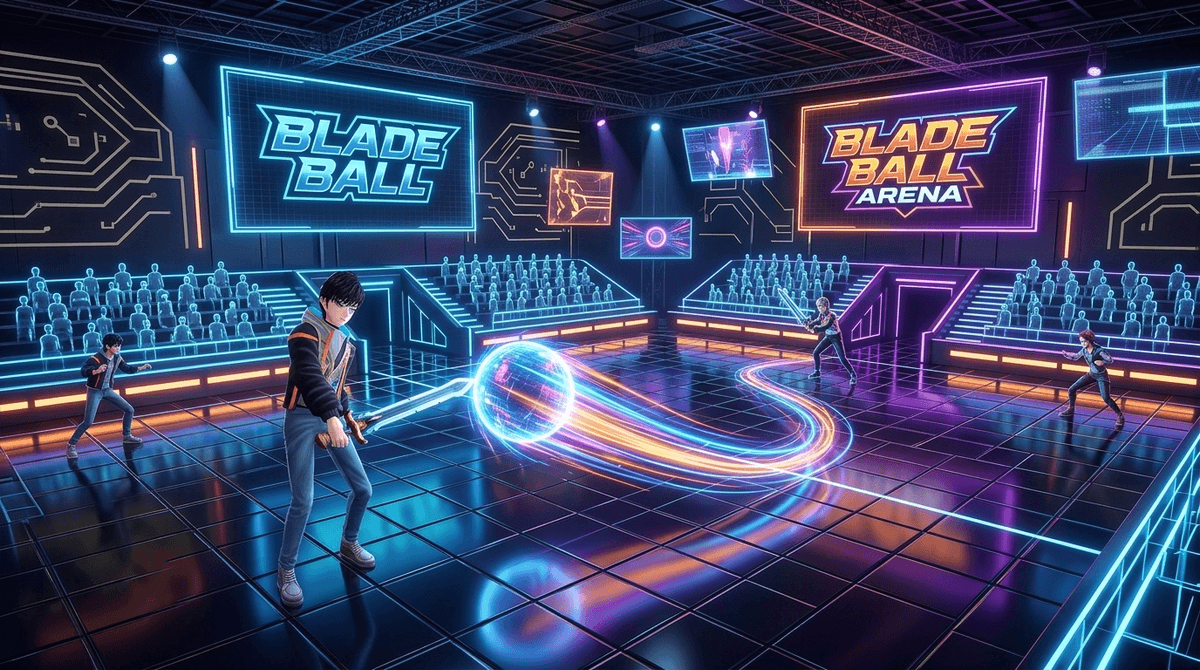
TL;DR: Blade Ball is a high-speed "digital dodgeball" game where players use swords to parry a homing ball. It’s incredibly addictive due to its fast rounds and "clout" culture. While the gameplay is relatively harmless (no blood, just blocky "knockouts"), the real risks are the aggressive monetization (gambling-adjacent "spins") and the high-pressure social environment of Roblox.
If your kid is suddenly obsessed with "parrying," "abilities," and spending their life savings on sword skins, you’re dealing with the Blade Ball phenomenon.
Imagine a game of dodgeball, but instead of throwing a red rubber ball, a glowing orb of energy zooms around an arena, targeting players one by one. Instead of catching it, you have to time a "parry" with a sword to send it flying at someone else. As the round progresses, the ball gets faster and faster until it’s a blur of light.
Blade Ball started as a massive hit on the Roblox platform, but its success has spawned standalone versions and "Arena" iterations looking to move beyond the Roblox ecosystem and onto PC and consoles. It’s essentially a test of reflexes and "ping" (internet speed), which is why you might hear your kid complaining that they "totally hit that button" when they lose.
It’s the digital equivalent of a "bottle flip" or a "fidget spinner"—it’s satisfying, rhythmic, and incredibly easy to start but hard to master.
- The "Clout" Factor: In the world of Roblox, having a rare sword skin or a unique "kill effect" (the animation that plays when you knock someone out) is a major status symbol.
- Short Feedback Loops: Rounds last about 2–3 minutes. If you lose, you’re back in a new game instantly. This creates a "just one more" loop that can make "five more minutes" turn into two hours very quickly.
- The Skill Ceiling: Unlike some games that are just "point and click," Blade Ball requires genuine timing. Kids love showing off that they can handle the ball when it’s at "insane" speeds.
- Social Spectating: When you’re knocked out, you watch the rest of the round. This creates a "stadium" feel where kids chat, commentate, and trash-talk (hopefully playfully) while waiting for the next round.
Learn more about why competitive gaming is so addictive for the developing brain
The developers are pushing Blade Ball Arena as a standalone title. Why? Because while Roblox is great for reach, it takes a massive cut of the profits. By moving to a standalone PC/Console game, the creators get more control—and more money. For you, this means your kid might ask to download a new launcher or buy the game on a platform like Steam.
The gameplay remains the same, but the graphics are usually "upgraded" (though still stylized), and the community can feel a bit more "hardcore" than the average Roblox server.
Let’s be real: the "violence" in Blade Ball is non-existent. There’s no gore, no realistic weapons—it’s just blocky characters getting booped by a ball. The real "boss fights" for parents are spending and toxicity.
The "Gacha" Trap
Blade Ball uses a "spin" system for its best items. This is essentially gambling. You pay currency (which costs real money) for a chance to win a legendary sword. The odds are often dismal, and it can lead to "chasing the win." If your kid has an impulsive personality, this game will poke at those buttons constantly.
Social Pressure and "Ohio" Energy
The Roblox community around this game is heavily influenced by "brain rot" culture—think Skibidi Toilet memes, calling everything "mid" or "Ohio," and a general level of irony that can sometimes mask actual bullying. Because the game is so competitive, the chat can get salty.
- Ages 7-9: They’ll love the colors and the speed, but they will likely get frustrated by the difficulty and the "pay-to-win" feel of other players having better abilities. Keep an eye on the Roblox chat settings.
- Ages 10-12: This is the sweet spot. They are old enough to handle the mechanics but most susceptible to the "I need that skin" social pressure. This is a great time to talk about "digital value" vs. "real-world value."
- Ages 13+: They’ll likely be playing the standalone Blade Ball Arena on PC. At this age, the concern shifts to "time creep" and ensuring they aren't spending eight hours a day in a digital arena.
If you’re looking to steer them toward games that have similar "flow" but maybe less aggressive monetization, check these out:
It’s soccer with cars. It has a similar "high skill, fast-paced" vibe but is a much more polished, professional esport. It still has skins, but the core gameplay is much more robust.
Though the official servers moved to a "private hosted" model, this is the gold standard for dodgeball games. It’s stylish, fun, and rewards teamwork over just individual "parrying."
Many Minecraft servers have "mini-games" that mimic the Blade Ball mechanics. Since you likely already have Minecraft, it’s a "safer" way to play within a known ecosystem.
If they love the "timing" and "parrying" aspect, Smash Bros is the ultimate test of those skills. It’s a one-time purchase (mostly) and offers a much deeper mechanical experience.
Instead of "Why are you playing that weird ball game again?", try these conversation starters:
- "Show me your favorite ability." (This helps you understand if they are focusing on gameplay or just the 'spins' for skins).
- "What happens if you miss a parry? Does the community get mad, or is it chill?" (This opens the door to talk about toxic gaming culture).
- "I noticed those 'spins' for swords. How many of those do you think are actually worth the money?" (A non-judgmental way to discuss the math of loot boxes).
Blade Ball isn't "bad" or "dangerous" in the traditional sense. It’s a digital sport that rewards focus and reflexes. However, it is a masterclass in monetizing FOMO (Fear Of Missing Out).
If you can keep the spending under control and ensure the "trash talk" in the arena doesn't follow them into the dinner table, it’s a relatively harmless way for them to blow off steam. Just don't be surprised if they start trying to "parry" the bread rolls tonight.
- Check the "Recent Purchases" on your Roblox account. You might be surprised how many "spins" have been bought.
- Set a "Round Limit" instead of a "Time Limit." Since rounds are short, telling a kid "two more rounds" is often more effective than "five more minutes."
- Watch a round with them. It’s actually quite impressive to see how fast their brains are processing the ball’s movement. A little "Whoa, nice parry!" goes a long way in building digital trust.
Get a personalized Screenwise guide for your family's gaming habits