

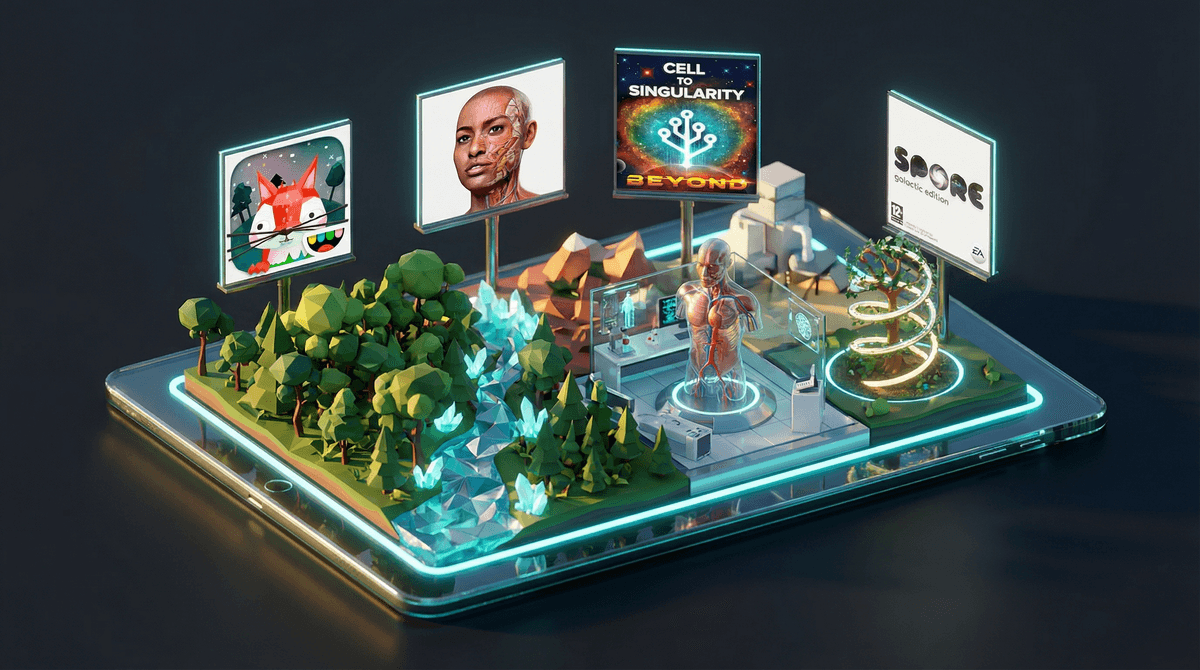
Biology games are digital (and sometimes physical) games that teach life science concepts through interactive play—think cells dividing, ecosystems balancing, body systems functioning, and evolution happening right on screen. We're talking everything from cute creature-collection games that sneak in genetics lessons to full-blown anatomy simulators where kids can virtually dissect a frog without the formaldehyde smell.
The good ones make photosynthesis feel like magic, turn the Krebs cycle into a puzzle, and help kids understand why their body does weird things without requiring a textbook. The not-so-good ones are basically digital flashcards with a cartoon mascot slapped on.
Here's the thing: biology is inherently fascinating to kids. They're already asking why their boogers are green, how their baby sibling grew in there, and whether their dog can understand them. Biology games tap into that natural curiosity without the "sit still and memorize the parts of a cell" energy that makes kids' eyes glaze over.
The appeal:
- Hands-on experimentation without real-world consequences (you can't accidentally kill your classroom hamster)
- Immediate feedback when they figure out how something works
- Progression systems that make learning feel like leveling up
- Visual learning for kids who struggle with textbook diagrams
- Creative problem-solving rather than rote memorization
Plus, let's be honest—some of these games are just genuinely fun. When a kid is breeding digital creatures to understand dominant and recessive traits, they're not thinking "wow, I'm learning Mendelian genetics." They're thinking "I want to make a purple one."
Ages 5-8: Introduction to Life Science
Toca Nature - Kids build ecosystems and watch how plants, animals, and environment interact. It's gentle, open-ended, and teaches basic food chains without being preachy.
The Magic School Bus Games - Multiple games covering human body, plants, and animals. Ms. Frizzle's chaos energy makes biology feel like an adventure rather than a lesson.
Creatures of the Deep - Ocean life exploration that's more about discovery than testing. Kids learn about marine biology through observation.
Ages 8-12: Building Core Concepts
Cell to Singularity - An idle/clicker game about evolution that's surprisingly educational. Kids tap to evolve life from primordial soup to space-faring civilization. Yes, it teaches actual evolutionary biology. Yes, kids find it addictive. Use the idle game mechanics as a conversation starter about how these games are designed to keep you coming back .
.
Spore - The classic. Kids design creatures and guide them through evolution stages. It's not scientifically rigorous, but it teaches adaptation, natural selection, and ecology in a way that sticks. Fair warning: it's older (2008) but still holds up.
Plague Inc. - Controversial pick, hear me out. Yes, you're creating a disease to wipe out humanity. But kids learn about epidemiology, transmission vectors, symptoms, and public health responses. Ages 10+ and definitely worth discussing the ethics. Maybe don't introduce this one during flu season.
Minecraft: Education Edition - Biology Labs - If your kid already plays Minecraft, the Education Edition has specific biology worlds for genetics, ecosystems, and chemistry. It's the game they already love with actual learning built in.
Ages 12+: Deeper Dive
Ancestors: The Humankind Odyssey - You control a lineage of primates evolving over millions of years. It's challenging, sometimes frustrating, and teaches evolutionary biology, adaptation, and survival in a visceral way. Ages 13+ due to predator attacks and some intensity.
Kerbal Space Program - While primarily physics-focused, the life support systems and biological considerations for space travel make this relevant. Plus, if your kid is into biology, they're probably also into space.
Real Biology Apps:
- Complete Anatomy - Medical-grade 3D anatomy app that's free for students
- Labster - Virtual lab simulations for high schoolers (subscription-based, but many schools provide access)
The Good Stuff
Genuine learning happens. When kids play biology games consistently, they retain concepts better than passive learning. A kid who's bred 47 generations of digital creatures to get the right color combination understands genetics in a way that a worksheet can't teach.
Screen time that doesn't feel like screen time guilt. If your kid is going to be gaming anyway, biology games land in that sweet spot of "educational but not boring." It's easier to say yes to 30 minutes of Cell to Singularity than another Fortnite session.
Conversation starters. These games naturally lead to questions: "Mom, why DO we have an appendix?" "Dad, could a disease actually wipe out humanity?" These are teaching moments disguised as game chat.
The Reality Check
Not all "educational" games are created equal. Some biology games are glorified quizzes with game mechanics tacked on. If your kid is just answering multiple choice questions with a timer, that's not really a game—that's a test with extra steps.
Idle/clicker games can be addictive. Games like Cell to Singularity use the same dopamine mechanics as any other idle game. Set time limits and be aware of the "just one more upgrade" pull.
Accuracy varies. Spore is fun but takes massive liberties with evolution. Plague Inc. simplifies epidemiology. Use these as starting points for conversations, not gospel truth.
Monetization exists. Many biology apps have in-app purchases, subscriptions, or ads. Toca Nature is a one-time purchase. Cell to Singularity has optional purchases. Check before handing over the device.
Here's my take: biology games can absolutely count toward "educational screen time" in your family's framework, but they're still screen time. A kid staring at cell division for 3 hours straight isn't better than 3 hours of anything else—eyes still get tired, bodies still need movement.
What works:
- Time-box it: 30-45 minutes of biology gaming, then hands-on activity (build a model cell with household items, go outside and observe actual ecosystems)
- Pair digital with physical: Playing Toca Nature? Visit a real nature center. Playing anatomy games? Get a skeleton model or anatomy coloring book
- Use as supplement, not replacement: These games are amazing for reinforcing what kids learn in school or sparking new interests, but they're not a full biology curriculum
When to say yes:
- Long car rides or flights
- Rainy days when outdoor play isn't happening
- As a reward for completing other homework
- When your kid is genuinely curious about a biology topic and the game can answer it
When to redirect:
- When they're zoned out/glazed over (even educational content can become passive)
- When they're frustrated and not learning anymore
- When it's replacing physical activity or sleep
- When they're just grinding for achievements rather than engaging with the content
Biology games can be legitimately educational without being painfully boring. The best ones teach kids to think like scientists—observing, experimenting, failing, and trying again. They make abstract concepts concrete and turn memorization into discovery.
But they're tools, not magic. A kid who plays Cell to Singularity for 20 minutes and then spends an hour asking you questions about evolution and looking up real organisms? That's the sweet spot. A kid who's clicking mindlessly to level up without thinking? That's just another screen time sink with a educational label.
Start here:
- Pick one game from the age-appropriate list above
- Play it with your kid for the first session—see what they're learning, what questions come up
- Set clear time limits before starting (use a timer, not "just a few more minutes")
- Follow their interest: If they love it, explore related hands-on activities; if they're meh, try a different game or different approach
And if your kid becomes obsessed with cellular biology because of a game and starts explaining mitochondria at dinner? Congratulations, you've unlocked the "educational screen time actually worked" achievement. It's rare, but it happens.
Want more educational game recommendations? Check out our guides on chemistry games for kids, physics games that don't suck, or how to balance educational and entertainment screen time.