The clicker that actually has a brain
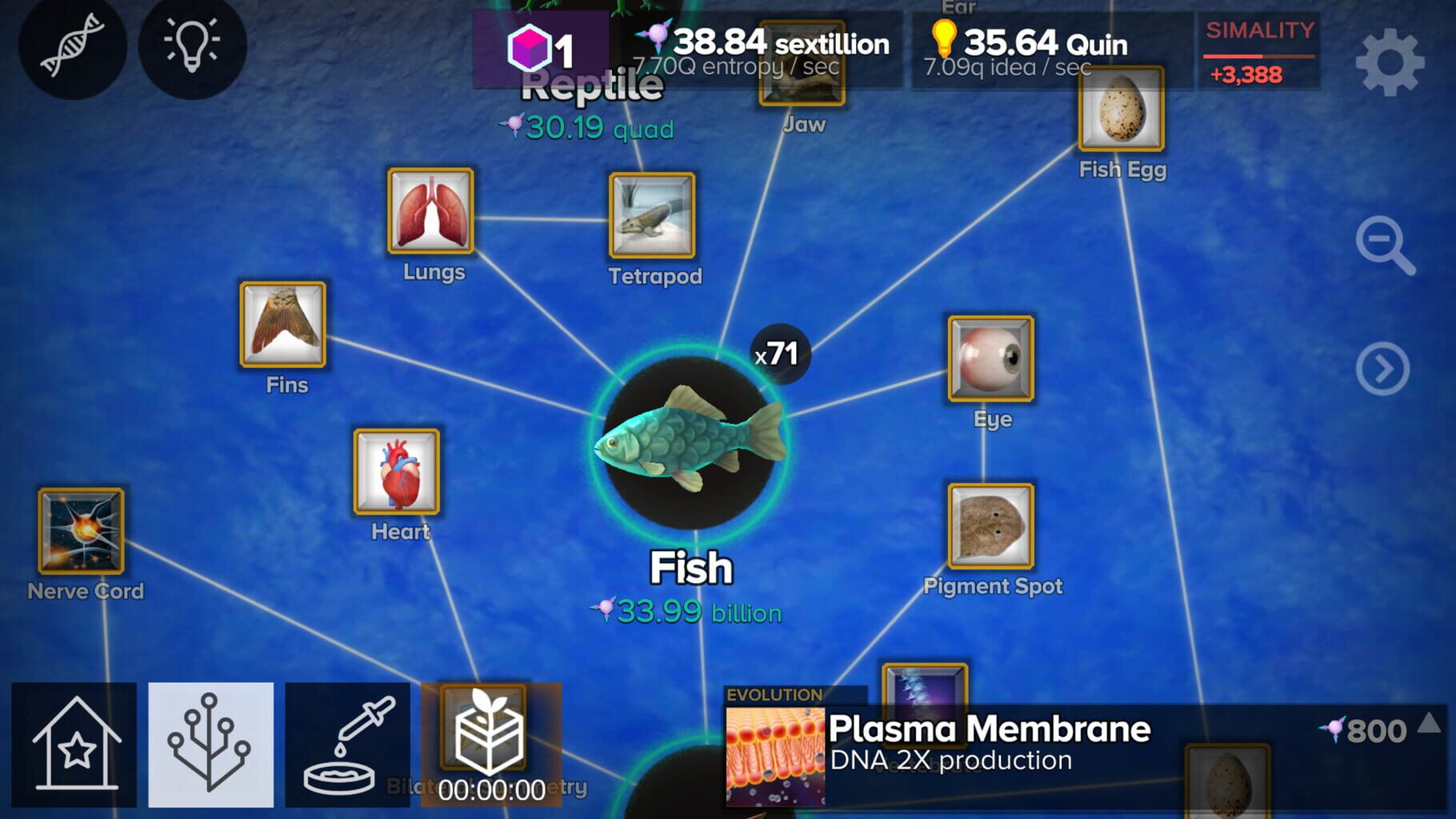
Most idle games are designed to turn your brain off. They want you to tap a cookie or a generic gold coin until your eyes glaze over. Cell to Singularity flips that script by making the "numbers go up" mechanic serve a massive, billion-year narrative. You start with a blank Earth and a few molecules, and before you know it, you’re managing the rise of the industrial revolution and the eventual colonization of Mars.
It’s a simulator in the truest sense. While we have a curated list of Biology Games for Kids: Learning Life Science Through Play, this one is the heavyweight champion of sheer scale. It doesn't just cover how a cell works; it covers why that cell eventually decided to walk on land and start a Twitter account.
The "Information Age" hump
The game is divided into different "trees." You have the main evolutionary line, but then you can branch off into the Mesozoic Valley to focus entirely on dinosaurs or head into the "Beyond" to deal with space. This variety is what keeps it from feeling like a biology textbook.
However, you should know about the pacing. Because this is an idle game, progress eventually hits a wall. In the early game, you’re unlocking new species every few seconds. By the time you reach the "Middle Ages" or the "Information Age," you might be waiting hours or even days to gather enough resources for the next big leap.
For a kid who thrives on the instant feedback of something like Roblox, this will be a dealbreaker. But for the kid who likes "competence porn"—the same vibe found in our parent’s guide to Rainbow Six where every detail and system matters—the slow build-up is the whole point.
Why the "Singularity" matters
The game’s title refers to the moment where technological growth becomes uncontrollable and irreversible. It’s a heavy concept for a mobile game, but it handles it with a chill curiosity. It moves from the past into speculative future tech, like cyborgs and Dyson spheres.
If your kid is the type to ask "what comes next?" after a science documentary, this game provides a playground for those questions. It’s also one of the few games where the "prestige" mechanic—restarting the game for faster progress—is actually baked into the story as a simulation reset. It makes the repetitive nature of the genre feel meaningful rather than just a way to keep you clicking.
A rare "clean" mobile experience
The most refreshing thing about this title is what it doesn't do. In a market saturated with "pay-to-win" mechanics and aggressive ads, this experience is remarkably stable. The developer, Computer Lunch, has kept the focus on the science and the sense of wonder.
There are no social leaderboards to stress over and no "loot boxes" to gamble on. It’s just you and the timeline of the universe. If you’re looking for a way to let a kid have a "phone game" that doesn't feel like a slot machine or a toxic chat room, this is the gold standard.