

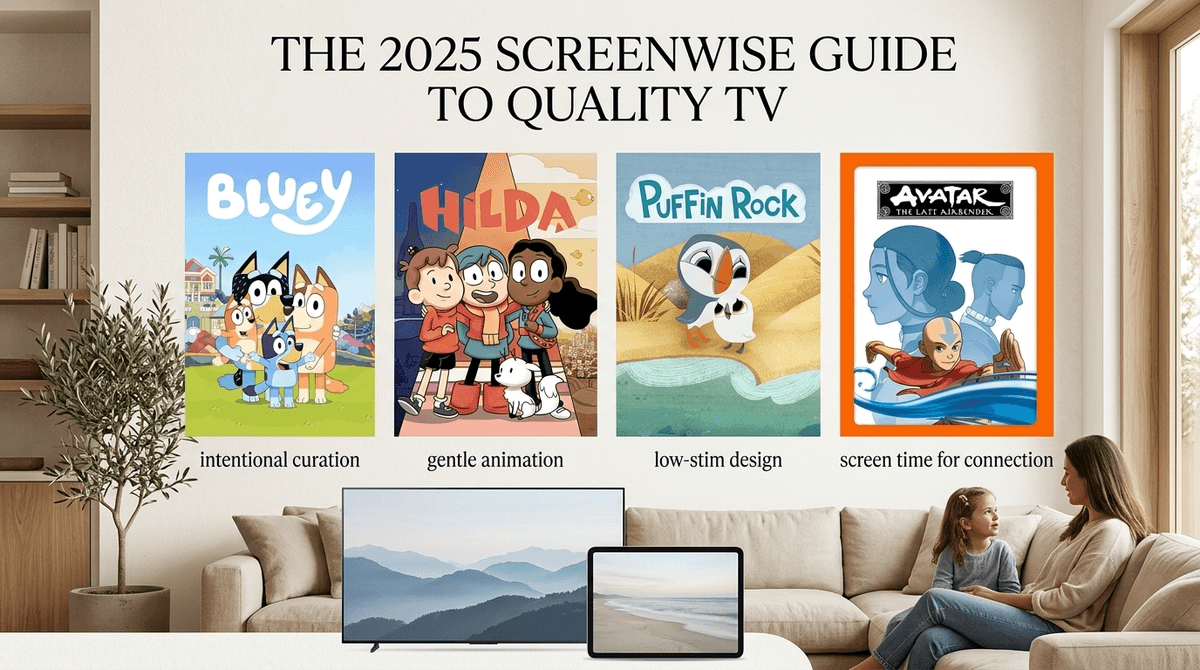
TL;DR: The Best Shows for Your Sanity (and Their Brains)
If you’re in a rush because someone just spilled a juice box, here are the top picks for 2026 that won't leave your kid acting like a "Skibidi" zombie:
- Best for Toddlers/Pre-K: Puffin Rock and Trash Truck
- The Gold Standard for Everyone: Bluey
- Best for Emotional Intelligence: Daniel Tiger’s Neighborhood
- Best for Adventure (Ages 7+): Hilda and The Dragon Prince
- Best for Science/Curiosity: Ada Twist, Scientist
Get recommendations based on your kid's favorite hobbies
We’ve all seen it. The "Cocomelon Glaze." It’s that vacant, mouth-agape stare kids get when they’re consuming high-fructose digital corn syrup. You know the shows—the ones with the neon colors, the 1.5-second camera cuts, and the constant, jarring sound effects.
By the time you turn the TV off, your kid is "only in Ohio" (which, for the uninitiated, is Gen Alpha speak for "everything is weird/bad") and having a total meltdown because their brain just went from 100mph to a dead stop.
In 2026, the "brain rot" is real. Between the Skibidi Toilet memes migrating from YouTube to the playground and the algorithmic chaos of the YouTube Kids home screen, finding a show that actually builds a kid up instead of just "parking" them is a legitimate parenting win.
Research shows that the pacing of media matters as much as the content. Shows like Cocomelon or some of the weirder Blippi spin-offs are designed to hijack the dopamine system. They use rapid scene changes to keep a child’s attention locked.
The problem? Real life doesn't have scene changes every two seconds. When we feed them high-stimulation content, we’re essentially training their brains to find the real world—and the classroom—boring.
Quality shows use "pro-social" modeling. They show characters solving problems, feeling frustrated without hitting, and navigating friendships. When your kid watches Bluey, they aren't just being entertained; they’re literally learning the scripts for how to play with others.
If you want to avoid the post-TV tantrum, go for "slow TV." These shows have muted palettes, gentle music, and logical transitions.
This is the ultimate "chill" show. It’s narrated by Chris O'Dowd, it’s set on an Irish island, and it follows a puffin named Oona. The colors are beautiful but not neon, and the stakes are low (e.g., "will the seagull eat the snack?"). It’s pure, wholesome, and won't make your head throb.
Don't let the title fool you. This isn't a loud, clanging monster truck show. It’s a gentle story about a boy and his best friend, who happens to be a garbage truck. It’s incredibly sweet and focuses on imagination and kindness.
Look, Daniel Tiger is basically therapy for toddlers. It’s the direct descendant of Mister Rogers' Neighborhood, and it’s still the best at teaching "emotional regulation." If your kid is struggling with sharing or "going to the potty," there’s a song for that.
Check out our guide on the best PBS Kids shows for emotional growth
This is the age where they start asking for Roblox and watching MrBeast. You want shows that bridge the gap between "baby stuff" and the more intense "big kid" media.
I don’t need to tell you that Bluey is the GOAT (Greatest of All Time). But here’s why it stays on the list for 2026: it’s one of the few shows that models "active fatherhood" and realistic sibling dynamics. It’s also funny enough that you won’t want to scroll on your phone while it’s on.
Based on the Hilda graphic novels, this show is stunning. It’s about a blue-haired girl who moves from the wilderness to a walled city. It deals with themes of empathy toward "monsters" and the complexity of growing up. It’s sophisticated without being scary.
If your kid is in the "Why?" phase, StoryBots is your best friend. It explains complex topics (how do phones work? why do we have to brush our teeth?) with catchy music and celebrity cameos that are actually funny for adults.
By this age, about 75% of kids are spending more time on YouTube or TikTok than watching traditional TV. If you can get them to sit down for a narrative show, make it one with a deep plot.
Whether it’s the original animated series (preferred) or the live-action remake, Avatar is a masterclass in character development, philosophy, and the consequences of war. It’s a "prestige" show for kids.
If they’ve read the Percy Jackson books, they’ll love the show. It’s a great way to get them interested in mythology and features a lead character with ADHD and dyslexia, which provides fantastic representation for neurodivergent kids.
From some of the same creators as Avatar, this is high-fantasy for the middle-school crowd. It’s got deep lore, diverse characters, and complex villains. It’s the perfect "binge" for a rainy weekend.
In 2026, the biggest "show" your kid is watching probably isn't on Netflix—it's on YouTube.
The community data is clear: by age 10, the majority of kids have moved away from curated streaming apps and into the world of "user-generated content." This is where things get dicey. A "show" on YouTube might just be a 20-minute video of someone playing Minecraft while screaming into a microphone.
If your kid is obsessed with YouTube, try to pivot them toward high-quality channels that feel like "shows."
- Mark Rober: Engineering and science with high production value.
- Kurzgesagt – In a Nutshell: Deep dives into space and biology with beautiful animation.
- Coyote Peterson / Brave Wilderness: For the animal lovers.
Learn how to set up YouTube parental controls for your tween
How do you know if a show is "brain rot"? Do an audit. Watch 5 minutes of the show and ask yourself:
- Is the music constant? Does it ever stop, or is it a non-stop wall of sound?
- Are the cuts too fast? If you can't keep track of the physical space the characters are in because the camera moves too much, it’s overstimulating.
- Are the characters "Ohio"? (Translation: Are they being weirdly aggressive, loud, or using "meme-brain" logic?)
- The "Off" Test: When you turn the TV off, does your kid transition back to reality, or do they immediately "glitch" into a meltdown?
If a show fails these tests, it doesn't mean it's "evil," but it might mean it's a "sometimes food" rather than a daily staple.
Instead of saying "That show is garbage," try asking questions that build their media literacy:
- "Why do you think the characters are yelling so much?"
- "Do you think Blippi is actually that excited about a fire truck, or is he acting?"
- "How did you feel after watching that? Did your brain feel fast or slow?"
Teaching them to recognize the "glaze" in themselves is the first step toward them making better choices on their own.
Digital wellness isn't about "zero screens." It’s about quality over quantity.
In 2026, we have more access to incredible, educational, and emotionally resonant storytelling than ever before. But we also have more access to "digital candy" that’s designed to keep kids addicted.
By choosing shows like Bluey, Hilda, or Puffin Rock, you aren't just filling time—you're protecting their focus and helping them build a healthier relationship with technology.
- Audit your streaming queue: Delete the high-stimulation apps if you need a "digital detox."
- Try a "Slow Saturday": Only allow low-stimulation shows for one full day and see if you notice a difference in behavior.
- Explore Podcasts: If you want to cut the cord on visual overstimulation entirely, check out Wow in the World or Brains On!.