

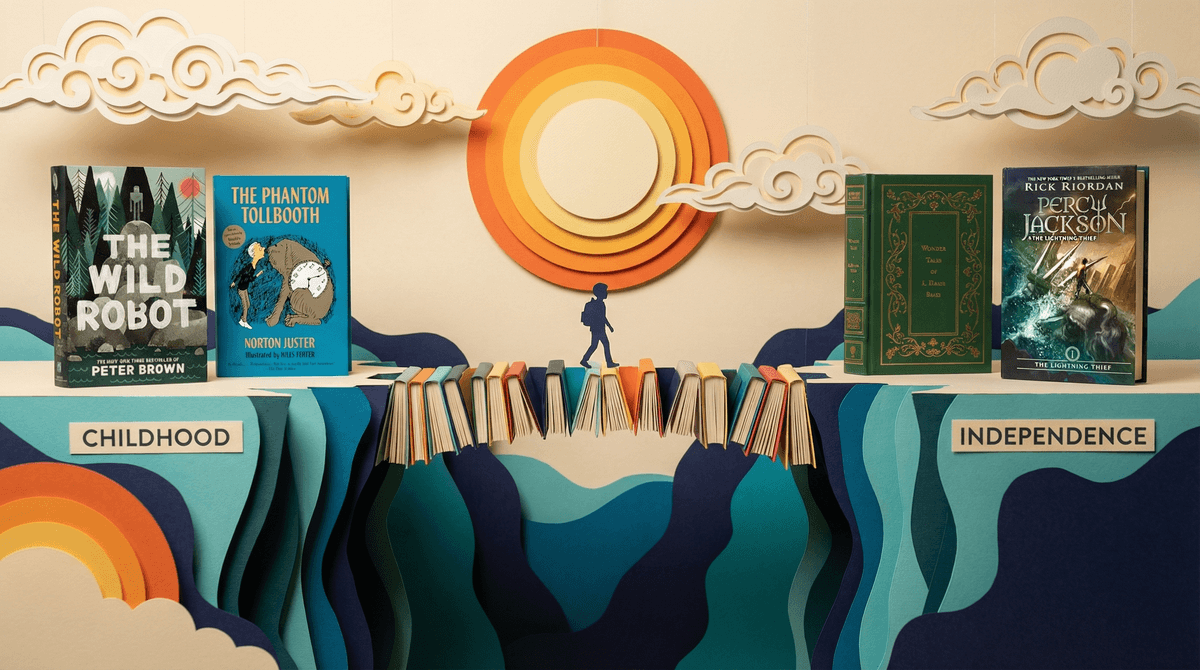
Fifth grade is such a weird, wonderful reading sweet spot. Kids are technically still in elementary school, but they're reading chapter books that would've made your 10-year-old self feel very grown up. They can handle complex plots, morally gray characters, and themes that go way beyond "be nice to your friends."
But here's the thing: not all "middle grade" books are created equal. Some 5th grade reading lists are basically just "books that won't get us in trouble with parents," which means they're boring as hell. Others throw kids into YA territory way too early (looking at you, well-meaning aunt who gifted The Hunger Games to a 10-year-old).
The best 5th grade books hit that Goldilocks zone: challenging enough to feel like a real accomplishment, but not so intense that you're fielding existential questions at bedtime for the next three weeks.
Fifth graders are at a crossroads. Some are still happily reading Dog Man (no shame, those books are hilarious), while others are ready for 400-page fantasy epics. This is the year a lot of kids either become readers for life or decide "reading is boring" and never pick up a book for pleasure again.
The stakes are higher than they seem because this is also the year kids start having real opinions about what they read. They're developing taste. They're comparing books to shows and games they love. They're starting to notice when a book talks down to them or when it actually respects their intelligence.
And honestly? A great book can do things for a 5th grader that even the best screen content can't. Books let kids process complex emotions at their own pace, imagine characters however they want, and build sustained attention in ways that episodic content just doesn't.
Books That Respect Their Intelligence
Wonder by R.J. Palacio - Yes, it's everywhere. Yes, every school does a unit on it. But it's popular for a reason: it tackles facial differences, bullying, and empathy without being preachy. The multiple perspectives teach kids that everyone's the protagonist of their own story. Fair warning: the movie is fine, but the book is genuinely better.
Hatchet by Gary Paulsen - A 13-year-old survives a plane crash in the Canadian wilderness with nothing but a hatchet. No magic, no chosen one prophecy, just pure survival and problem-solving. Kids who love Minecraft survival mode will eat this up. It's also mercifully short (under 200 pages), which makes it perfect for reluctant readers.
The Giver by Lois Lowry - This is the book that teaches kids what dystopian fiction actually means (before they dive into the YA dystopian deep end). It's thought-provoking without being traumatizing, and it sparks incredible conversations about conformity, memory, and what makes life worth living. The ending is ambiguous, which some kids love and some kids HATE, so heads up.
For Kids Ready for Epic Adventures
Percy Jackson series by Rick Riordan - If your kid hasn't discovered these yet, you're in for a treat. Greek mythology, ADHD representation that actually makes sense in the plot, humor that doesn't feel forced, and a protagonist who's not a perfect chosen one. The series grows with readers—book one is solidly 5th grade, but by book five, they're ready for more complex themes. The Disney+ show is pretty faithful if they want to see it come to life.
The Wild Robot by Peter Brown - A robot washes up on an island and has to learn to survive among wild animals. It's Wall-E meets Hatchet, and it's absolutely beautiful. Great for kids who love tech but need a break from screens. The themes about belonging and what makes someone "alive" are surprisingly deep.
Holes by Louis Sachar - This book is a masterclass in plotting. Multiple timelines that all connect, a satisfying mystery, and themes about justice and fate that don't feel heavy-handed. Also, it's funny! The movie is one of those rare adaptations that's actually good, so you can make it a whole thing.
For Kids Who Think They Don't Like Reading
Diary of a Wimpy Kid series - Yes, these are technically easier than "5th grade level," but if they get a reluctant reader actually reading, who cares? Greg Heffley is kind of a terrible person, which makes him hilarious and relatable. These books prove that reading can be as entertaining as scrolling TikTok.
Refugee by Alan Gratz - Three kids, three time periods (Nazi Germany, 1990s Cuba, modern-day Syria), all fleeing their homes. It's heavy subject matter, but Gratz writes with urgency and short chapters that keep kids turning pages. This is the book that teaches empathy without feeling like a lesson.
The One and Only Ivan by Katherine Applegate - Based on a true story about a gorilla living in a shopping mall. It's short, it's accessible, and it tackles themes about captivity and freedom in ways that spark real conversations. Kids who love animals will be all in.
For Advanced Readers Ready for More
A Wrinkle in Time by Madeleine L'Engle - Sci-fi, fantasy, and philosophy all wrapped up in a story about a girl searching for her father across dimensions. It's weird, it's challenging, and it doesn't explain everything, which is exactly what strong readers need. The movie is... let's just stick with the book.
The Phantom Tollbooth by Norton Juster - A bored kid drives through a magical tollbooth into a world of wordplay and mathematical concepts. It's clever without being smug, and it's the kind of book that rewards rereading. Perfect for kids who love puzzles and puns.
Bridge to Terabithia by Katherine Paterson - Fair warning: this book has a gut-punch plot twist that will wreck your kid (and possibly you). But it's also one of the most honest books about friendship, imagination, and grief. Just... maybe don't let them read it right before bed.
Graphic novels are REAL BOOKS, full stop. If someone tells you they don't count, they're wrong. Fifth graders who devour graphic novels are building visual literacy, following complex narratives, and yes, actually reading.
Smile by Raina Telgemeier and her other books are perfect for this age—relatable middle school drama with actual stakes. Amulet series by Kazu Kibuishi is great for kids who want fantasy adventure in graphic novel form. And honestly? If your kid is reading Dog Man or Big Nate, that's still reading. Don't let anyone shame them out of it.
Let them choose. I know the school reading list says Where the Red Fern Grows, but if your kid wants to read the 47th Wings of Fire book instead, that's fine. Series reading builds stamina and confidence.
Audiobooks count. Kids who struggle with decoding but love stories can follow along with the physical book while listening. The Libby app connects to your library card and is free. This is not cheating—it's accessing content in a different format.
Don't force the classics. Yes, Treasure Island is a classic. It's also boring to most 10-year-olds. There's time for canonical literature later. Right now, the goal is building a reading habit.
Make it social. If your kid's friends are all reading the same series, lean into it. Book series are like the Roblox of literature—they create shared culture and conversation.
The best 5th grade reading list is the one your kid actually reads. Yes, challenge them. Yes, introduce them to different genres and perspectives. But also respect that they're developing their own taste, and sometimes that taste is "books about dragons" for six months straight.
Reading at this age should feel like discovery, not homework. If you can find even three books that make your kid feel the way they feel when they're deep in their favorite game or show—that sense of being completely absorbed in another world—you've won.
And if your kid genuinely hates reading? That's a separate conversation about learning differences , screen time balance, and finding their entry point. But for most kids, there's a book out there that'll hook them. Your job is just helping them find it.
Start with interest, not level. Ask your kid what they love about their favorite show or game, then find books with similar themes. Kid obsessed with Pokémon? Try fantasy books with creature collecting. Loves Bluey? Look for books about family dynamics and everyday adventures.
Use the library. Seriously, just go. Let them wander. Let them check out seven books and only finish one. That's fine. Libraries are free, and librarians are magic people who know exactly which book will hook which kid.
Read together sometimes. Not every book, not as a requirement, but occasionally reading the same book gives you built-in conversation starters that aren't "how was school?" (which never works anyway).
The goal isn't creating a perfect little reader who only touches leather-bound classics. The goal is raising a kid who knows that books can be as engaging, funny, and transportive as any screen—and sometimes even better.