

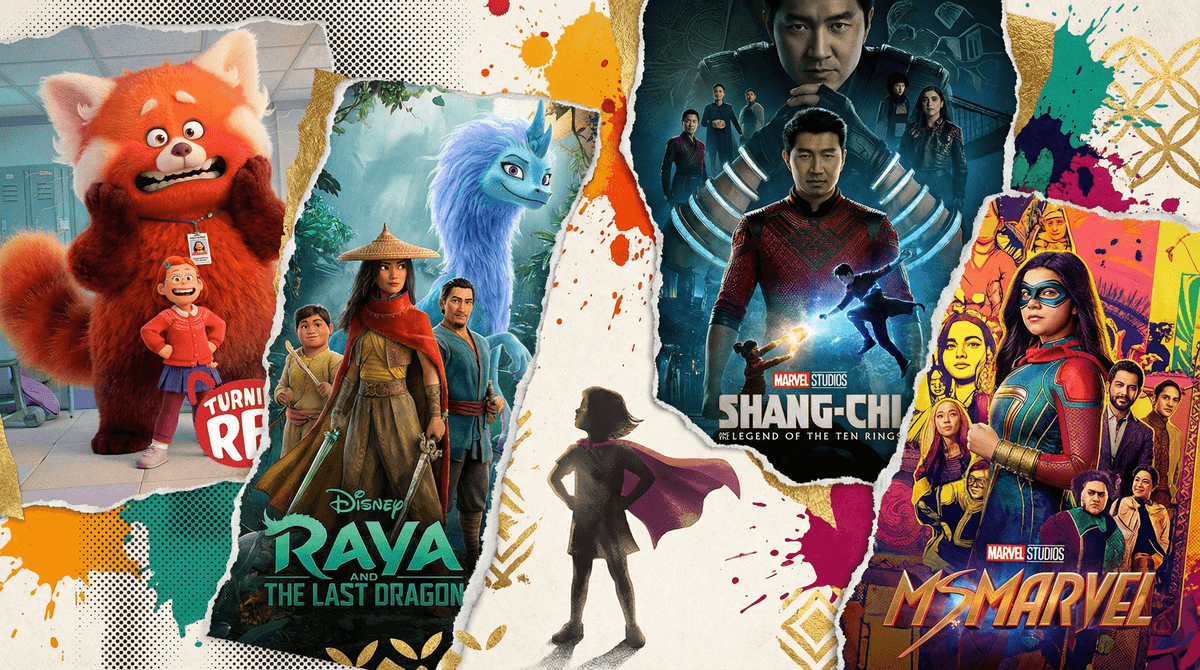
Look, representation in media isn't just a buzzword or a diversity checklist item. It's about kids seeing themselves reflected back as heroes, leaders, and main characters—not sidekicks, not stereotypes, not the "smart kid" or the "martial arts expert" who exists to help the white protagonist on their journey.
For Asian-American kids specifically, the landscape has shifted dramatically in the past few years. We've gone from basically Mulan and... Mulan... to actually having a legitimate roster of Asian and Asian-American heroes leading their own stories. And this matters for all kids, not just Asian-American ones. When kids only see one type of person saving the world, they internalize some pretty limiting ideas about who gets to be brave, funny, powerful, or worthy of a happy ending.
The data is pretty clear: kids who see positive representations of their own identity in media show higher self-esteem and stronger sense of belonging. And kids who see diverse representations of others develop more empathy and less prejudice. It's not rocket science—if you grow up watching stories where only certain people get to be the hero, you absorb that message.
But here's what's changed: we're finally at a point where Asian-American representation isn't just "better than nothing." We've got genuinely great content with complex, fully-realized Asian and Asian-American characters. Not perfect—we'll get to that—but meaningfully different from even five years ago.
For younger kids (ages 5-10):
Raya and the Last Dragon is a solid starting point—a Southeast Asian-inspired fantasy with a female warrior protagonist. It's not perfect (the "trust" message gets a bit heavy-handed), but Raya is brave, flawed, and drives her own story. Plus, the dragon is genuinely funny.
Turning Red is where Pixar finally made a movie about an Asian-American girl that's actually about being an Asian-American girl. The generational trauma, the immigrant parent pressure, the code-switching between home culture and friend culture—it's all there, wrapped in a story about a girl who turns into a giant red panda. Some parents found it "too specific" or "too emotional," which... kind of proves why it needed to exist.
For TV, Carmen Sandiego on Netflix features an Asian-American protagonist (voiced by Gina Rodriguez, which is its own conversation about voice acting and representation), and she's smart, capable, and morally complex. The show itself is genuinely educational without being preachy.
For tweens and teens (ages 10-16):
Shang-Chi and the Legend of the Ten Rings is the first Asian-led Marvel movie, and it's legitimately good. Shang-Chi is funny, vulnerable, complicated—not just "Asian guy who does kung fu" (though yes, the fight choreography is incredible). The father-son relationship is nuanced, and Awkwafina's character is a highlight without being reduced to comic relief.
Everything Everywhere All at Once is technically rated R, but many parents of 13+ kids have watched it together as a family. It's weird, it's moving, and it centers an Asian-American immigrant family dealing with generational expectations, identity, and nihilism through a multiverse adventure. Michelle Yeoh is phenomenal. Fair warning: it's genuinely strange and has some mature themes, so preview it first.
Ms. Marvel on Disney+ features a Pakistani-American Muslim teen, and while not specifically Asian-American, it's one of the best examples of showing a non-white, non-Christian superhero navigating cultural expectations while also just being a regular goofy teenager. The family dynamics are warm and realistic.
For anime fans (and there are many), shows like My Hero Academia and Demon Slayer feature Japanese protagonists in Japanese settings, which is different from Asian-American representation but still meaningful for many Asian-American kids who connect with seeing Asian faces as heroes.
Let's be real: we're not at "mission accomplished" yet.
The good news: We've moved past the era of Long Duk Dong and Mickey Rooney in yellowface. Progress!
The less good news: A lot of Asian representation still falls into the "model minority" trap—the smart kid, the overachiever, the rule-follower. We need more Asian characters who are messy, rebellious, average, or even kind of dumb. Not every Asian character needs to be a straight-A student or a martial arts master.
Also, South Asian, Southeast Asian, and Pacific Islander representation still lags significantly behind East Asian representation. Encanto isn't Asian at all (it's Colombian), but it's worth noting because it shows what's possible when you actually invest in culturally specific storytelling—we need that same energy for Filipino stories, Vietnamese stories, Hmong stories, etc.
For Asian-American kids: Ask them how they feel seeing characters who look like them. Do they feel represented? Do the characters feel real? What stories do they wish they could see? Don't assume that any Asian character automatically resonates—a Chinese-American kid might not see themselves in a Japanese anime character, and that's okay.
For non-Asian kids: Talk about who gets to be the hero in stories and why that matters. Ask questions like: "Have you noticed that most superheroes used to look pretty similar? What do you think about that?" Help them understand that more diverse stories means more interesting stories, period.
For all kids: Point out when representation is done well versus when it's stereotypical. Help them develop a critical eye. Why is Shang-Chi different from old kung fu movie stereotypes? What makes Turning Red feel authentic versus generic?
Asian-American representation in kids' media has genuinely improved, and it matters. Kids who see themselves as heroes develop stronger identities. Kids who see others as heroes develop broader worldviews. It's that straightforward.
The content exists now—not in overwhelming quantities, but enough that you can actually curate a media diet for your kids that includes Asian and Asian-American heroes who are funny, brave, flawed, and fully human.
Start a conversation: Ask your kids who their favorite heroes are and why. If they're all the same race/gender, that's information worth having.
Diversify intentionally: Pick one movie or show from this list that your family hasn't seen yet. Watch it together. Talk about it.
Follow Asian-American creators: On YouTube, TikTok, and Instagram, there are tons of Asian-American creators making content for kids and families. Expose your kids to real people, not just fictional characters.
Support the content: When you find shows and movies with good Asian-American representation, actually watch them, rate them, and talk about them. Studios are watching those numbers, and they make more of what works.
And if you want to dig deeper into any of these titles, check out our media pages where you can see ratings, age recommendations, and what other parents in your community are saying.