

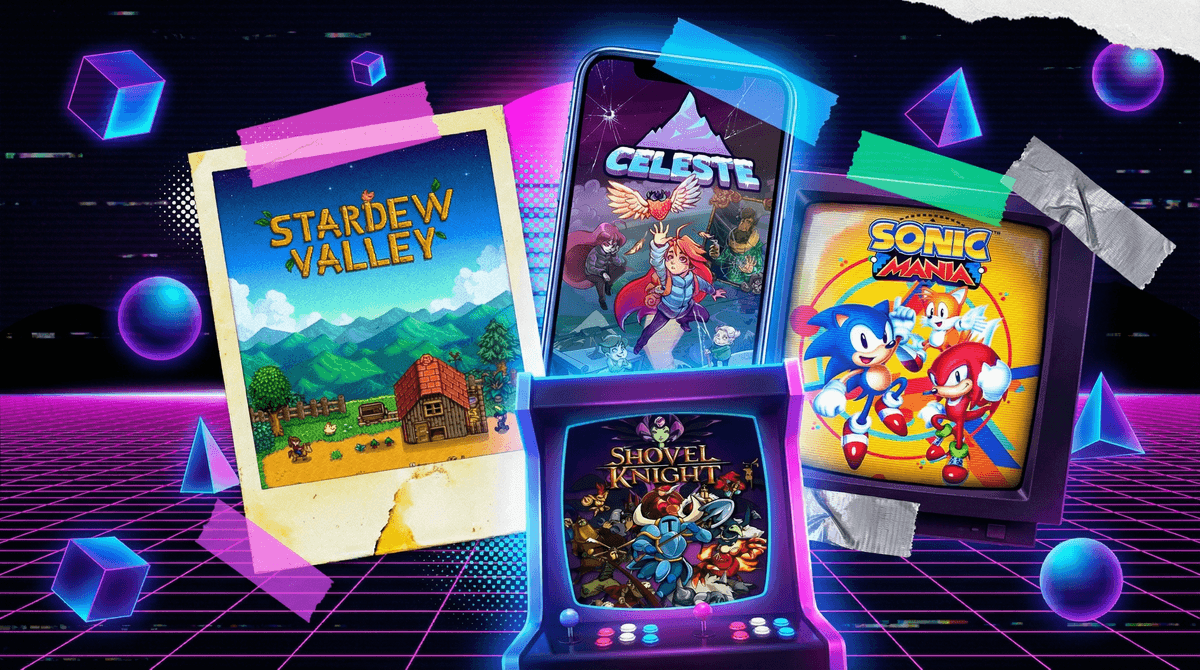
Remember when video games were just chunky pixels, simple controls, and the absolute certainty that you'd lose all your progress because nobody had invented saving yet? Well, that aesthetic is everywhere in modern gaming right now.
80s-inspired video games are modern titles that deliberately mimic the look, sound, and feel of classic arcade and early console games. We're talking pixel art graphics, chiptune music (those bleepy-bloopy soundtracks), limited color palettes, and often brutally difficult gameplay that would make Dark Souls look merciful.
But here's what makes this interesting for parents: these aren't just old games repackaged. They're new games built with modern design sensibilities that happen to look and sound retro. Think of it like how Stranger Things uses 80s aesthetics but has modern storytelling and production values. Games like Celeste, Shovel Knight, and Stardew Valley are all technically 80s-style but were made in the last decade.
Here's the wild part: kids who have never touched an NES are obsessed with games that look like they came from one. Why?
It's genuinely not about nostalgia for them. They can't be nostalgic for something they never experienced. Instead, there's something about the simplicity and clarity of retro design that just works. When a game is pixel art, your brain fills in the details. A few pixels become a character you care about. The limitations become part of the charm.
Also, let's be real: these games often have tight, responsive controls and clear objectives. There's no 40-minute tutorial, no season pass, no daily login bonuses. You jump, you shoot, you solve puzzles, you win or lose. In an era of games that feel like part-time jobs (looking at you, Fortnite), that simplicity is refreshing.
Plus, the indie game scene has absolutely embraced this aesthetic, which means there are tons of creative, weird, heartfelt games that happen to look retro. Your kid might stumble onto something like Undertale that looks like it was made in 1989 but has writing and emotional depth that rivals any modern game.
The Good Stuff
Most retro-inspired games are genuinely wholesome. Because they're often made by small indie teams rather than massive studios, you're less likely to encounter aggressive monetization, loot boxes, or predatory design. Many of these games are one-time purchases with no microtransactions—remember those?
The difficulty level in many 80s-style games can actually teach persistence and problem-solving. Games like Celeste are literally about climbing a mountain as a metaphor for overcoming anxiety. Sure, your kid will die 500 times, but that's kind of the point.
Also, because the graphics are simple, these games often run on literally anything. Got an old laptop that can barely handle Chrome? It'll probably run most pixel art indie games just fine. This makes them accessible without needing expensive hardware.
The Watch-Outs
Not all retro games are created equal in terms of content. Just because something looks like it came from the NES era doesn't mean it has NES-era content ratings. Some indie games with pixel art aesthetics contain mature themes, violence, or language that would never have appeared in an actual 80s game.
Hotline Miami, for example, looks like a cute top-down game from 1987. It is absolutely, unequivocally not for kids. It's ultraviolent and disturbing. The retro aesthetic can be deceiving.
The difficulty thing cuts both ways too. Some kids thrive on challenge; others will get genuinely frustrated by games designed to be punishingly hard. If your kid already struggles with frustration tolerance, maybe start with something like A Short Hike (gentle, exploratory, retro-ish) rather than something like Cuphead (gorgeous 1930s animation style, will make grown adults cry).
Ages 6-9: Look for games with retro aesthetics but forgiving gameplay. Kirby and the Forgotten Land has some retro vibes, or try Sonic Mania which is literally a modern take on classic Sonic.
Ages 10-12: This is prime territory for games like Shovel Knight, Hollow Knight (bit harder), or Stardew Valley. These have depth and challenge but are generally appropriate.
Ages 13+: Now you can explore the full range, including emotionally complex games like Celeste or Undertale. Just always check ratings and content warnings—the pixel art can be deceiving.
If your kid is suddenly into games that look "old," lean into curiosity rather than confusion. Ask them what they like about the style. You might be surprised—they might talk about the music, the challenge, or how the game makes them feel.
This is also a great opportunity to share your own gaming experiences if you had them. Did you play arcade games? Did you have an Atari or NES? Showing them what the actual 80s games were like can be a fun bonding moment. Pull up some gameplay of original Super Mario Bros. or Pac-Man and watch them be amazed that people played games that looked like that.
If you're concerned about difficulty and frustration, you can say something like: "I noticed this game seems pretty hard. How do you feel when you keep dying? Is it fun-challenging or just frustrating?" Help them develop awareness of their own emotional responses to games.
80s-inspired video games are mostly a positive trend in gaming. They represent a move toward creativity, simplicity, and artistic expression rather than just photorealistic graphics and billion-dollar budgets. Many of the best indie games of the last decade happen to have retro aesthetics.
The main thing is to not assume that "looks old" means "is safe for kids." Always check ratings and reviews. Common Sense Media is your friend here, as is just watching your kid play for a few minutes.
But overall? If your kid is into retro-style games, they're probably discovering some genuinely great gaming experiences. And hey, at least you can actually tell what's happening on screen, unlike when they're playing Roblox and you have no idea if that's a person or a sentient refrigerator.
- Check out our guide to indie games for kids for more recommendations
- Explore Celeste if you want to understand why a "hard platformer" can actually be therapeutic
- Curious about the difficulty thing? Learn more about how challenge in games can build resilience
