Tetris

Tetris

game

1984

WISE
94%

WISE Score

The perfect puzzle game that proves you don't need fancy graphics or a battle pass to lose three hours of your life to falling blocks.

Where to Play

Platform availability info not available. Search for "Tetris" on your preferred gaming platform.

Screenwise Verdict

Tetris is the GOAT for a reason. It is the purest expression of 'easy to learn, impossible to master.' In an era of games designed to harvest your data or sell you skins, Tetris is a refreshing reminder that a great mechanic is all you really need.

It’s the best digital 'fidget toy' ever invented. It doesn't just pass the time; it sharpens the brain. If you're going to let your kid play anything on a screen, this should be at the top of the list.

Age Fit

Perfect for anyone with the motor skills to move a joystick or press a button. It’s one of the few games that truly scales from age 4 to 99 without losing its appeal.

WISE Breakdown
Wholesome
95

It is the cleanest, most abstract game in existence. No violence, no complex social dynamics, just pure geometric order and a satisfying 'clear' sound. It’s the ultimate digital palate cleanser.

Imaginative
65

While it requires creative problem-solving, it’s a closed system. You aren't building a world or exploring a narrative; you are reacting to a fixed set of rules. It’s brilliant, but it’s more logic than imagination.

Safe
92

No chat, no strangers, and in its classic form, zero manipulative monetization. The only real safety hazard is the 'Tetris Effect'—closing your eyes and seeing blocks—and the potential for 'just one more game' to eat an entire afternoon.

Enriching
94

One of the few games with actual peer-reviewed cognitive benefits. It trains spatial reasoning, mental rotation, and focus. It’s basically a gym for the parietal lobe.

Parent Info

Why It Might Be Great

  • Cognitive heavy lifting disguised as a game; it builds spatial reasoning and pattern recognition skills that actually translate to real-world tasks.
  • Zero barrier to entry means a four-year-old and a ninety-year-old can play together (or at least trade off turns) without a steep learning curve.
  • Flow state induction is Tetris's superpower. It’s one of the fastest ways to get a kid to focus and enter a state of deep, calm concentration.
  • No dark patterns in the classic versions—no loot boxes, no 'energy' timers, and no social pressure to keep playing.

What to Watch For

  • The Tetris Effect is real; if they play for two hours, they will see blocks falling when they close their eyes to go to sleep. It’s harmless but can be annoying.
  • Modern mobile versions are often cluttered with ads and microtransactions. If you're introducing this, look for a 'classic' or 'premium' version to avoid the junk.
  • It can be surprisingly addictive. Because the feedback loop is so tight and satisfying, it's easy for 'five minutes' to turn into an hour.

Conversation Starters

  • "Do you start to see patterns or shapes in real life after playing for a while?"
  • "What’s your strategy when the blocks start falling too fast to think?"
  • "Why do you think this game is still popular forty years after it was made?"
  • "How do you feel when you finally clear a four-line 'Tetris'?"

Deep Dive

The Timelessness of the Long Bar

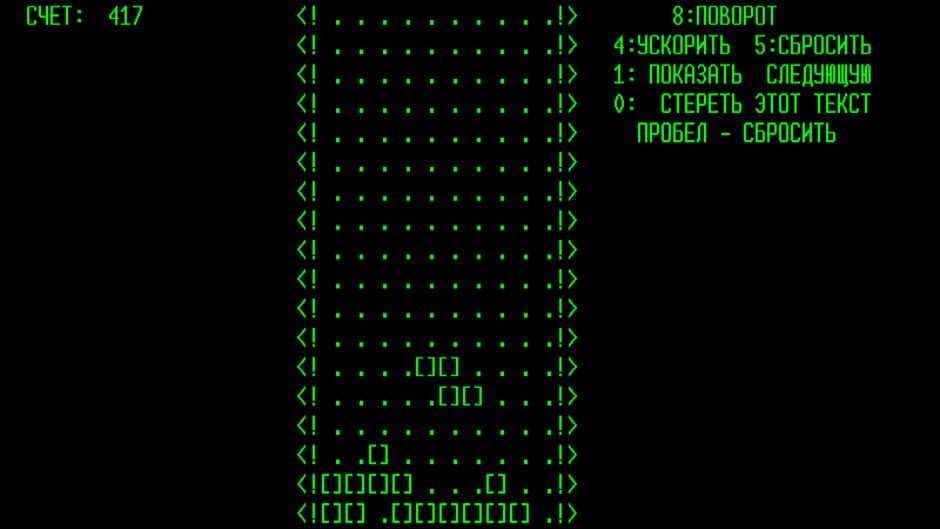
Tetris isn't just a game; it's a cultural landmark. Created by Alexey Pajitnov in 1984 Soviet Russia, it bypassed the Cold War to become a global obsession. Why? Because the human brain is hardwired to want to create order out of chaos. That's all Tetris is: organizing a mess until it disappears.

Why it beats modern 'Match-3' games

If you look at modern mobile puzzles like Candy Crush, they are designed around 'variable ratio reinforcement'—the same logic used in slot machines. They give you 'lucky' boards and 'unlucky' boards to keep you spending money on power-ups. Tetris is different. It is a meritocracy. If you lose, it’s because you made a mistake or weren't fast enough. That makes the 'win' much more psychologically rewarding for a kid.

The 'Tetris Effect' and Brain Health

There is actual scientific research suggesting that playing Tetris can increase cortical thickness and even help reduce the impact of traumatic memories if played shortly after a stressful event. It occupies the visual processing centers of the brain so completely that it blocks out intrusive thoughts. For a kid who needs to 'reset' after a long day at school, a few rounds of Tetris is often more effective than a nap.

How to play it in 2026

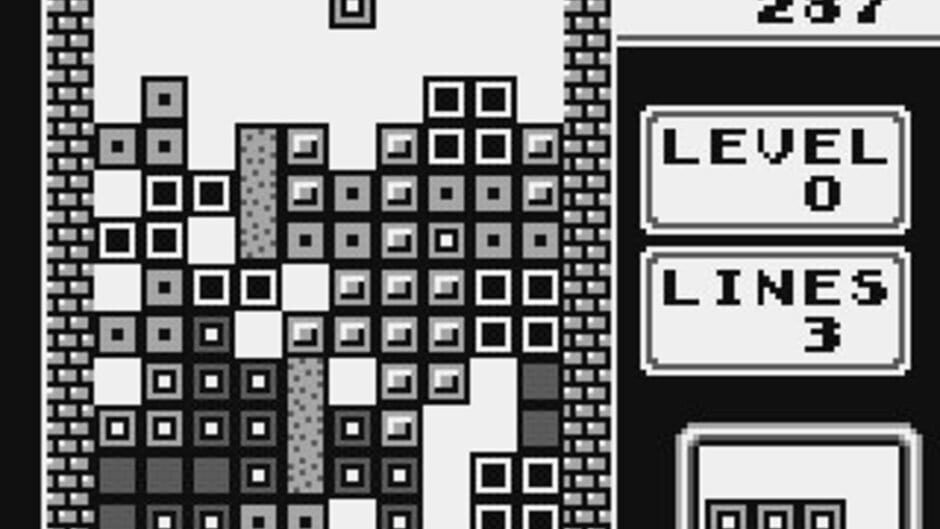
Avoid the free-to-play mobile apps that are 90% ads. The best way to experience it now is through Tetris Effect: Connected (available on most consoles) which adds incredible music and visuals, or Tetris 99 on the Switch if your kid wants a competitive 'Battle Royale' twist. If you want to go old school, find an original Game Boy—there's still something magical about that 8-bit theme song.

What Parents Ask

Ask Anything

Get a personalized guide on any topic