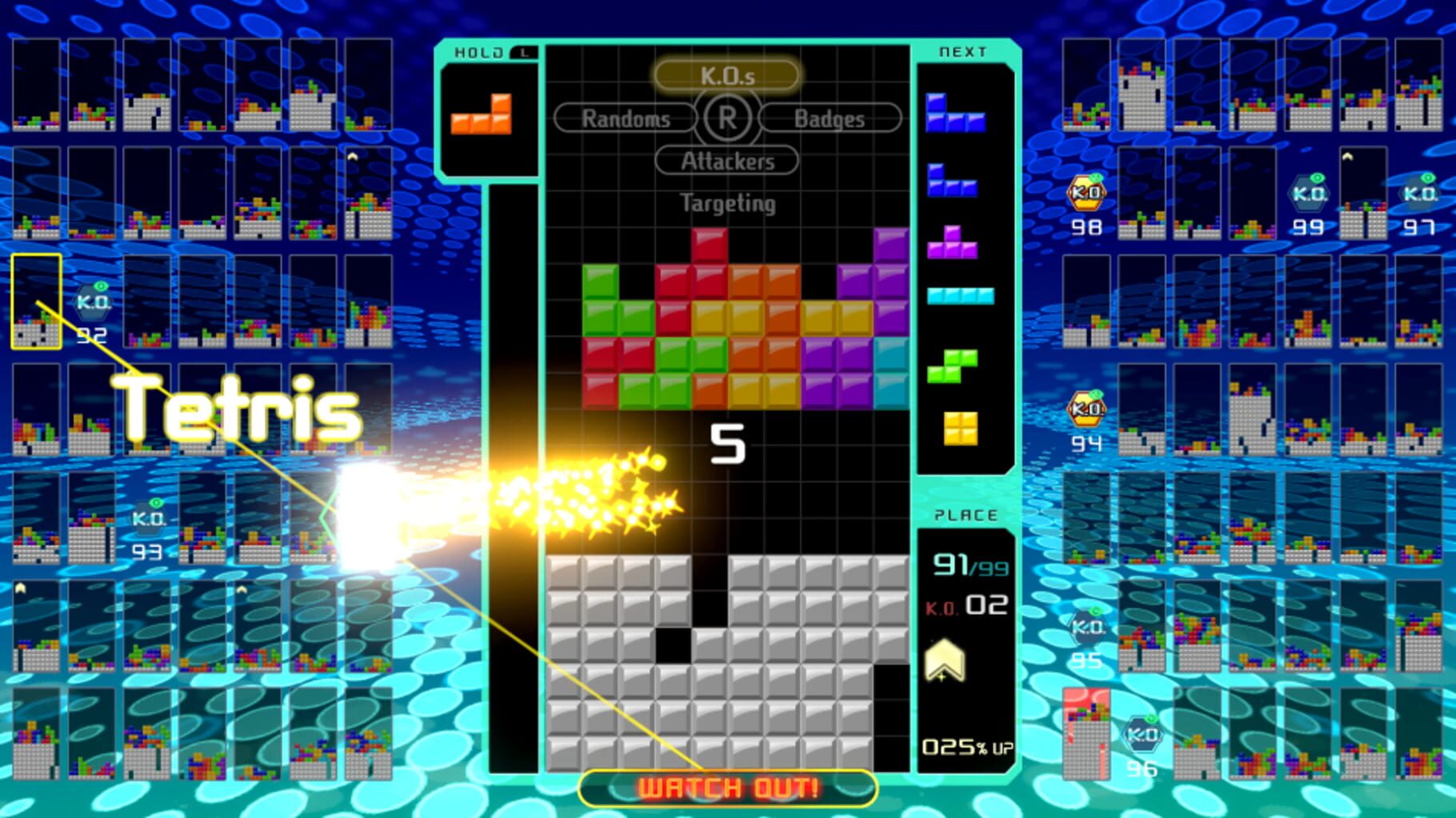
Tetris 99 is what happens when you take a perfectly wholesome 40-year-old puzzle game and throw it into the Hunger Games arena. The good news: it's still just colored blocks, there's no chat toxicity, and it genuinely builds spatial reasoning skills. The less-good news: battle royale formats are designed to keep you coming back, and losing to 98 other players can feel pretty brutal.
For kids with decent reflexes and frustration tolerance, this is actually a solid competitive game choice—way cleaner than Fortnite, no microtransactions trying to drain your wallet, and legitimately skill-based. But the fast pace and constant pressure aren't for everyone, and younger kids will likely just feel overwhelmed.
The lack of chat is a huge safety win, and being included with Nintendo Switch Online means no predatory monetization. Just watch for the 'one more game' trap—battle royale formats are sticky by design, even when they're just falling blocks.
Age Fit
Best for ages 8-16 who have the reflexes and frustration tolerance for competitive play. Younger kids will struggle with the speed and pressure; older teens may find it a bit simple compared to other competitive games, though nostalgic college kids still love it.
WISE Breakdown
Wholesome
78
Classic Tetris gameplay with competitive elements but no toxic content. The battle royale format introduces pressure and competition against 98 other players, which can create stress but isn't inherently unwholesome. No violence, inappropriate themes, or negative social modeling. The fast-paced nature and competitive pressure may feel intense for some players, but it's fundamentally just clearing blocks.
Imaginative
62
Tetris 99 is a clever twist on a classic puzzle formula, combining battle royale mechanics with traditional Tetris. Strategic thinking is required to decide which opponents to target and when. However, it's ultimately a variation on a 40-year-old game with limited creative expression—you're still just rotating and dropping blocks. The innovation is in the competitive multiplayer format rather than imaginative world-building or open-ended creativity.
Safe
85
Very safe content with abstract puzzle gameplay and no inappropriate material. Users interact online but there's no chat function, significantly reducing toxicity risk. No in-game purchases or loot boxes. The main safety concern is the potentially addictive nature of battle royale 'one more game' loops and the stress/frustration that can come from competitive play against 98 others. The game is included with Nintendo Switch Online subscription, so no predatory monetization.
Enriching
70
Strong spatial reasoning, quick decision-making, and strategic thinking skills. Players must manage their own board while making tactical choices about targeting opponents. Pattern recognition and problem-solving under pressure are core skills developed. However, it's primarily entertainment-focused with limited deeper meaning or personal growth opportunities beyond reflexes and spatial skills. The IGDB rating of 82.93 suggests solid quality and engagement.
Parent Info
✓
Why It Might Be Great
Develops serious spatial reasoning and quick decision-making skills under pressure
No chat means competitive multiplayer without the toxic community issues
Clean, abstract gameplay with zero inappropriate content—just pure puzzle action
Included with Nintendo Switch Online subscription (no additional purchase or microtransactions)
Quick matches make it easy to play in short bursts, though 'one more game' is dangerously tempting
⚠
What to Watch For
The competitive nature can create real stress and frustration—losing to 98 other players isn't always fun
Battle royale format can trigger 'one more game' compulsive loops even without monetization tricks
Fast pace and constant pressure may be overwhelming for younger or more sensitive kids
Requires decent reflexes and pattern recognition—not great for kids still developing those skills
Conversation Starters
"What's your strategy for deciding which players to target—do you go after the strong ones or pick on someone struggling?"
"How does it feel when you're in the top 10? Does the pressure make it more fun or more stressful?"
"Do you think playing against 98 real people is different from playing regular Tetris alone?"
"When you lose early, how do you decide whether to try again or take a break?"