Gray grew up in the childhood he says we took away
Peter Gray is 82, and his own childhood runs through the book. At 4 he was sent to the corner store alone to buy cigarettes, crossing a street on the way. A few years later he was one of the pack of kids who spent every afternoon roaming the neighborhood with no adult in sight. He has spent four decades at Boston College studying what kids get from play, and his conclusion is that the loss of that kind of afternoon is the main reason kids are struggling.
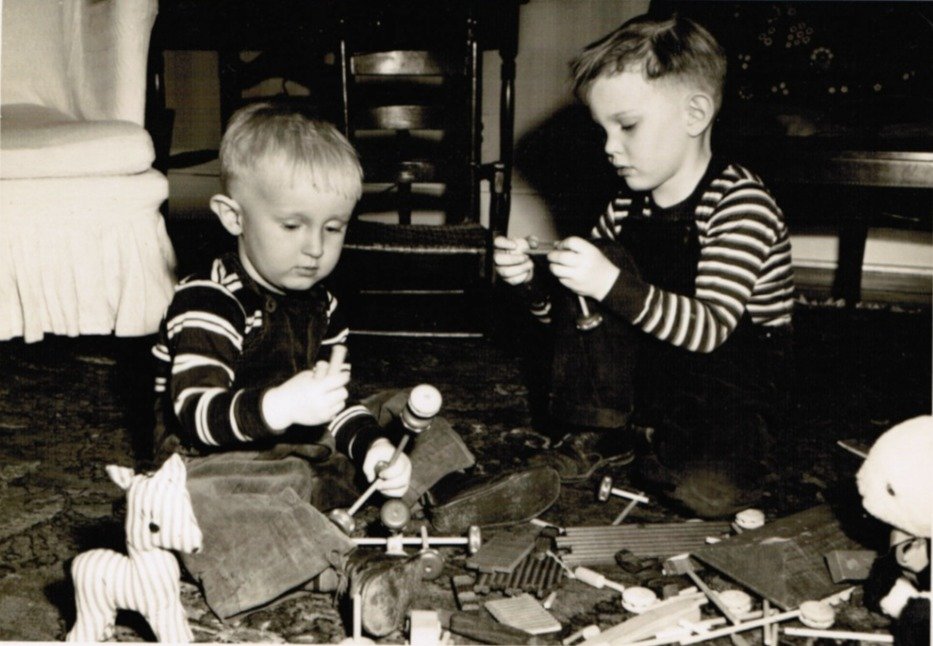 Peter Gray (right) and his brother Steve with their Tinker Toys. Photo from petergray.org.
Kids' mental health fell for decades before anyone had a phone
The chart at the center of the book shows three phases. From the mid-1950s to 1990, the U.S. teen suicide rate quadrupled and anxiety and depression climbed. From 1990 to about 2010, kids' mental health recovered about 40% of the way back. Gray credits home computers and the early internet: kids had a new place to play, talk to friends and be the family tech expert, away from adult control. After 2010 the numbers fell again.
The usual story blames smartphones for that last drop. Gray reviewed the research and argues the effects of phones on kids vary from kid to kid and roughly cancel out across the population, and that teen suicide fell slightly in Europe over the same years kids there got phones. His candidate is school: Common Core and testing standards adopted around 2010 cut recess, art and teacher freedom and raised the pressure. "In every national survey I have been able to find in which school-aged kids are asked to identify the main causes of psychological distress, school pressure comes out on top by a large margin," he writes.
Eleven changes tightened the leash
A chapter called "Tightening the Leash" lists the changes that pulled kids indoors and under supervision. Some are physical: bigger houses with a bedroom for every kid, and suburbs built without sidewalks. Some are cultural: adult-run Little League replacing sandlot games, the 1980s panic about strangers, and fewer teens holding jobs. Some are legal. Child protective services, once focused on abuse, now investigate "supervisory neglect," and Gray reports that 38% of American children will be at the center of a CPS case at some point. Some are about school, which grew five weeks longer per year between 1950 and 2015.
 Peter Gray. Photo from petergray.org.
The last chapter is a to-do list
The longest chapter is the practical one. Parents can say yes to more independence even inside today's rules. Schools can open their playgrounds before and after school for free play with no adult directing it. Libraries can add makerspaces, parks departments can build places kids want to go on their own, and pediatricians can counsel families about the health value of free play. Let Grow, the nonprofit Gray helped start, runs a Play Club program built on that idea.
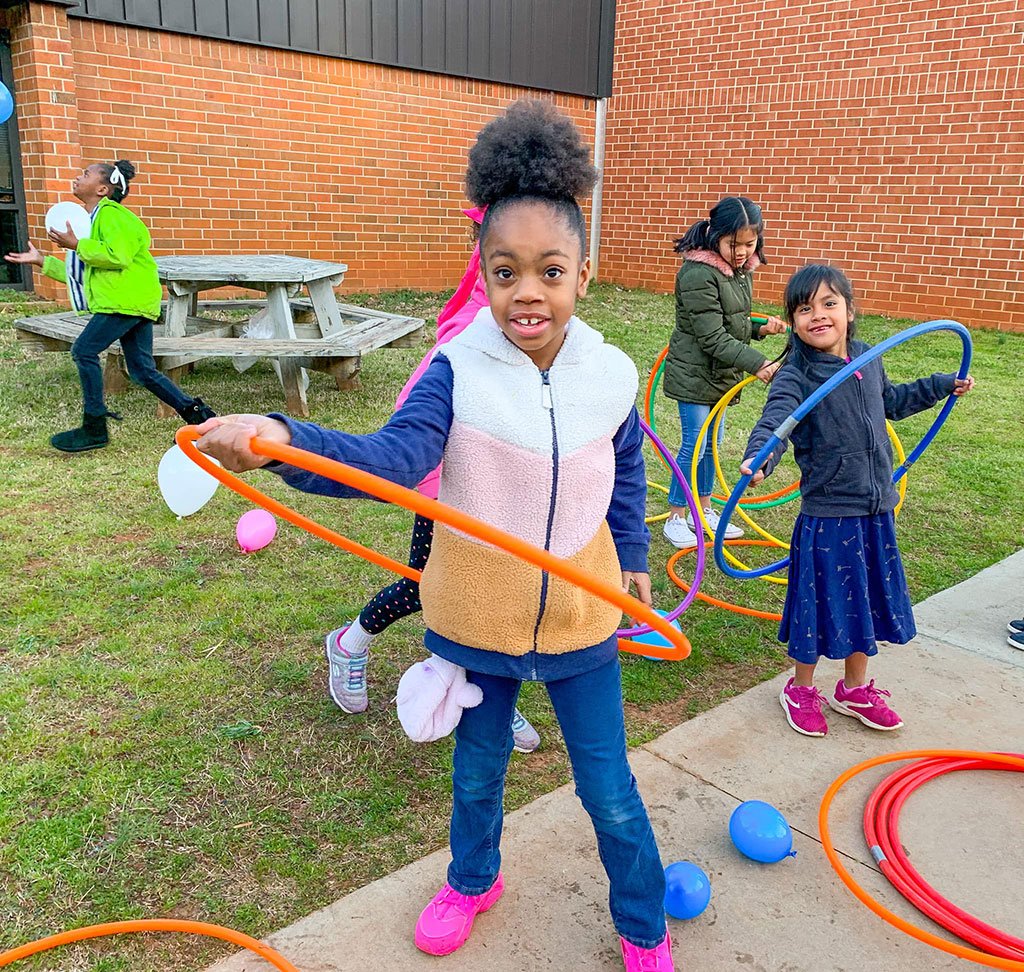 A Let Grow Play Club: open time at school, no adult running the game. Photo from letgrow.org.
Reviewers liked the case and questioned the cause
Reason's Elizabeth Nolan Brown called it "an important addition to the teens-and-tech discourse" and found the thesis more convincing than the phone theory, but noted that Gray takes decades of survey answers at face value, when less stigma around mental health could explain part of the rise. The New Yorker's Joshua Rothman pointed out that Gray and Jonathan Haidt agree on more than they disagree, and that a problem with many causes gives parents more than one lever to pull. That is good advice for a reader: if you found The Anxious Generation convincing, this is the book to read next.
Hear him make the case
Gray's full conversation about the book with Nick Gillespie for Reason:
A shorter talk with Debbie Reber for Tilt Parenting, aimed at parents:
Read it with
Gray's earlier book, Free to Learn, makes the case for self-directed learning that this one builds on. Free-Range Kids by Let Grow co-founder Lenore Skenazy is the funniest and most practical guide to the first steps of letting go. For ideas on what to do with the reclaimed time, see why kids need boredom and unstructured play.


