Kids learned for 99% of human history without being taught
Peter Gray trained as a biologist, and Free to Learn starts with a question from evolution. For most of human history people lived in small hunter-gatherer bands, and anthropologists who studied the bands that survived into the 20th century found almost no formal teaching. Kids spent their days playing in mixed-age groups, copying and shadowing adults, and they grew into adults who could track animals, find food and build shelters. Gray argues that the drives to play, explore and socialize are how children were designed to educate themselves.
He came to the question as a father. His son's rebellion against school pushed Gray to look for something else, and he spent years studying the Sudbury Valley School in Framingham, Massachusetts, where students from 4 to 19 run their own days, vote on school rules, and get no classes unless they ask for one.
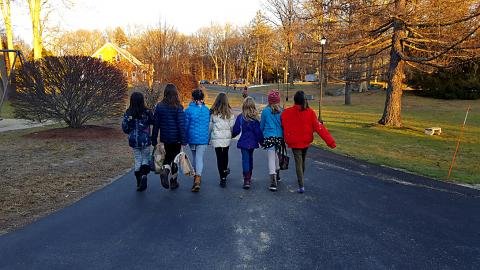 Students at the Sudbury Valley School in Framingham, Massachusetts. Photo from sudburyvalley.org.
Age-mixing does what classrooms sorted by birth year cannot
The most useful idea in the book is about age. Schools group kids by birth year; nearly every other setting in human history mixed them. Gray shows what that buys. A 5-year-old playing a game with 10-year-olds can do things he could not manage alone, and the older kids practice patience, explaining and looking out for someone smaller. Families can recreate some of this with cousins, neighbors and mixed-age camps.
The case against school is where reviewers pushed back
Gray does not stop at play. He writes that "school is prison, but almost nobody beyond school age says it," and argues that compulsory schooling turns learning into work and makes kids anxious. Kirkus called that conclusion controversial and his picture of hunter-gatherer life a golden age. Publishers Weekly found the book "energetic though repetitive" and warned that many educators would find the ideas impractical. Most parents can take the core of the book without the policy: protect hours with nothing scheduled, let kids play with kids of other ages, and let a passion run.
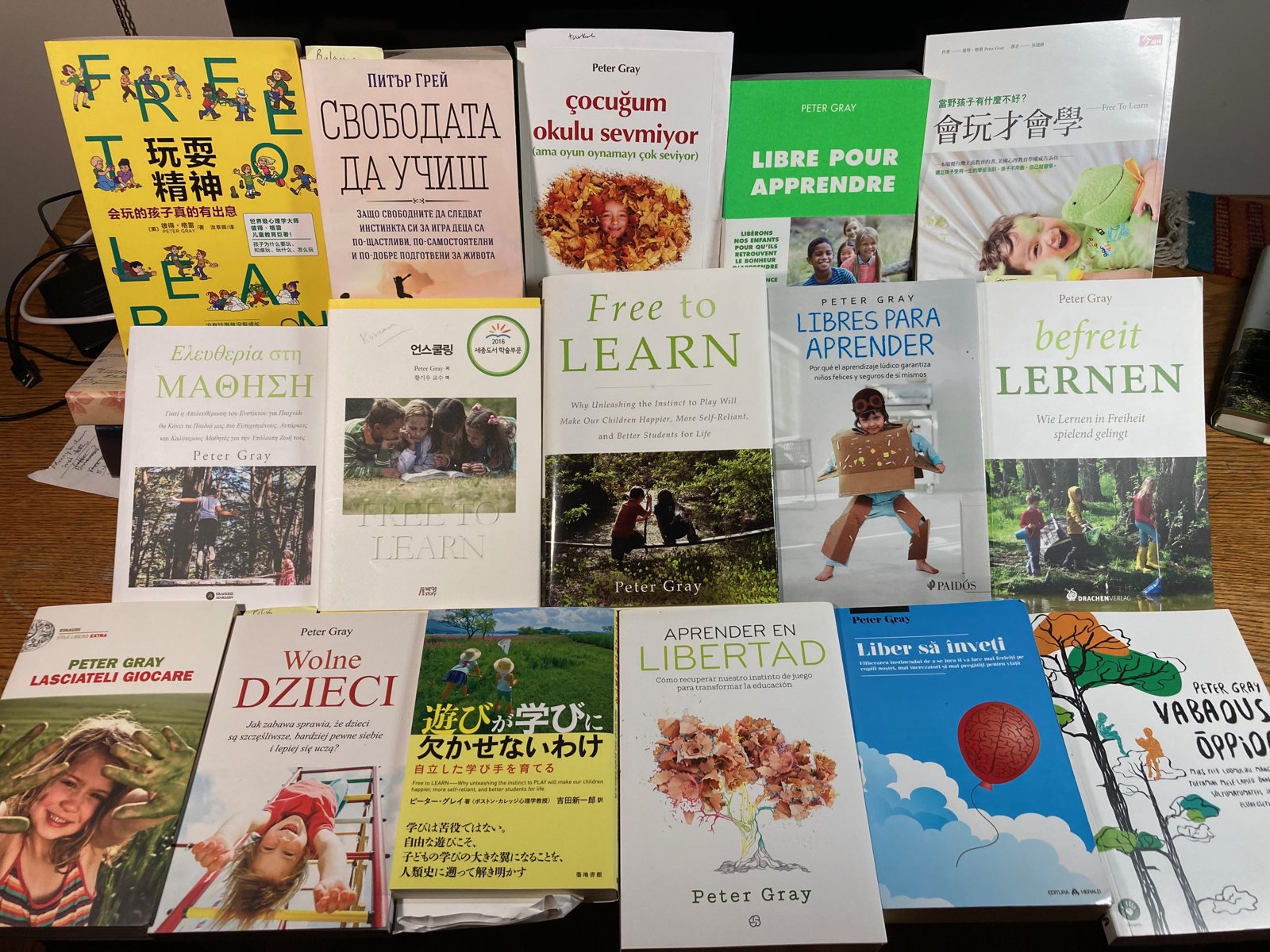 Free to Learn has been published in 18 languages. Photo from petergray.org.
Watch him explain it
Gray's 2014 TEDx talk on the decline of play and the rise of anxiety and depression in kids, the argument at the heart of the book:
A longer lecture on Free to Learn for the self-directed learning community:
The sequel takes on phones
Thirteen years later, Gray turned the same research on the youth mental health debate. Restoring Childhood argues that lost freedom and school pressure, not smartphones, drove the decline, and ends with steps families and schools can take. For the classroom version of the play argument, see Einstein Never Used Flash Cards.


