Cook, serve, hire, then build upward
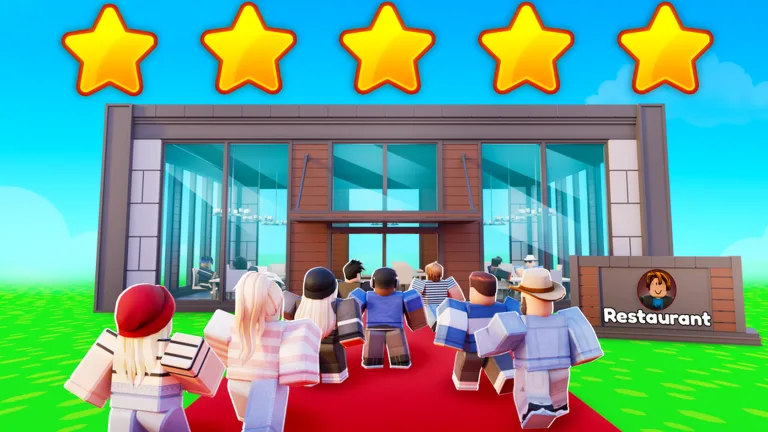
My Restaurant! starts with a tutorial: take an order, cook it, carry it to the table, clear the dirty plate. Customers pay for what they ate, and rarer VIP and celebrity customers pay more. That cash buys better stoves and dishwashers, which work faster, and more tables and chairs.
Then kids hire waiters and chefs, and the restaurant starts running without them. The goal shifts from serving to planning: where the stoves go, how far the waiters walk, which upgrade to save for. New floors are the big purchases. Each one makes customers arrive faster, from every 8 to 18 seconds with one floor to every second or two with all ten.
The dining room is the creative part
Each floor is an empty grid your kid fills with furniture, lighting and decor from the shop. Some kids build the prettiest restaurant on the server, and others build the most efficient one. Updates over the years added extras like a lemonade stand and a taco truck.
BIG Games, the studio behind Pet Simulator, released it in June 2020, and it has close to 900 million visits and more than 2.6 million favorites.
Every shortcut has a Robux price
This is where parents need to look closely. The game sells more than a dozen game passes, from a 150-Robux jukebox to the 1,999-Robux Royal Bundle, a set of furniture that always attracts VIP customers. Floors two through ten each show a Robux price next to the cash price, up to 9,000 Robux for the tenth. In 2023 the game also sold limited-time crates, loot boxes with a random item inside, for 200 Robux each.
None of it is required. A patient kid can earn every floor with in-game cash. Deciding before they play how much, if any, Robux they can spend saves an argument later; the Robux economy guide has ideas for setting that rule.
Other places to run a kitchen
For more open-ended building, Theme Park Tycoon 2 has kids design whole rides and parks. For kitchen chaos the family plays together on one couch, Overcooked is the classic. Cooking games and apps covers the rest.