

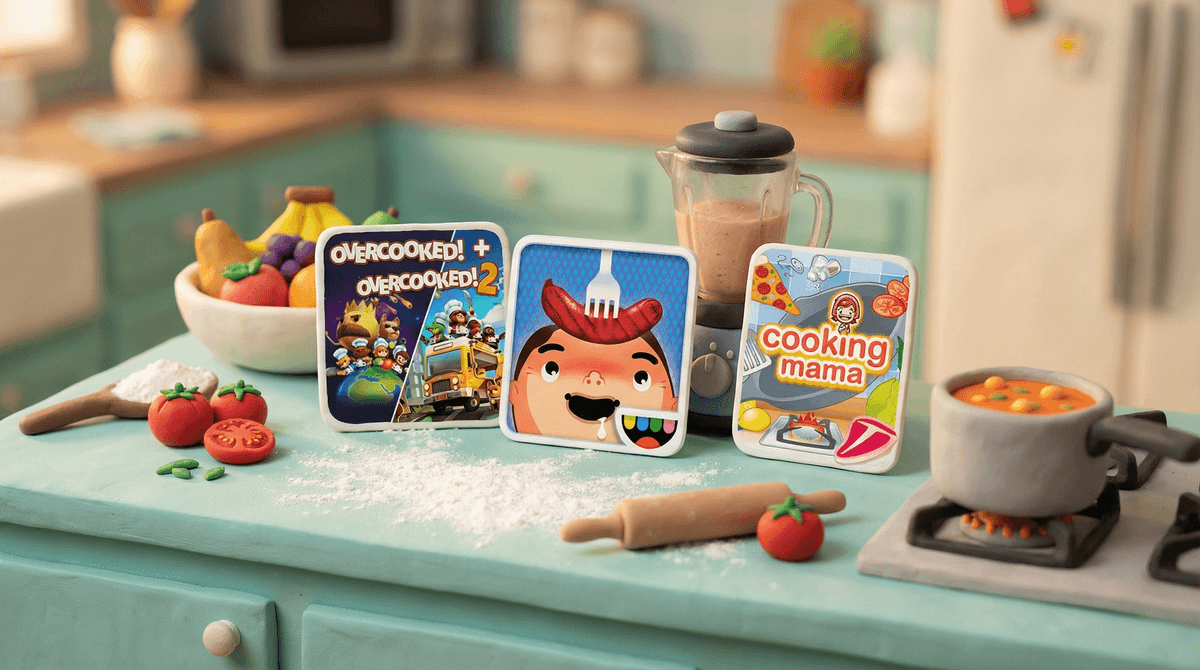
Cooking games have come a long way from the old flash games where you'd click ingredients in the right order. Today's cooking games range from frantic multiplayer chaos like Overcooked to surprisingly detailed simulators like Cooking Mama, and even full restaurant management experiences in Roblox.
The genre includes everything from arcade-style time management games (think Diner Dash vibes) to more creative sandbox experiences where kids can experiment with recipes and run virtual restaurants. Some are standalone apps, others are mini-games within larger platforms, and increasingly, there are cooking-themed experiences in metaverse-style games.
The big question parents are asking: Are these actually teaching anything useful, or is this just more mindless tapping?
Cooking games hit a sweet spot for a lot of kids because they combine creativity, achievement, and often social play—without the competitive pressure of battle royales or the endless grinding of some other game genres.
For younger kids (ages 5-8), the appeal is often about the sensory experience and immediate feedback. Tapping to chop vegetables, watching things sizzle, collecting ingredients—it's satisfying in that same way kids love play kitchens. Games like Toca Kitchen let them experiment without rules or failure states.
For middle elementary (ages 8-11), time management and progression systems kick in. They love the challenge of keeping multiple orders straight, upgrading their kitchen, unlocking new recipes. There's also a real entrepreneurship element—many of these games involve running a business, managing money, and making strategic decisions about what to upgrade first.
For tweens and teens (ages 11+), it's often about the social aspect. Overcooked is genuinely one of the best couch co-op games out there (even if it might end friendships). And in Roblox, games like "My Restaurant!" let kids build elaborate dining empires and show them off to friends.
Also worth noting: cooking games have traditionally skewed toward girls in marketing, but the actual player base is pretty evenly split once you get into the multiplayer and management games. The stereotype is outdated.
Here's where it gets interesting. Can these games actually teach cooking skills?
The short answer: Sort of, but not in the way you might hope.
Research on educational games suggests that transfer of learning from digital to physical is... complicated. Your kid isn't going to become a chef from playing Cooking Mama. BUT—and this is a meaningful but—these games can teach some genuinely useful adjacent skills:
Time management and multitasking: Games like Overcooked and Diner Dash are basically high-pressure project management simulators. Kids learn to prioritize tasks, work under time constraints, and coordinate with team members. These are real skills.
Recipe literacy: Many cooking games introduce kids to the concept of recipes as sequential instructions. They learn that cooking has an order of operations, that ingredients combine in specific ways, and that timing matters. This is actually pretty valuable foundational knowledge.
Food vocabulary and cultural exposure: Better cooking games introduce kids to ingredients and dishes they might not encounter otherwise. Learning that ramen is more than just instant noodles, or that there are different types of pasta, or what goes into pad thai—this is real cultural literacy.
Basic kitchen confidence: Some kids report feeling less intimidated by real cooking after playing these games. They've "practiced" cracking eggs or flipping pancakes virtually, so the real thing feels less foreign.
What they DON'T teach: Actual knife skills, food safety, real recipe following, understanding heat and timing in a real kitchen, or what things actually taste like together.
Ages 4-7: Toca Kitchen Series The Toca Kitchen apps are perfect for this age—no rules, no failure, just pure experimentation. Kids can feed characters weird combinations and see funny reactions. It's more about creative play than cooking per se, but it builds comfort with food and kitchen concepts. No ads, no in-app purchases, one-time cost.
Ages 6-10: Cooking Mama: Let's Cook! Cooking Mama walks a decent line between game and teaching tool. Kids follow actual recipe steps using mini-games (chopping, stirring, timing). The recipes are real dishes. Warning: The app version has ads and some in-app purchases, but they're not aggressive. The Nintendo Switch version is cleaner if you have that option.
Ages 8-12: Good Pizza, Great Pizza This one's a sleeper hit. Kids run a pizza shop, take orders, manage ingredients and money, and deal with quirky customers. It teaches resource management and customer service basics. Has ads but they're skippable, and the game is fully playable without spending money.
Ages 10+: Overcooked! 1 & 2 If you want a family game that will either bring you together or tear you apart, Overcooked is it. This is legitimately challenging and requires real communication and teamwork. Best played on console or PC with controllers—the mobile version exists but isn't nearly as good. This is one of those rare games that's genuinely fun for both kids and adults.
Ages 10+: Roblox Restaurant Games Games like "My Restaurant!" in Roblox let kids design their space, create menus, and run a business. The entrepreneurship lessons are real. Standard Roblox warnings apply: learn about Robux and spending, and make sure you have parental controls set up for chat.
The monetization varies wildly. Some cooking games are one-time purchases (Overcooked, console versions of Cooking Mama). Others are free-to-play with ads and in-app purchases. The mobile cooking game space can be particularly aggressive with timers and premium currency. Check the app's purchase options before handing over a device.
These games work best as a bridge to real cooking. If your kid is into a cooking game, that's actually a perfect opportunity to say "Hey, want to make real pizza/cookies/whatever together?" The games build interest and basic conceptual knowledge, but the real learning happens in your actual kitchen.
Overcooked is genuinely stressful. I'm not kidding—this game will test your family's communication skills. It's fantastic, but go in knowing it's designed to create chaos. Some families love it, some find it too intense. Maybe try the first few levels before committing to family game night.
Screen time trade-offs matter. If your kid is playing cooking games instead of watching random YouTube, that's probably a win. If they're playing cooking games instead of helping with actual dinner prep... maybe redirect that energy.
Cooking games aren't going to replace actual cooking lessons, but they're also not just mindless entertainment. The best ones teach legitimate skills around planning, multitasking, resource management, and teamwork. They can build food vocabulary and cultural awareness. And they can spark genuine interest in real cooking.
The move: If your kid is into cooking games, lean into it. Use it as a conversation starter about real food. Let them pick a recipe from their game to make together. Talk about how the game version differs from reality (spoiler: real cooking involves a lot more cleanup).
And if they're playing Overcooked, maybe invest in some family therapy. I kid, but only sort of.
- Try a cooking activity together based on something from their game—even if it's just making scrambled eggs or assembling sandwiches
- Set clear boundaries around in-app purchases if you're allowing free-to-play cooking games
- Check out alternatives to screen-based cooking games
 for when you want to redirect that interest offline
 - Consider family co-op gaming with something like Overcooked if your kids are old enough—it's genuinely one of the better family bonding (or bonding-testing) experiences out there
Want to explore more games that might actually teach something useful? Check out our guide to educational games that don't feel like homework.