

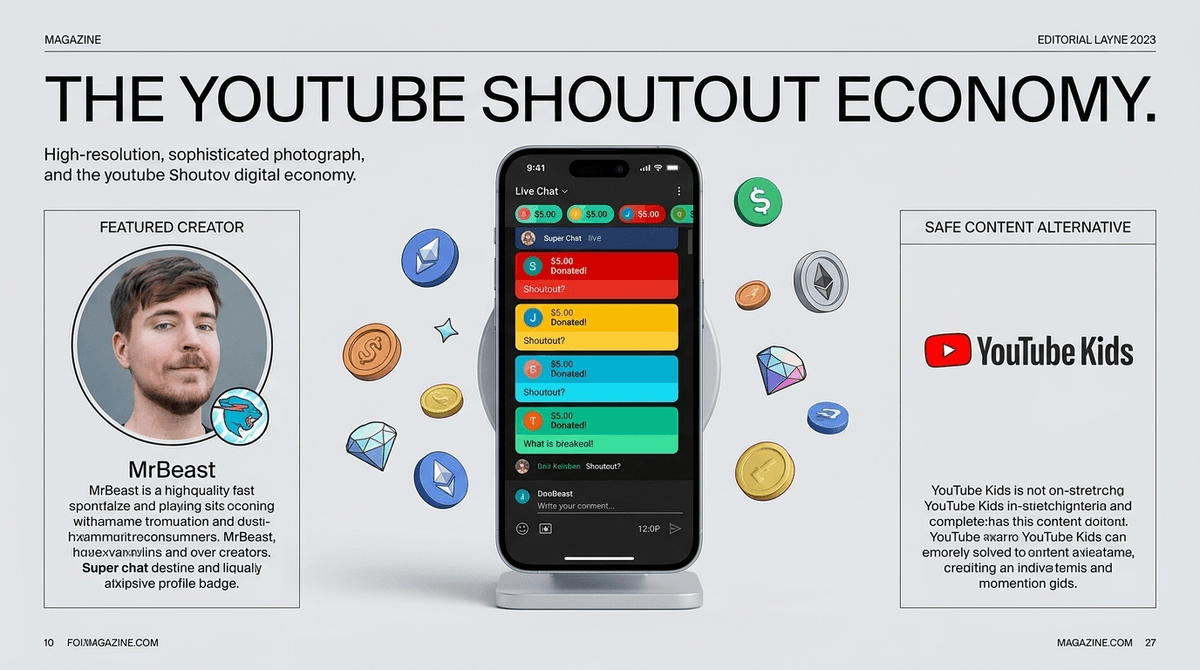
TL;DR: YouTube has moved way beyond just watching videos. It’s now a live, interactive economy where kids can pay for attention through Super Chats, Channel Memberships, and a new TikTok-style currency called Jewels. While it feels like "supporting a creator," it’s often an impulse-driven bid for a five-second shoutout that can quickly drain a bank account.
Quick Links for Context:
- YouTube - The main platform where these features live.
- YouTube Kids - The "safe" version (where these payment features are mostly absent).
- Twitch - The platform that pioneered the "tipping for attention" model.
- Roblox - How "Robux" prepared kids for digital-only spending.
If you grew up watching TRL on MTV, you remember people holding up signs in Times Square hoping the camera would pan over them for a split second. Super Chats are the digital version of that sign, except the sign costs between $1 and $500, and you’re paying the host directly to look at it.
Here is the breakdown of the current YouTube "tipping" ecosystem:
Super Chats and Super Stickers
When a creator goes live—whether they are playing Minecraft or just "Just Chatting"—there is a live chat feed on the side. In a popular stream, that chat moves so fast it’s unreadable. A Super Chat allows a viewer to pay to have their message highlighted in a bright color and "pinned" to the top of the chat for a set period. Super Stickers are just the animated version of this.
Channel Memberships
This is a monthly subscription (usually $4.99, but it can go much higher) to a specific creator like MrBeast or Kai Cenat. In exchange, kids get "loyalty badges" (a little icon next to their name that changes the longer they’ve been a member) and exclusive emojis. It’s digital status, plain and simple.
Jewels (The New Currency)
YouTube recently introduced Jewels, which is their direct answer to TikTok "Gifts." This is a virtual currency kids buy with real money to send "gifts" during vertical live streams (YouTube Shorts). It’s designed to be fast, flashy, and highly addictive.
Learn more about how digital currencies like Jewels and Robux trick kids' brains
To an adult, paying $20 to have a 19-year-old in a gaming chair say "Thanks for the twenty, SkibidiSlayer69!" seems like a colossal waste of money. To a kid, it’s a hit of pure dopamine.
The Parasocial Relationship
Kids today don't just watch creators; they feel like they know them. This is a parasocial relationship—a one-sided bond where the fan invests emotional energy and money, and the "friend" (the creator) doesn't actually know they exist. When a kid sends a Super Chat, they are trying to turn that one-sided relationship into a two-sided moment of recognition.
Social Status in the Chat
In the world of Roblox and Fortnite, your "skin" or your gear dictates your status. On YouTube, your "badge" or the color of your Super Chat does the same. If your kid is a "Tier 3 Member" of a popular channel, they are a "big deal" in that specific digital community.
The "Hype Train"
YouTube uses gamification to encourage spending. If a bunch of people start donating at once, it can trigger a "Hype Train" or a "Gift Goal." It creates a frantic, "we're all in this together" atmosphere that makes a 10-year-old feel like they are "helping" the community by clicking the $10 button.
We need to be honest: some of these live streams are basically digital panhandling disguised as entertainment.
- The Financial "Oops": We’ve all seen the headlines about a kid spending $3,000 on a parent’s credit card. Because these payments are often "one-click" once a card is on file (Google Play or Apple Pay), it is incredibly easy for a kid to lose track of reality. $5 here and $10 there feels like "points" until the statement hits.
- The Attention Trap: If a kid feels they must pay to be noticed, it creates a "pay-to-play" social dynamic. This can lead to feelings of inadequacy if they can't afford to "keep up" with other donors in the chat.
- Inappropriate Content in Live Streams: While a creator's edited videos might be fine, their live streams are unedited. A creator like IshowSpeed is notorious for chaotic, unpredictable, and often inappropriate live behavior that you won't see in a 10-minute highlight reel.
Check out our guide on the most popular (and controversial) streamers right now
Ages 7-11: The "Hard No" Phase
At this age, kids generally lack the impulse control and financial literacy to navigate Super Chats. If they are watching YouTube, they should ideally be on YouTube Kids or watching curated content on the main site with Live Chat disabled. There is zero reason for an 8-year-old to be tipping a millionaire gamer.
Ages 12-15: The "Allowance" Phase
This is the time for "Digital Budgeting 101." If they want to support a creator, it should come out of their physical allowance. They need to feel the "pain" of the purchase.
- The Membership Compromise: A $4.99 monthly membership to one favorite creator is a much safer bet than open-ended Super Chats. It’s a fixed cost and provides the "status" they want without the impulse-spending risk.
Ages 16+: The "Transparency" Phase
By high school, they’re likely using their own debit cards (linked to your account). This is about discussing the value of entertainment. Is a $50 "shoutout" worth more than a movie ticket and dinner with real-life friends?
If your kid is asking for "Jewels" or a "Membership," don't just roll your eyes. Use it as a bridge to talk about how the internet actually works.
1. Check Your Settings (The "Nuclear" Option)
If you have an Android device or use Google Play, you can require "Purchase Authentication" for every single transaction. On iPhone, you can use "Ask to Buy" via Family Sharing. Do not leave your credit card "hot" on their device.
2. Discuss the "Value of a Shoutout"
Ask your kid: "What happens after he says your name?" Usually, the answer is... nothing. The streamer forgets 2 seconds later. Helping your kid realize that they are paying for a fleeting moment of "fame" can help de-mystify the magic.
3. Watch a Live Stream Together
Sit down for 20 minutes and watch a live stream from someone like LazarBeam or MrBeast. Notice how often they call for "Super Chats." Point out the marketing tactics. "Wow, he’s really pushing that Hype Train, isn't he? It’s like he’s a digital auctioneer."
4. Alternatives to Spending
If they want to support a creator, remind them that liking, subscribing, and sharing actually helps the creator’s "algorithm" (their standing with YouTube) for free.
YouTube Memberships and Super Chats aren't "evil," but they are designed by some of the smartest engineers in the world to exploit the human desire for belonging and recognition. For a kid, that’s a lopsided fight.
By setting hard technical boundaries on spending and having honest conversations about the "shoutout economy," you can let them enjoy their favorite creators without turning your bank account into a "donation" for a 20-year-old multi-millionaire.
Ask our chatbot for a script on how to say 'no' to digital currency requests
- Check the "Subscriptions" tab on your kid's YouTube account to see if they’ve already signed up for memberships.
- Toggle off "Live Chat" in the YouTube app settings if you want to remove the temptation entirely.
- Explore educational YouTube channels like Mark Rober or Veritasium that focus on content over "tipping" gimmicks.