

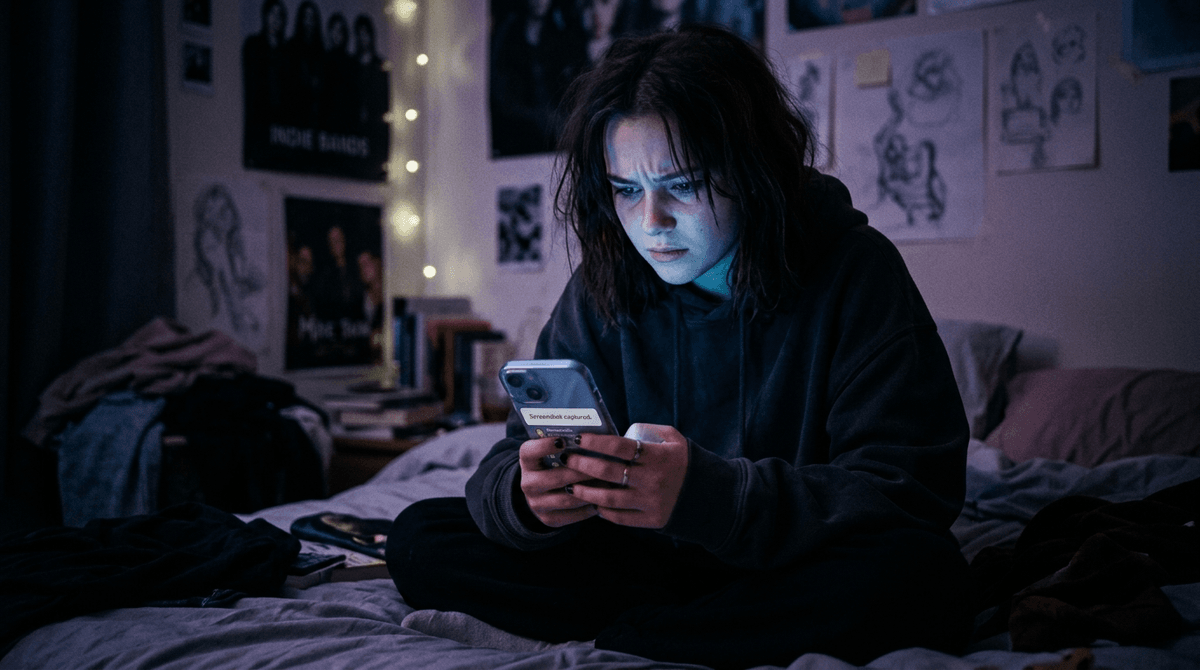
TL;DR: In the digital age, "he said, she said" has been replaced by high-definition "receipts." Kids screenshot private messages to prove a point, spill "the tea," or protect themselves in a conflict. While it feels like justice to them, it often nukes digital trust and can lean into cyberbullying.
Quick Links for Context:
- Understanding Group Chat Drama
- Snapchat - The pioneer of screenshot notifications.
- Instagram - Where "Close Friends" lists and DMs often get leaked.
- Discord - The king of "receipts" in gaming communities.
If you’ve spent any time around a middle schooler lately, you’ve probably heard someone demand "receipts." In the adult world, a receipt is what you get at Target. In the digital world, a receipt is a screenshot of a private conversation, a photo, or a post that was supposed to be temporary or restricted.
"Receipts culture" is the social practice of documenting digital interactions to use as evidence later. Whether it’s proving that a crush actually liked a photo or showing the group chat that "Sarah actually did say that about Chloe," screenshots are the currency of social proof.
When kids "spill the tea" (share gossip), the receipts are the validation. Without a screenshot, it’s just a rumor. With a screenshot, it’s a "fact"—even if that fact is stripped of context or edited.
It’s easy to look at this behavior and think, "Why are kids so mean?" But for most kids, screenshotting isn't about being a villain; it’s about navigating a high-stakes social environment where digital presence is everything.
1. Social Currency and "The Tea"
Sharing a screenshot of a wild DM or a cringey text is a way to gain social standing. It’s the digital equivalent of leaning over the lunch table to whisper a secret, but with a much larger reach. Apps like TikTok are filled with "storytime" videos where creators share screenshots of their "receipts" to settle public feuds.
2. Self-Defense and "Logging"
Many kids feel the need to "keep logs" of conversations just in case things go south. If a friend starts acting "sus" (suspicious) or "Ohio" (weird/cringe), having a record of what was actually said feels like an insurance policy. They’re terrified of being gaslit, so they document everything.
3. The "Exposed" Narrative
There is a massive trend on platforms like YouTube and Instagram where people are "exposed" for their bad behavior. Kids mirror this. If someone says something mean in a private chat, the immediate reaction isn't always to talk to them—it's to screenshot it and send it to the group chat to "expose" them.
Learn more about the psychology of 'cancel culture' in schools
Different apps handle screenshots differently, and kids are masters at navigating these technicalities.
Snapchat is the most "honest" app because it notifies the other person if you screenshot their message or photo. However, kids have found workarounds, like using a second phone to take a physical picture of the screen or using "screen recording" features (though Snap tries to notify for those, too).
Instagram does not notify users when a standard DM or a post is screenshotted. It only notifies if you screenshot a "disappearing" photo or video sent in a message thread. This makes it a prime location for "receipt hunting."
Discord is the wild west of receipts. Because it’s organized into servers and channels, it’s incredibly easy to scroll back months and find a specific message to "receipt" someone. There are no screenshot notifications here, making it a high-risk area for private vents to become public drama.
These are standard "green bubble vs. blue bubble" territories. No notifications, total privacy... until someone decides to hit the power and volume buttons simultaneously.
When your child screenshots a private message and shares it, they usually aren't thinking about "digital ethics" or "privacy rights." They are thinking about the immediate social payoff. As parents, we need to bridge that gap.
It’s a Breach of Consent
We talk a lot about physical consent, but digital consent is just as important. Sharing a private message without permission is a violation of trust. Even if the content isn't "bad," the act of taking something meant for one person and showing it to ten people is a foundational breach of friendship.
The Context Problem
Screenshots are dangerous because they are "truth without context." A kid might screenshot a friend saying "I hate you" as a joke during a gaming session on Roblox, but when that screenshot is shared two weeks later during a fight, the joke is gone. It looks like a threat or a genuine insult.
Legal and Safety Risks
In some cases, screenshotting crosses the line from "drama" to "illegal." If a child screenshots and shares a sensitive or "spicy" image (NCSII - Non-Consensual Sharing of Intimate Images), they are entering the territory of digital sex crimes, even if they are minors. This is the "pulling no punches" part: a single screenshot can lead to school expulsion or legal intervention.
Check out our guide on the legal risks of sharing photos
If you find out your kid has been sharing receipts—or if they’ve been "exposed" themselves—don't start by taking the phone away. Start by understanding the "why."
For the "Sharer" (The One Spilling the Tea)
- The "Grandma Rule" vs. the "Friend Rule": Most kids know not to post things they wouldn't want their grandma to see. But they need to learn the "Friend Rule": If you wouldn't say it to their face with their parents standing there, don't text it. And if they said it to you in confidence, it stays with you.
- Ask about the Goal: "What did you hope would happen when you sent that screenshot to the group?" Usually, it's a desire for validation. Help them find that validation without betraying a friend.
- Discuss the "Digital Paper Trail": Remind them that once they share a screenshot, they lose control of it. Their "receipt" can be screenshotted by someone else, and suddenly they are the one in trouble.
For the "Victim" (The One Who Got Exposed)
- Validate the Betrayal: It hurts. It feels like the end of the world. Don't minimize it by saying "it's just an app."
- The "Cool Down" Period: Encourage them not to retaliate with their own receipts. "Going nuclear" only keeps the story alive longer.
- Audit the Circle: Use this as a moment to look at who they are talking to. If a "friend" is screenshotting your private vents, they aren't a friend. It might be time to move the chat to a different group or app.
Media to Help Start the Conversation
Sometimes it's easier to talk about other people's drama.
- Mean Girls - The ultimate "Burn Book" is just a physical version of a "Receipts" folder.
- Gossip Girl - (Ages 14+) Great for discussing how anonymous "leaks" ruin lives.
- The Social Dilemma - A bit heavy, but good for older teens to understand how apps profit from our drama.
Ages 10-12 (The "Group Chat" Years)
At this age, drama is usually about who said what about whom.
- Action: Set a "No Screenshots" rule for the family.
- Teach: Explain that if someone says something mean to them, they should show you (the parent), not the whole class.
Ages 13-15 (The "Identity" Years)
This is when receipts are used to define "who is a good person" and "who is fake."
- Action: Discuss the concept of "Digital Integrity."
- Teach: Remind them that being a "trusted" friend is a high-value social trait that will last longer than the temporary clout of a leaked DM.
Ages 16-18 (The "Real World" Years)
By now, they should understand the professional risks.
- Action: Talk about college admissions and job background checks.
- Teach: Screenshots are forever. Even "disappearing" messages on Snapchat are only temporary until someone captures them.
Receipts culture is a symptom of a world where kids feel they need "proof" to be heard. As intentional parents, our job isn't to ban the screenshot—it’s to teach our kids that privacy is a gift you give to your friends, and integrity is the choice to keep that gift wrapped.
If your kid's group chat is currently on fire because of a leaked DM, take a breath. It’s a messy, painful, but highly teachable moment about the weight of digital words.
Next Steps:
- Check your kid's phone for "Hidden" or "Screenshots" folders to see the vibe of what they’re saving.
- Ask them: "Have you ever been worried about someone screenshotting what you said?"
- Run a Screenwise survey to see how your family's digital trust compares to your community.
Get a script on how to talk to your kid about a specific screenshot incident