

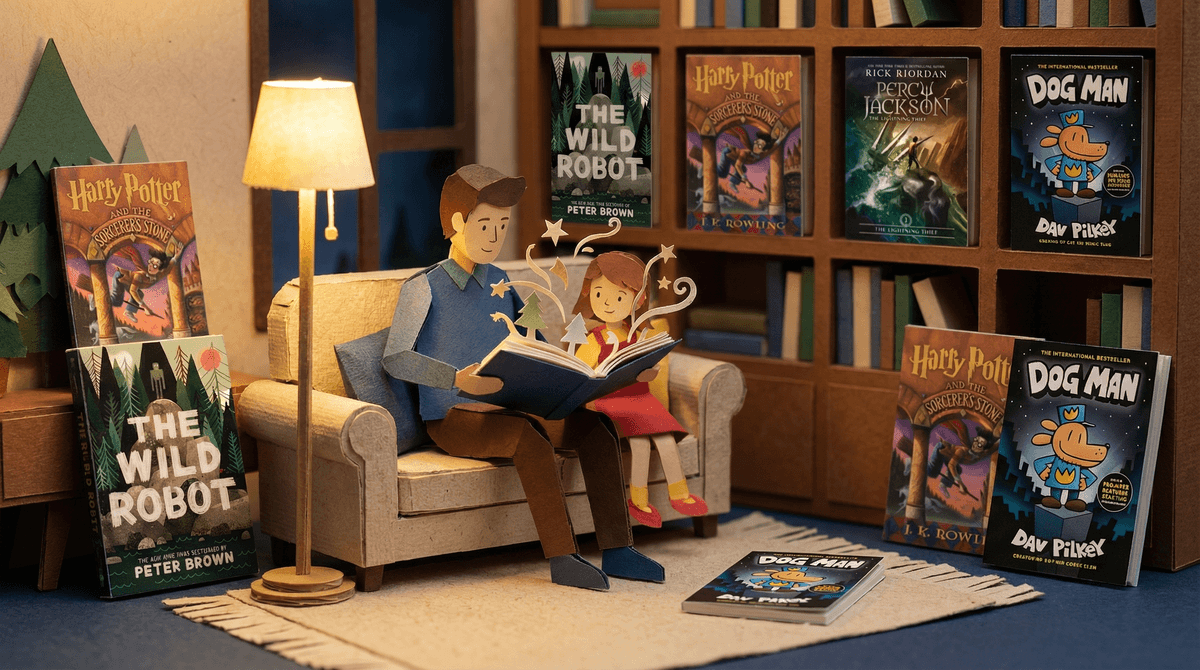
So your kid can totally read on their own now, but they keep asking you to read to them. Every. Single. Night. Or maybe they're choosing audiobooks over picking up a physical book, or they'll devour a graphic novel but won't touch chapter books unless you're reading them aloud.
First thing: this is completely normal and not a red flag. Like, at all.
Being read to is fundamentally different from reading independently, and honestly? It's often better. When someone reads aloud to a child, they're getting exposure to more complex vocabulary, more sophisticated sentence structures, and stories that are usually 2-3 grade levels above what they can decode on their own. A third grader who can read Dog Man independently might be able to comprehend and enjoy Harry Potter when you read it aloud.
Plus, let's be real—being read to is cozy. It's connection time. It's often the best part of the day for both of you. Your kid isn't choosing laziness; they're choosing intimacy.
There are actually several legitimate reasons kids prefer being read to, and none of them mean your child is "behind" or lazy:
Decoding is exhausting. Even when kids can read independently, the cognitive load of decoding words, tracking lines, and comprehending simultaneously is genuinely tiring. By the end of a school day where they've been reading all day, their brain is fried. Being read to lets them access stories without that mental overhead.
The stories they can decode are boring to them. This is the brutal truth of early chapter books. A lot of them are... not great. They're written at a specific reading level with controlled vocabulary, and the plots can feel painfully slow to a kid whose comprehension is miles ahead of their decoding ability. Meanwhile, you reading aloud opens up access to actually engaging stories.
Reading aloud is a shared experience. Kids who prefer being read to aren't necessarily avoiding the work—they might be seeking the connection. Especially for kids who spend their days being independent and capable, storytime is a chance to be little again, to be close, to have your full attention without having to compete with phones or siblings or dinner prep.
They're getting plenty of reading practice elsewhere. If your kid is reading texts, Minecraft guides, Roblox chat, subtitles on shows, signs, menus, and instructions throughout the day (which they absolutely are), they're getting reading practice. The bedtime book doesn't have to be boot camp.
A related thing that stresses parents out: kids who choose audiobooks or podcasts over physical books. "But are they actually reading?"
Here's the thing—listening comprehension is a literacy skill. It's not a lesser form of reading; it's a different access point to stories and information. Kids who listen to Harry Potter audiobooks are building vocabulary, narrative comprehension, and a love of stories. They're learning how dialogue sounds, how pacing works, how chapters build tension.
For some kids, especially those with dyslexia, ADHD, or processing differences, audiobooks aren't a crutch—they're an accommodation that lets them access grade-level (or above) content without the barrier of decoding.
That said, if your kid only ever consumes audio and actively avoids any visual reading (including texts, signs, game instructions), that might be worth exploring with their teacher. But choosing audiobooks for leisure? That's just... a format preference.
There are a few scenarios where a preference for being read to might signal something worth investigating:
- Your child is in 3rd grade or beyond and actively avoids all independent reading, including signs, instructions, menus, texts—anything
- They get frustrated or upset when asked to read even very simple text
- Their teacher has expressed concerns about their reading progress
- They're falling significantly behind grade-level benchmarks
But if your kid is reading independently at school, doing fine academically, and just prefers bedtime stories to be read aloud? That's not a problem. That's a preference.
If you want to gently encourage more independent reading without killing the magic of storytime, here's what actually works:
Keep reading aloud. Seriously. Don't stop. The research is overwhelming that being read to—even through middle school—builds vocabulary, comprehension, and a love of reading better than almost anything else. This isn't a crutch you need to remove.
Create low-pressure reading opportunities. Leave graphic novels, magazines, joke books, and high-interest books around. Dog Man, Diary of a Wimpy Kid, The Bad Guys—these aren't lesser books. They're gateway drugs to reading for pleasure.
Try "popcorn reading." You read a page, they read a page. Or you read the narration, they read the dialogue. This keeps the connection while building stamina.
Respect their reading interests, even if they seem "babyish." A fifth grader who wants to reread Captain Underpants is still reading. Don't shame them into harder books before they're ready.
Let screens count. If your kid is reading Minecraft wikis, Roblox game descriptions, YouTube comments, or fanfiction, that's reading. It might not be what you pictured, but it's literacy in action.
A kid who wants to be read to isn't a kid who can't read—they're a kid who's smart enough to know that being read to is awesome. It's access to better stories, it's connection time, and it's a break from the exhausting work of decoding.
Keep reading aloud as long as they'll let you. Seriously. You're building a reader, not enabling dependence. And if they're also reading independently in other contexts (texts, games, school), they're getting plenty of practice.
The goal isn't to make them read alone as quickly as possible. The goal is to raise a human who loves stories, who sees reading as a source of joy and connection, and who has the skills to access books independently when they're ready.
You're doing that. Keep going.
Tonight: Read to them. Don't overthink it. Pick something you both enjoy—maybe even something above their independent reading level like Percy Jackson or The Wild Robot.
This week: Stock their space with high-interest, low-pressure reading material. Graphic novels, magazines, books about their obsessions (yes, even if that's Five Nights at Freddy's).
This month: If you're genuinely concerned about their reading progress, talk to their teacher. But if this is just about them preferring storytime to solo reading? Let it go. This is not the hill.
And if you want to explore more about building reading habits without the pressure, Find age-appropriate book recommendations or learn more about when kids are actually ready for independent reading.