

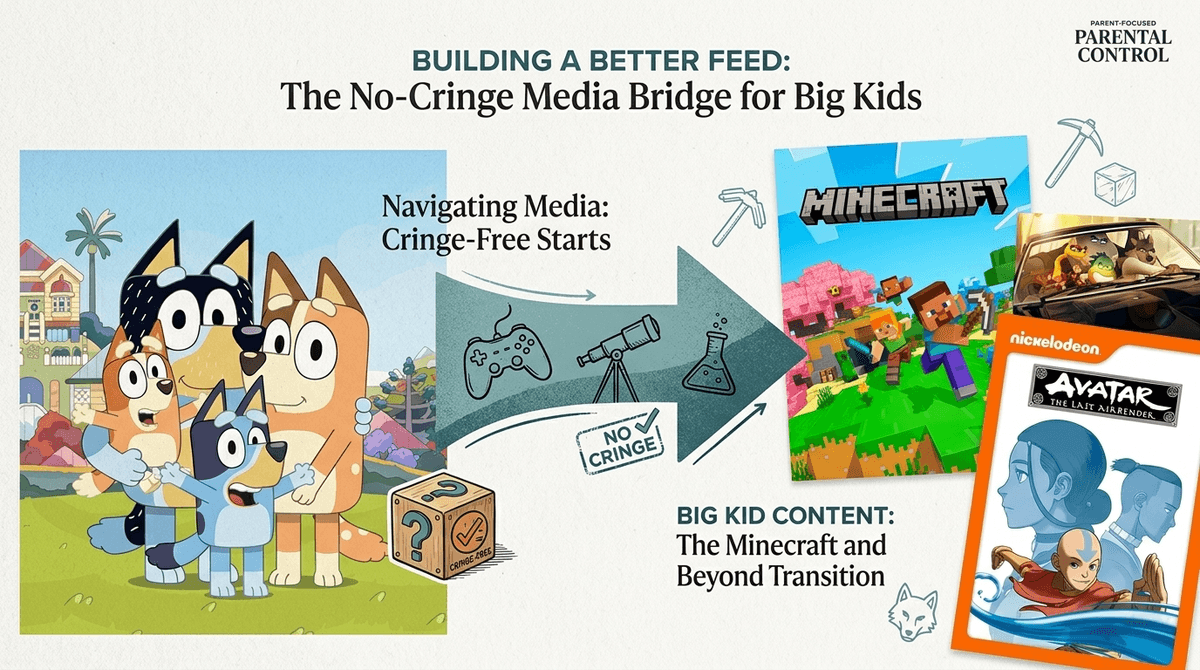
TL;DR: The Quick Pivot List
If you’re currently staring at a pile of Paw Patrol toys that your kid suddenly treats like radioactive waste, you’re in the "Great Pivot." They’re moving from the safety of "Little Kid" media to the social currency of "Big Kid" content. Here’s the bridge content to keep them entertained without jumping straight into the deep end of the internet:
- The Transitional Show: Bluey (Ages 4-9) - The rare show that survives the "cringe" purge.
- The First "Real" Game: Minecraft (Ages 7+) - Creative, social, and much safer than Roblox.
- The Action Upgrade: Star Wars: The Clone Wars (Ages 8+) - For when they want stakes and drama.
- The New "Gross-Out" Humor: The Bad Guys (Ages 6+) - Edgy enough to feel cool, safe enough for family movie night.
- The Social Gateway: Pokemon TCG Live (Ages 7+) - Trading cards are the ultimate playground currency.
Find a "bridge" media list for your child's age
It happens almost overnight. One day, they’re wearing Blippi pajamas and singing about tractors. The next, they’re looking at those same pajamas with a look of pure, unadulterated betrayal. They’ve discovered the concept of "cringe."
In kid-speak, "cringe" isn’t just about being embarrassed; it’s a boundary marker. It’s how they signal to their peers (and themselves) that they are moving out of the "baby" phase and into the "big kid" phase. This is the era of social currency. They don't just watch things because they like them anymore; they watch things so they can talk about them at recess.
This pivot usually happens between ages 6 and 9. It’s the shift from curated, parent-approved platforms like Netflix Kids or PBS Kids to the "Social Wild West" of YouTube, Roblox, and eventually TikTok.
When your kid outgrows a franchise, they aren't just changing their taste in animation. They are changing how they consume media.
- From Passive to Active: They stop just "watching" and start wanting to "participate" (gaming, commenting, creating).
- From Linear to Algorithmic: They move from shows with a beginning, middle, and end to the infinite scroll of the YouTube algorithm.
- From Safety to Social: The primary driver shifts from "Is this fun?" to "Does everyone else know about this?"
This is why your 8-year-old is suddenly obsessed with Skibidi Toilet or calling everything "Ohio." It’s not because the content is high-quality (let’s be real, it’s mostly brain rot), it’s because it’s the language of their community.
Read our guide on understanding "Brain Rot" and modern kid slang
If you’re trying to find media that feels "cool" to a kid but doesn't make you want to throw the router out the window, look for "bridge content." These are franchises that have enough edge to satisfy the "big kid" urge but still maintain some level of quality and safety.
- The Exit: Sago Mini World or Toca Life World.
- The Entrance: Minecraft.
- Why it works: Minecraft is the gold standard. It’s complex, it has social status, and you can play it offline or on private servers. It’s the perfect antidote to the chaos of Roblox, which often feels like a digital casino designed by toddlers.
- The Exit: Paw Patrol or PJ Masks.
- The Entrance: Avatar: The Last Airbender.
- Why it works: It deals with real themes—war, responsibility, failure—without being inappropriate. It’s "grown-up" storytelling that respects the child’s intelligence. If they want something faster-paced, try Ninjago.
- The Exit: Ryan’s World or Cocomelon.
- The Entrance: MrBeast or Mark Rober.
- Why it works: MrBeast is the king of the playground. While his content is loud and hyper-edited, it’s generally "clean" compared to the darker corners of the platform. Mark Rober is the holy grail—science and engineering disguised as high-energy entertainment.
As they move away from curated franchises, the risks change. You’re no longer worried about "scary monsters" in a cartoon; you’re worried about:
- Unfiltered Social Interaction: In Roblox, your kid is playing with strangers. Period.
- Dark Patterns: Games like Fortnite are designed to keep kids coming back through FOMO (Fear Of Missing Out) and "limited time" skins.
- The Algorithm Rabbit Hole: YouTube doesn't care if a video is good for your kid; it only cares if they keep watching. This is how a search for "Minecraft tips" can lead to "Scary Creepypasta" in three clicks.
Pro-tip: This is the age where you move from "Control" to "Context." You can't just block everything anymore because they'll see it at a friend's house. You have to start explaining why certain apps or creators are off-limits.
Don't take it personally when they reject the things you used to love together. It’s tempting to say, "But you loved Bluey!" That just makes them dig their heels in.
Instead, try these talking points:
- Validate the shift: "I get it, you're into more action-packed stuff now. Paw Patrol feels a bit young."
- Set the "Quality" Standard: "I’m okay with you watching YouTube, but we’re going to skip the 'screaming gamers' and look for people who actually build or create things."
- The "Why" of Games: "If you want to play Roblox, we need to talk about why people spend real money on fake hats, and how to spot a scam."
The "Great Franchise Pivot" is a sign that your child is developing their own identity. It’s annoying to lose the "safe" shows, and it’s exhausting to keep up with whatever "Skibidi" means this week, but it’s a necessary part of growing up.
Your job isn't to stop the pivot; it's to guide the landing. Replace the "baby" stuff with high-quality "big kid" media that challenges them without exposing them to the worst parts of the internet.
Next Steps for Intentional Parents:
- Audit the Tablet: Delete the apps they haven't touched in six months. If they haven't opened Khan Academy Kids since the first grade, it's time for it to go.
- Find a "Co-Play" Game: Pick a game like Mario Kart 8 Deluxe that you can actually enjoy together.
- Update Your Screenwise Profile: Take our updated survey to get a fresh set of recommendations based on your kid's "Big Kid" interests.