

Using Media to Teach Courage: From Brave Characters to Real-Life Bravery
Look, our kids are growing up in a world that requires a different kind of courage than we needed. Yeah, they still need to be brave enough to try the monkey bars or speak up in class. But they also need the courage to stand up to online bullying, to not follow the crowd when everyone's doing something sketchy on Discord, to admit when they've made a mistake in a group chat, to be themselves when the algorithm is literally designed to make them conform.
The good news? The screens we're all so worried about can actually be incredible tools for teaching courage. Not by accident, but when we're intentional about it.
It's the practice of using movies, shows, games, books, and even YouTube content as jumping-off points for conversations about bravery, standing up for what's right, facing fears, and doing hard things. Think of media as a low-stakes practice ground where kids can witness courage, talk about it, and start building their own courage muscles before they need them in real life.
The key word here is intentional. We're not talking about parking kids in front of any random "brave hero" content and hoping osmosis does the work. We're talking about choosing stories thoughtfully and then actually having the conversations.
Here's the thing: kids are more likely to open up about hard topics when they're talking about fictional characters than when we're grilling them about their own lives. "Why do you think Moana was scared to go past the reef?" is way less threatening than "Why didn't you stand up to that kid at recess?"
Media gives us:
- Shared language - "Remember when Neville stood up to his friends? That took guts."
- Safe distance - We can explore scary concepts without it being about them
- Concrete examples - Abstract concepts like "moral courage" become real
- Repeated exposure - They can rewatch, replay, and internalize these lessons
Plus, kids are already consuming this content. We might as well help them think critically about it instead of letting those messages wash over them unexamined.
Ages 4-7: Basic Bravery
At this age, courage is pretty straightforward: trying new things, admitting mistakes, being kind when others aren't. Look for:
- Bluey - Especially episodes like "Bike" where Bluey learns to ride without training wheels
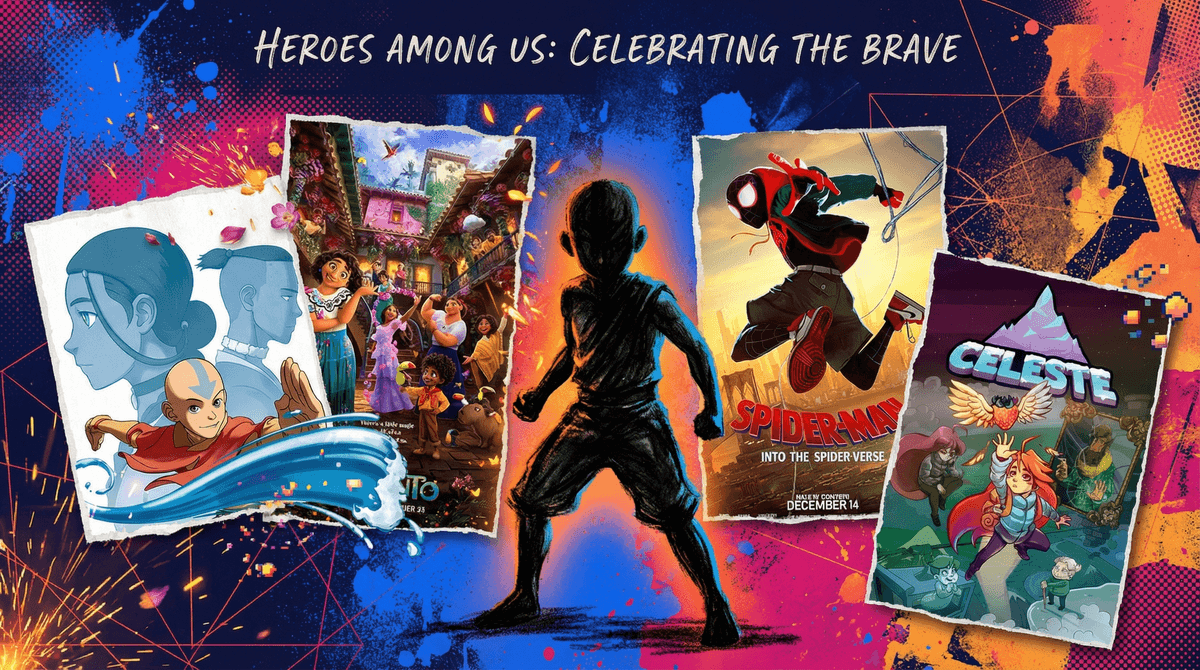
- Encanto - Mirabel's courage to speak truth to her family
- Daniel Tiger's Neighborhood - Literally designed to teach emotional courage
Conversation starters: "What was the brave thing they did?" "Were they scared?" "What helped them be brave?"
Ages 8-11: Social Courage
This is when peer pressure kicks in hard and kids start facing real social dilemmas. They need examples of standing up to friends, being different, and speaking up.
- Wonder - Multiple perspectives on choosing kindness when it's hard
- Matilda - Standing up to authority figures who are wrong
- Percy Jackson series - Loyalty, standing by friends, facing impossible odds
- Avatar: The Last Airbender - Moral courage, admitting when you're wrong, choosing the hard right over the easy wrong
Conversation starters: "Have you ever been in a situation like that?" "What would you have done differently?" "Who was the bravest character and why?"
Ages 12+: Moral and Digital Courage
Teens need to see examples of standing up for beliefs, resisting peer pressure in high-stakes situations, and navigating the specific courage challenges of digital life.
- Spider-Man: Into the Spider-Verse - Taking on responsibility you didn't ask for
- The Hunger Games - Systemic injustice and rebellion (though watch for the violence level)
- Celeste - A game literally about climbing a mountain as a metaphor for facing anxiety and depression
- She-Ra and the Princesses of Power - Leaving toxic friendships, choosing your own path
Conversation starters: "What would it cost them to do the right thing?" "When is it worth it to stand alone?" "How does this apply to online situations?"
Here's where it gets really relevant: digital courage is its own beast. It takes guts to:
- Not forward that mean screenshot
- Tell an adult when something scary happens online
- Stand up to someone being bullied in a game chat
- Admit you spent money in a game without permission
- Delete a post that got likes but was mean
- Be the one who says "guys, this isn't cool" in the group chat
Look for media that specifically addresses these scenarios. Eighth Grade (for older teens) is brutally honest about social media courage. Even games like Kind Words can model what it looks like to be brave and kind online.
Don't just watch/play together - talk together. The media itself isn't magic. The conversation is where the learning happens. Even just "What did you think about when Character X did that thing?" can open doors.
Look for nuance, not just "hero defeats bad guy." The best courage lessons come from complicated situations where the brave choice isn't obvious. Characters who are scared but do it anyway. Characters who mess up and have to be brave enough to make it right.
Your own media matters too. Kids are watching what YOU watch and how you respond to it. When you're watching your shows and a character does something brave (or cowardly), say it out loud. Model that critical thinking.
Play the games they're playing. You can't have meaningful conversations about courage in Roblox or Fortnite if you have no idea what actually happens in those spaces. You don't have to be good at them. You just have to show up.
Connect fiction to real life (gently). After you've talked about the story, you can bridge to reality: "Have you ever had to do something brave like that?" But don't force it. Sometimes the lesson just needs to marinate.
Media isn't going to raise brave kids on its own. But when we're thoughtful about what they're consuming and we take the time to process it with them, these stories can become powerful tools in their courage toolkit.
The goal isn't to shield them from every scary thing or to only show them perfectly heroic characters. It's to give them a vocabulary for courage, examples to draw from, and practice thinking about what bravery looks like in different situations - so when they face their own moment of truth (and they will), they've got something to draw on.
This week: Pick one show/movie/game your kid is already into and watch/play it with them. Then ask just one question about a brave moment in it. That's it. See where it goes.
This month: Create a "courage collection" - a list of media that you've vetted and can pull from when you want to explore these themes. Mix it up: movies, shows, games, books, even podcasts like Brains On! that feature kids asking brave questions.
Ongoing: Make it normal to talk about courage - both in media and in real life. When you do something that scares you, name it. When they do, celebrate it. Build a family culture where bravery is expected, honored, and most importantly, practiced.
Because at the end of the day, courage isn't the absence of fear. It's doing the thing even when you're scared. And that's a lesson worth every minute of screen time.