

TL;DR
If your kid is asking to play Undertale, they’re looking at one of the most influential indie games of the last decade. It’s a retro-style RPG where the "hook" is that you don't actually have to kill anyone to progress. It’s funny, surprisingly deep, and teaches a massive lesson about the weight of our choices.
- Best for: Ages 10+ (due to some meta-horror and complex themes).
- Key Value: Empathy-driven gameplay and accountability.
- Watch out for: The "Genocide" route, which gets dark and intentionally "unfun."
- Related Content: Deltarune, Earthbound, Stardew Valley.
See if Undertale is too scary for your 8-year-old
Released in 2015 by developer Toby Fox, Undertale looks like something from the 1990s. It uses 8-bit pixel art similar to old Nintendo classics like Earthbound. You play as a human child who falls into an underground world filled with "monsters" who were banished there long ago.
Standard gaming logic tells you to fight monsters, level up, and get stronger. Undertale flips that script. It gives you the option to "ACT" (talk, flirt, joke, or comfort) and then spare the enemy. If you kill everyone, the game changes. If you kill no one, the game changes. And here’s the kicker: the game remembers what you did, even if you reset the save file.
It’s easy to look at the simple graphics and wonder why kids aren't just playing Roblox or Fortnite instead. But Undertale has a cult-like grip on youth culture for a few specific reasons:
- The Characters: Characters like Sans (the pun-loving skeleton) and Papyrus are internet icons. They are genuinely funny and well-written.
- The Music: Toby Fox is a composer first, and the soundtrack is legendary. Even if your kid hasn't played the game, they’ve almost certainly heard "Megalovania" in a meme or a YouTube video.
- The Mystery: The game is packed with secrets. It encourages kids to talk to each other, look up theories, and try to find "Easter eggs."
- Agency: Most games give the illusion of choice. In Undertale, the choices feel heavy. Kids love the feeling that their specific personality—whether they are kind or "edgy"—is reflected in the world.
To understand what your kid is doing in the game, you need to know about the "Routes." This is how the community categorizes a playthrough:
This is usually what happens the first time someone plays. They kill some monsters, spare others, and get an ending based on those specific actions. It’s a standard "learning the ropes" experience.
This is the "good" ending. To get this, the player cannot kill a single enemy. Not one. They have to figure out how to befriend every boss. It requires patience, empathy, and problem-solving. It is widely considered the "correct" way to experience the game's heart.
This is where things get heavy. To trigger this, the player must go out of their way to hunt down and kill every single monster in every area. The game becomes bleak, the music turns creepy, and the characters—who are usually your friends—treat you like a literal monster. The game actually tries to make the player feel bad for doing this. It’s a fascinating look at consequences, but it can be disturbing for younger or more sensitive kids.
Check out our guide on the psychological impact of the Genocide Route
We spend a lot of time worrying about "brain rot" content—those mindless YouTube Shorts or repetitive Skibidi Toilet memes. Undertale is the opposite of brain rot. It’s "brain food."
It forces a player to consider the "other." In most games, a "monster" is just a target for loot. In Undertale, the monster might be a dog who just wants pets, or a shy ghost who likes music. By choosing to "MERCY" these characters, kids practice a form of digital empathy that is rare in competitive gaming environments.
While the ESRB rating is E10+, there are a few things to keep in mind based on your child's maturity:
- Ages 7-9: They might struggle with the "bullet hell" combat (which requires quick reflexes to move a little heart out of the way of projectiles). Some of the meta-horror elements—like a character "breaking" the game or talking directly to the player—might be confusing or slightly scary.
- Ages 10-12: This is the "sweet spot." They are old enough to appreciate the humor and understand the moral weight of their choices.
- Ages 13+: Teens often enjoy the deeper lore and the challenge of the harder boss fights (especially the infamous Sans fight at the end of a Genocide run).
If your kid loves Undertale, they will likely end up on YouTube or Discord looking at fan art and theories.
The Undertale fandom is massive and generally creative, but like any large internet community, it has its dark corners. There is plenty of "shipping" (pairing characters in romantic relationships) and some of it can veer into "not safe for work" territory. If your kid is searching for fan art, it’s worth a quick conversation about staying on moderated platforms.
Learn more about how to talk to your kids about online fandoms
Instead of asking "Are you winning?", try these conversation starters:
- "Which monsters have you decided to spare so far?"
- "Has anyone in the game done something that surprised you?"
- "I heard the game remembers if you reset it. Has it mentioned anything you did in a previous save?"
- "What do you think about Flowey? Is he just mean, or is there more to it?"
These questions show your kid that you "get" the game's unique hook—that it’s a story about relationships, not just a high score.
If your child has finished Undertale and is looking for something with a similar vibe (humor, heart, and great music), check these out:
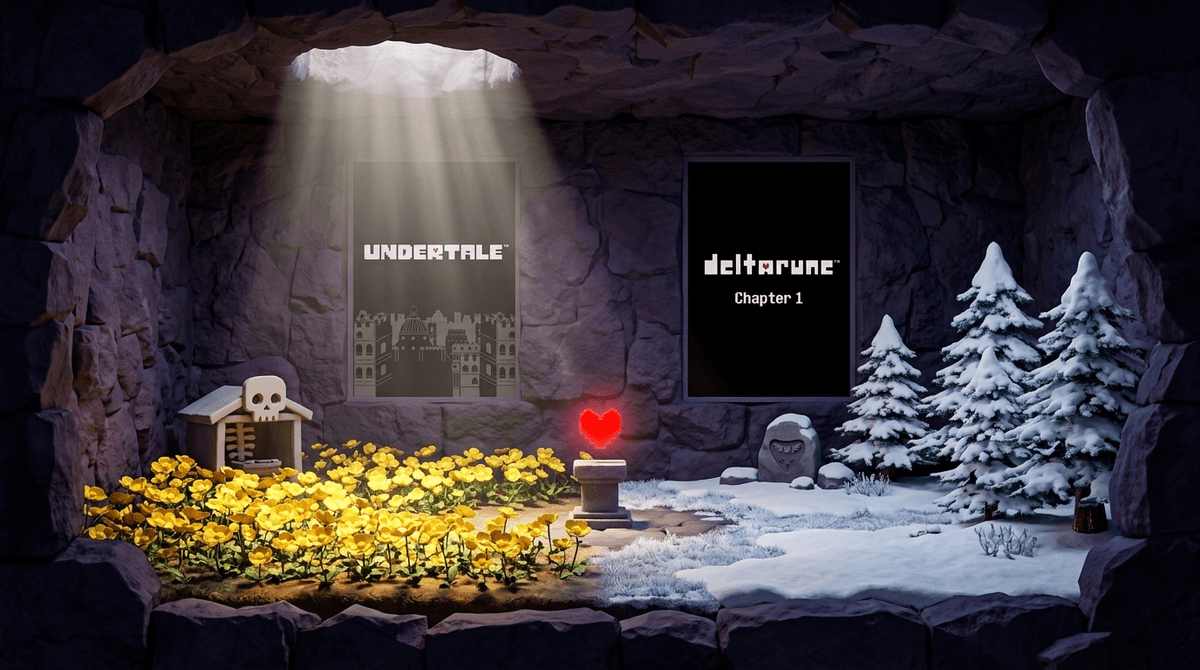
This is Toby Fox’s follow-up. It’s technically an "alternate universe" and is being released in chapters. Chapters 1 and 2 are currently free. It’s a must-play for any Undertale fan.
The primary inspiration for Undertale. It’s a quirky, 90s SNES game about a group of kids saving the world. It’s available on the Nintendo Switch Online service and is a masterclass in weird, wonderful storytelling.
While it’s a farming sim rather than a battle-heavy RPG, it shares that "intentional" vibe. You succeed by building relationships with the townspeople and taking care of the world around you.
A musical adventure where you play as a bard who uses singing to solve puzzles and save the world. It’s incredibly wholesome and shares the "pacifist" spirit.
A surreal puzzle-adventure game where the player has a direct relationship with the protagonist. Like Undertale, it plays with the idea of the game "knowing" it's a game.
Undertale is a rare gem in the digital landscape. It’s a game that actually asks the player to be a "good person" and then holds them accountable when they aren't. It’s a fantastic entry point for talking to your kids about empathy, the permanence of digital actions, and the idea that just because you can do something (like "fight" or "delete") doesn't mean you should.
- Check the platform: Undertale is available on PC, Mac, Switch, PlayStation, and Xbox. It’s cheap (usually around $10-15) and runs on almost any computer.
- Watch a "Pacifist" run: If you want to see the vibe without playing, search YouTube for a "True Pacifist No Commentary" playthrough. It’s like watching a really well-written indie movie.
- Talk about the Genocide Route: If you see your kid playing a version of the game that looks dark and the music is slowed down/creepy, they’re likely on a Genocide run. This is a great time to ask why they chose that path and how the game is making them feel.