

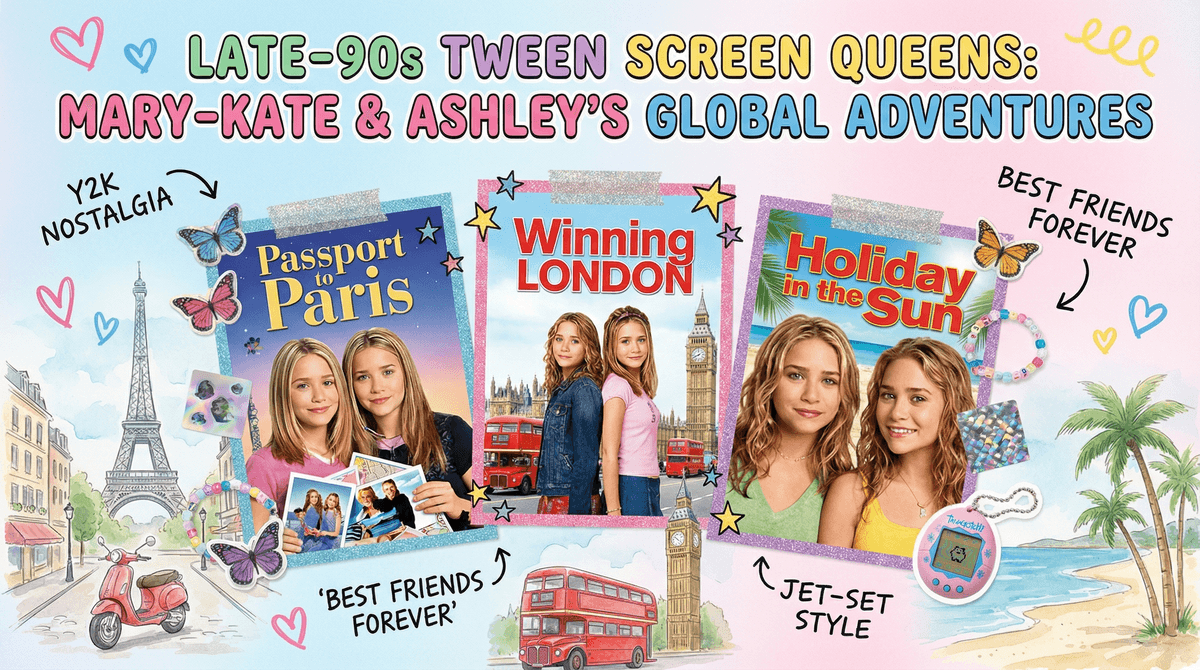
Passport to Paris: A Parent's Guide to the Mary-Kate and Ashley Classic
TL;DR: This 1999 gem is peak wholesome tween entertainment—two 13-year-olds get chaperoned freedom in Paris, there's innocent romance, zero actual peril, and surprisingly solid messages about independence and cultural curiosity. Perfect for ages 8-12, especially if you're looking for something that won't make you cringe during family movie night.
Passport to Paris is a 1999 straight-to-video movie starring Mary-Kate and Ashley Olsen at the height of their tween empire. The twins play Melanie and Allyson Porter, who get sent to Paris for spring break to stay with their ambassador grandfather. What follows is exactly what you'd expect from a late-90s tween fantasy: they ditch their stuffy chaperone, meet cute French boys, ride mopeds through cobblestone streets, and learn valuable lessons about independence and cultural appreciation—all while wearing an impressive array of coordinated outfits.
The plot is paper-thin, but that's not really the point. This is aspirational content for the 8-12 set, and it delivers exactly what it promises: a sanitized, parent-friendly adventure that makes international travel look magical and accessible.
Despite being over 25 years old, this movie has serious staying power with elementary and middle schoolers. Here's why:
The independence fantasy is timeless. The core appeal—being trusted to explore a foreign city with minimal supervision—hits differently for kids who are just starting to crave autonomy. Melanie and Allyson get to order their own food, navigate public transportation, and make their own decisions (within very safe parameters). For a 10-year-old who still needs permission to walk to the corner store, this is intoxicating stuff.
Paris looks incredible. The movie is basically a 90-minute tourism ad, but it works. The Eiffel Tower, the Seine, outdoor cafes, fashion shows—it's all shot with that soft-focus, golden-hour glow that makes everything look impossibly romantic. Kids come away wanting to visit Paris, which honestly isn't the worst influence.
The romance is painfully innocent. The twins meet two French boys (who are age-appropriate and respectful), and the biggest romantic gesture is... holding hands on a boat ride. There's no kissing, no pressure, just sweet, earnest conversations about dreams and aspirations. In an era where Euphoria exists, this level of wholesomeness feels almost radical.
The fashion is a whole thing. Every scene features multiple outfit changes, and the twins are never not perfectly coordinated. It's absurd, but kids eat it up. There's something deeply satisfying about watching characters who clearly have unlimited wardrobe budgets and the time to plan matching ensembles.
This is aggressively safe content. There's no violence, no substance use, no crude humor, and barely any conflict. The biggest "danger" is when the twins briefly lose track of their chaperone and have to find their way back to the embassy. Even then, they're never actually in peril—they just get to feel slightly adventurous before everything works out perfectly.
The messages are surprisingly solid. Beneath all the fashion montages and tourist shots, there are actually some decent themes:
- Cultural curiosity matters: The twins genuinely engage with French culture, try new foods, attempt the language, and show respect for local customs
- Independence requires responsibility: They prove they can handle freedom by being thoughtful and making good choices
- Relationships with grandparents are valuable: The subplot with their grandfather is sweet and reinforces intergenerational connection
The production values are... fine. This was a straight-to-video release, and it shows. The acting is serviceable at best (the twins were 13, cut them some slack), the dialogue is often clunky, and some scenes feel weirdly paced. But kids generally don't care about production quality the way adults do.
There's minimal diversity. It's a very white, very privileged story. The twins come from obvious wealth, their problems are first-world to the extreme, and there's little acknowledgment of any broader social context. This isn't surprising for a 1999 tween movie, but it's worth noting if you're trying to build a more inclusive media diet.
Ages 6-8: Probably fine, though younger kids might find it boring. There's a lot of dialogue and not much action. If your 7-year-old is into fashion or dreams of traveling, they might engage with it, but don't be surprised if they wander off halfway through.
Ages 8-12: The sweet spot. This age group will appreciate the independence fantasy, relate to the twins' desire for freedom, and enjoy the Paris tourism. It's also a great conversation starter about travel and cultural differences.
Ages 13+: They'll probably find it painfully dated and cheesy, unless they're watching ironically or feeling nostalgic. Middle schoolers who've moved on to more sophisticated content will likely roll their eyes at the innocent romance and predictable plot.
Make it a conversation starter about travel. After watching, pull up a map and talk about Paris—where it is, what makes it special, what other places your family might want to visit someday. The movie can spark genuine interest in geography and cultural exploration.
Talk about the independence piece. Ask your kids what kinds of independence they're ready for. Would they feel comfortable ordering food in a restaurant alone? Taking public transportation? The movie can open up real conversations about age-appropriate autonomy.
Address the privilege. Depending on your kids' ages, you can have a light conversation about how not everyone gets to travel internationally, and how the twins' experience is pretty unusual. It's a chance to talk about gratitude and perspective.
Use it as a gateway to better content. If your kids respond well to the travel/adventure theme, you can level up to more sophisticated options like The Lizzie McGuire Movie (similar vibes, slightly better production), or even Emily in Paris for older teens (though that one requires more parental guidance).
If your kids like Passport to Paris, they'll probably enjoy other Mary-Kate and Ashley classics:
- Winning London: Same formula, different city. The twins compete in a Model UN competition in London. Equally wholesome, equally fashion-forward.
- Holiday in the Sun: Bahamas edition. A bit more action-oriented (there's a subplot about smugglers), but still very safe.
- Our Lips Are Sealed: Australia adventure with a witness protection twist. Slightly more plot than usual.
For parents looking for similar vibes but better production values, consider:
- The Princess Diaries: Higher budget, better acting, similar themes of identity and responsibility
- Bend It Like Beckham: More substance, but still wholesome and empowering
- The Parent Trap (1998): Peak wholesome twin content with actual emotional depth
Passport to Paris isn't going to win any awards, but it doesn't need to. It's a time capsule of late-90s tween entertainment that still works for its target audience. The messages are positive, the content is squeaky clean, and it might actually inspire your kids to be curious about the world beyond their zip code.
Is it cheesy? Absolutely. Is the acting great? Not particularly. Will your kids care? Probably not. If you're looking for something genuinely safe for family movie night that won't rot anyone's brain, you could do a lot worse than letting your tweens spend 90 minutes in Paris with Mary-Kate and Ashley.
The real question isn't whether this movie is "good"—it's whether it serves a purpose in your family's media diet. If you're trying to balance out the Roblox and YouTube consumption with something that models cultural curiosity and age-appropriate independence, this fits the bill nicely. Just don't expect cinematic brilliance, and you'll be fine.
Next Steps: If you want to explore more wholesome movies for tweens or shows that inspire travel and cultural curiosity, Screenwise has you covered. And if you're wondering whether your kid is ready for more independence in real life, start here.