

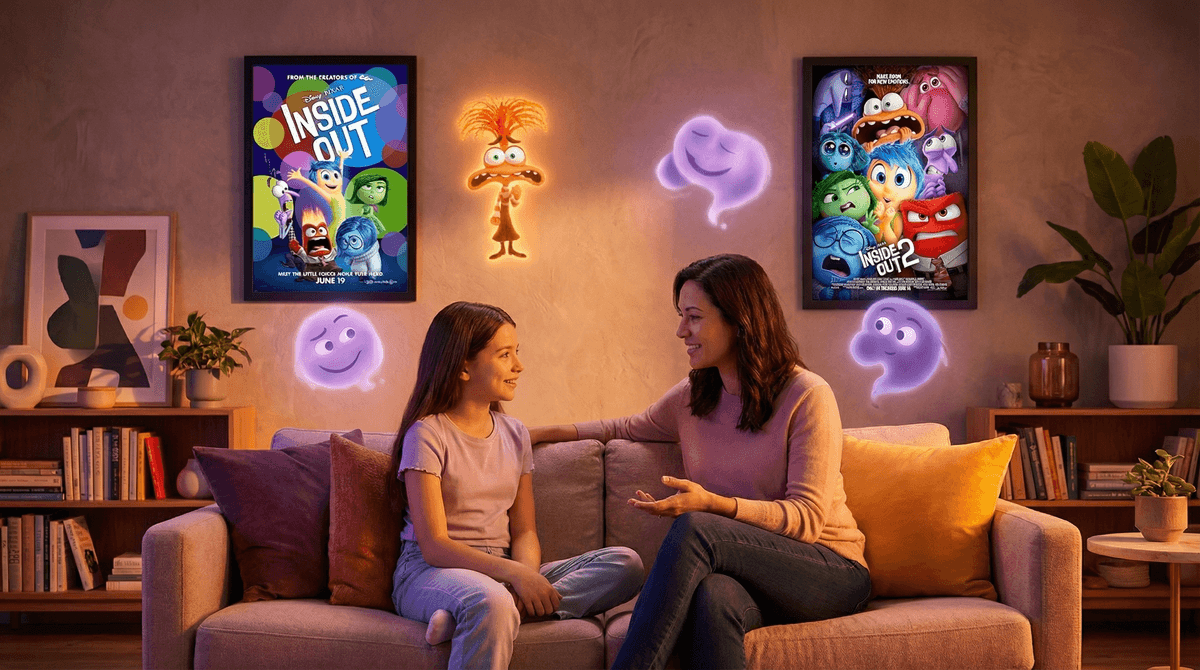
TL;DR: Inside Out 2 isn't just a sequel; it’s a survival manual for the middle school transition. It introduces Anxiety as a frantic, orange, over-caffeinated character who takes over the "console" of 13-year-old Riley’s brain. For parents, this is the perfect opening to talk about the "I'm not good enough" loop, how to handle a panic attack, and why our kids are suddenly acting like "everything is mid" (Ennui).
Quick Links for Emotional Intelligence:
- Inside Out 2 - The new gold standard for explaining puberty.
- Turning Red - Great for the "hormonal rage" side of puberty.
- Headspace - Practical tools for when the "orange emotion" takes over.
- The Moodsters - For younger siblings who need to name their feelings.
If you’ve seen Inside Out 2, you know the "Puberty Alarm" scene. It’s loud, it’s chaotic, and it involves a wrecking ball. That is exactly what it feels like when a kid hits 12 or 13. One day they’re playing with Minecraft and the next they’re worried about whether their shoes are "Ohio" (weird/bad) and if they’ll have anyone to sit with at lunch.
Anxiety (the character) isn't a villain in the movie, and she’s not a villain in real life. She’s a protective mechanism that has lost the plot. She’s trying to "plan for the future" to keep Riley safe, but she ends up creating a "Sense of Self" that is rooted in fear.
In a world where our kids are constantly bombarded by the curated "perfection" of TikTok and the social hierarchy of Roblox, their internal "Anxiety" is working overtime. This movie gives us the vocabulary to talk about it without making it weird.
The "Core Five" from the first Inside Out (Joy, Sadness, Anger, Fear, Disgust) are still there, but they get shoved into a jar when the new crew arrives. Here’s how to translate the new characters into "Parent-Speak":
She’s the star of the show. She’s not just "scared" (like the purple Fear character); she’s anticipating disaster. She’s the one who makes Riley stay up late practicing hockey drills because she’s afraid of being alone in high school.
- Parent Tip: Ask your kid, "Is Anxiety at the console right now?" It’s easier for them to answer that than "Why are you stressed?"
The French-accented personification of "I don't care." This is the defense mechanism kids use to protect themselves from being judged. If you act like everything is "mid" or boring, no one can hurt your feelings.
- Parent Tip: When they give you the one-word answers, remember that Ennui is just a mask for feeling overwhelmed.
The big guy in the hoodie who just wants to disappear. This is the most relatable character for any kid who has ever felt "cringe" for just existing.
She’s small but mighty, constantly looking at what others have. In the digital age, Envy is fueled by Instagram filters and YouTube influencers.
Get more ways to explain these emotions to different ages
There is a moment in Inside Out 2 where Anxiety moves so fast she becomes a blur, and Riley, in the real world, starts to lose her breath. It is one of the most accurate depictions of a panic attack ever put on film.
Don't skip talking about this.
Even if your kid hasn't had a full-blown panic attack, they’ve felt that "spiral."
- Validate it: "That looked really scary for Riley, didn't it?"
- Explain the 'Storm': Explain that when Anxiety takes over, it’s like a storm in the brain. You can’t "think" your way out of it; you have to wait for the storm to pass.
- The "Grounding" Technique: Joy eventually helps Riley by having her focus on the present moment—the feel of the bench, the sound of the rink. This is the "5-4-3-2-1" method.
Check out our guide on grounding techniques for kids
The most profound part of the movie is the "Sense of Self"—a glowing tree built from Riley’s memories. At first, Joy tries to make it all positive ("I am a good person"). Then Anxiety takes over and turns it into "I'm not good enough."
Ultimately, the movie argues that a healthy Sense of Self isn't just "positive vibes." It’s a mix of everything. "I am a good friend, but I am sometimes selfish. I am brave, but I am also scared."
The Digital Connection: Kids today are building their "Sense of Self" based on digital feedback. If a TikTok doesn't get likes, or they get "blocked" on Snapchat, their internal "I'm not good enough" loop starts playing.
Use the movie to ask: "What are the voices in your 'Sense of Self' saying today?"
If your kid loved the movie and you want to keep the conversation going without it feeling like a therapy session, try these:
Ages 10+ While Inside Out 2 handles anxiety, Turning Red handles the "big red monster" of puberty-induced rage and the desire for independence. It's funny, it's honest, and it's a great companion piece.
Ages 8+ If your kid is struggling with the "orange emotion," this show is surprisingly un-boring. It uses great animation to show how to "note" a thought and let it go, rather than letting it control the console.
Ages 3-7 For the younger siblings who aren't quite ready for the complexities of Ennui but need to know that being "sad" is okay. It’s a great way to start the "naming emotions" habit early.
Ages 8-12 This graphic novel is a must-read. It’s a true story about the author’s own experience with anxiety and how it manifested as stomach issues. It’s the "Inside Out" of middle school literature.
- Ages 5-8: They’ll love the colors and the slapstick humor. Focus on the idea that "all feelings are okay." You don't need to get into the nuances of "catastrophizing" yet.
- Ages 9-12: This is the "sweet spot." They are Riley. Use the movie to talk about the transition to middle school and the pressure to be "cool."
- Ages 13+: They might act like they’re too "Ennui" for a Disney movie, but they’re the ones who need it most. Watch it "with" them (even if they’re on their phone for half of it) and mention the panic attack scene casually later.
Learn more about how to discuss mental health with teens
One of the best "no-BS" takeaways from the movie is that Joy (the character) is actually kind of a problem at the beginning. She tries to suppress Riley’s bad memories and "force" her to be happy.
As parents, we do this too. We want to "fix" the anxiety. We want to say, "Don't worry, you're great!" But Inside Out 2 teaches us that you can't joy your way out of anxiety. You have to accept it, pull it off the console, and let the child develop a complex, messy, and authentic sense of self.
Inside Out 2 is a rare win for parents. It’s not "brain rot," it’s not a cash-grab sequel, and it actually gives us a way to talk to our kids about the very real mental health challenges they face in 2026.
Next time your kid is spiraling because they think they’re "cringe" or they’re worried about a math test, don't just tell them it’ll be fine. Ask them if Anxiety is trying to "protect the future" a little too hard. Sometimes, just naming the orange monster is enough to make it sit down.
Next Steps:
- Watch the movie (or re-watch the first Inside Out if you need a refresher).
- Download Headspace and try one "wind down" session together.
- Ask one question: "Which emotion is at your console the most often this week?"
Get a list of cozy games to help an anxious child decompress