

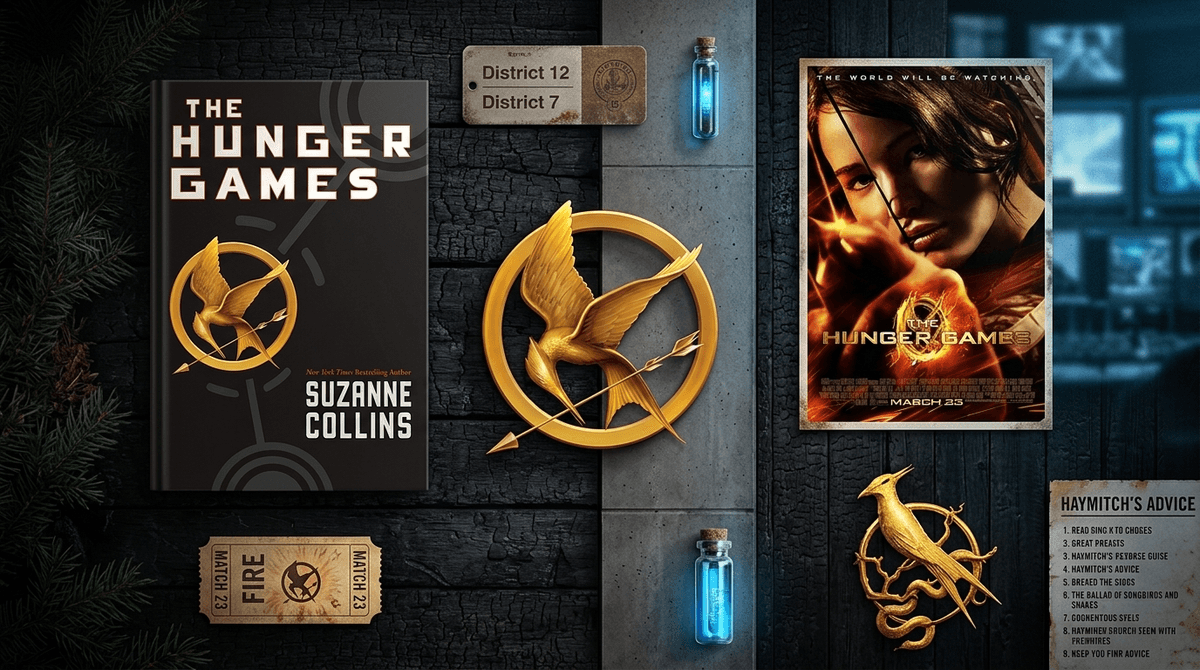
TL;DR: The Hunger Games is back in the cultural zeitgeist with the announcement of Sunrise on the Reaping. While the series is a "Battle Royale" staple that paved the way for games like Fortnite, it deals with heavy themes of state-sponsored violence, PTSD, and media manipulation. It’s best for ages 12+, but the new prequels are arguably even darker and more philosophical than the original trilogy.
Quick Links:
If you missed the 2012 craze, Panem is a dystopian North America divided into 12 districts and a wealthy Capitol. Every year, as punishment for a past rebellion, the Capitol forces two children from each district to fight to the death on live television.
It’s the "OG" of the modern dystopian trend. While your kids might be used to the "shrinking circle" mechanic in Fortnite or the high-stakes survival of Roblox "obby" games, The Hunger Games is where those concepts get a grim, political reality check.
It’s not just the "kids fighting kids" hook. The series taps into that universal teenage feeling that the world is rigged against them and the adults in charge are, at best, incompetent, and at worst, actively malicious.
Katniss Everdeen is the ultimate "main character." She’s not trying to save the world; she’s just trying to save her sister. That grounded motivation makes the subsequent political revolution feel earned rather than preachy. Plus, with the announcement of Sunrise on the Reaping, there’s a renewed interest in the "lore" of Panem—specifically the backstory of Haymitch Abernathy, the grumpy mentor who won the 50th Games.
The series has evolved from a survival action story into a deep dive into how dictatorships are formed. Here is how to navigate the different entries with your family.
The first book and movie are the easiest entry points. They focus on Katniss and the immediate horror of the Games.
- The Vibe: High-stakes survival, a bit of romance, and a lot of "down with the establishment" energy.
- Parental Note: The violence is significant. In the books, it’s descriptive; in the movies, it’s fast-paced and shaky-cam style to maintain a PG-13 rating, but the emotional weight of seeing 12-year-olds "exit the game" permanently is heavy.
This is the prequel focusing on a young Coriolanus Snow (the future villain).
- The Vibe: This isn't a "hero's journey." It’s a "villain's origin story." It’s much more philosophical, focusing on why the Games exist and the nature of humanity.
- Parental Note: It’s arguably more disturbing than the original series because it shows the Games in their early, "unpolished" state—where the cruelty is more raw and less "TV-ready."
The upcoming book (and eventual movie) will cover the "Second Quarter Quell." This is the year Haymitch Abernathy won.
- The Vibe: We know it ends with Haymitch winning, but we also know the Capitol punishes him by killing everyone he loves shortly after. It’s going to be a masterclass in exploring PTSD and the "cost" of winning.
- Parental Note: This is a great time to talk about "prequels" and how knowing the ending changes how we view the journey.
Check out our guide on the most violent scenes in the Hunger Games movies
While the books are marketed as "Young Adult," that label covers a massive range of maturity.
- Ages 10-12: Some mature 5th and 6th graders can handle the first book, but they might focus more on the "action" and miss the political nuance. Be prepared for questions about why the adults aren't stopping the violence.
- Ages 13-15: This is the sweet spot. They are old enough to understand the themes of propaganda and how the Capitol uses "entertainment" to distract people from real issues—a great parallel to modern social media "brain rot."
- Ages 16+: They can handle the prequels and the more complex discussions about "Just War" theory and the psychological toll of trauma found in Mockingjay.
This series doesn't pull its punches. If you’re going to let your kid dive into Panem, here are the three big "dark" areas you’ll want to be ready to discuss.
1. Violence as Entertainment
The most disturbing part of the series isn't just that kids are fighting; it’s that the people in the Capitol are cheering for it. It’s a direct critique of reality TV and our own obsession with "viral" tragedy.
2. PTSD and Mental Health
Unlike many action movies where the hero walks away fine, Katniss and Haymitch are profoundly damaged by their experiences. Haymitch’s alcoholism is a direct result of his trauma.
- The Conversation: This is a rare chance for a "no-BS" talk about mental health. Winning the "game" doesn't mean you're okay. Talk about how characters cope with stress and loss.
3. Propaganda and "Fake News"
In the later books, both the "good guys" and the "bad guys" use Katniss as a prop. They edit her speeches, dress her up, and use her to manipulate the public.
- The Conversation: This is a perfect bridge to talking about deepfakes, AI-generated content, and how "the truth" is often manufactured by people in power.
If your kid is currently obsessed with the series or hyped for Sunrise on the Reaping, use these prompts to get past the "it was good" one-word answers:
- "Who is the real villain?" Is it President Snow, or is it the people in the Capitol who watch and do nothing? (This gets into "bystander effect" territory).
- "Why do you think Haymitch is the way he is?" Instead of just seeing him as "the drunk guy," help them connect his behavior to his history in the 50th Games.
- "If the Hunger Games happened today, how would they be on social media?" Would there be "Get Ready With Me" (GRWM) videos from the tributes? This helps them see the satire in the story.
- "Is Katniss a hero?" She often makes selfish choices to protect her family. Is that better or worse than being a "perfect" hero?
The Hunger Games is a heavy lift, but for an intentional parent, it’s a goldmine for deep conversation. It’s not "brain rot" content; it’s a sharp, often cynical look at power and media.
If your kid is a fan of Fortnite or Squid Game (which is way more graphic and arguably less meaningful), The Hunger Games is actually a step up in terms of intellectual value. It asks them to think about why we play these games and what happens when the screen turns off.
- Watch together: If your kid is 12+, watch the first Hunger Games movie together. It’s a great litmus test for their maturity level.
- Read the Prequel: If they’ve finished the trilogy, suggest The Ballad of Songbirds and Snakes. It’s a slower burn but much more rewarding for older teens.
- Discuss the "Capitol" lifestyle: Compare the fashion and excess of the Capitol to current Instagram influencer culture. It’s an eye-opener.
Get a list of dystopian books for kids who finished The Hunger Games